Espresso Machine · Single boiler with built-in grinder
Breville Barista Express
Breville · $$$
A hugely popular all-in-one espresso machine with an integrated grinder.
Price range
$650 – $800
Breville Barista Express on video
Lance Hedrick covers the Breville Barista Express in a 28-minute video. Watch the review below, then see the details and where to buy — all without leaving the page.
Lance Hedrick takes a hands-on look at the Breville Barista Express. We link it for its specs walkthrough and real-world impressions — form your own view by watching.
We may earn a commission when you buy through links on this page, at no additional cost to you.
More videos
Why this matters
The Breville Barista Express sits at a genuinely important crossroads in the home espresso market: it is one of the few machines in the $650–800 USD price band to integrate a grinder directly into the chassis, removing the single biggest barrier for new espresso drinkers — figuring out a compatible, budget-appropriate separate grinder. For someone transitioning from pod machines or drip coffee and unwilling to research two pieces of equipment simultaneously, the Barista Express collapses that decision into one. Its thermocoil single-boiler architecture, manual steam wand, and 54mm portafilter give it a credible espresso pedigree rather than a toy-level experience, while the approachable control layout means you are dialing in your first shot within minutes of unboxing. It is squarely aimed at the beginner-to-enthusiast conversion moment: a person who wants real espresso at home, understands that a pod machine will not get them there, but is not yet ready to invest $1,500+ in separates. It also functions as a genuine on-ramp to deeper espresso literacy — the manual wand and pressure profiling light teach you what extraction actually feels like, so that when you outgrow the integrated grinder, you do so with hard-won context rather than frustration.
At a glance
Best for
- Beginners wanting all-in-one
- First espresso setup
Look elsewhere if
- The 54mm portafilter is a proprietary size — if you anticipate expanding into the 58mm aftermarket ecosystem of precision baskets and distribution tools (VST, IMS, etc.), you will hit a compatibility wall that a Gaggia Classic Pro or Rancilio Silvia avoids from the start.
- The integrated grinder is structurally modest: its burr size and chute-based dosing introduce retention and shot-to-shot variability that a dedicated entry-level standalone grinder at a similar price point largely avoids, making it the performance ceiling for anyone chasing dialed-in clarity.
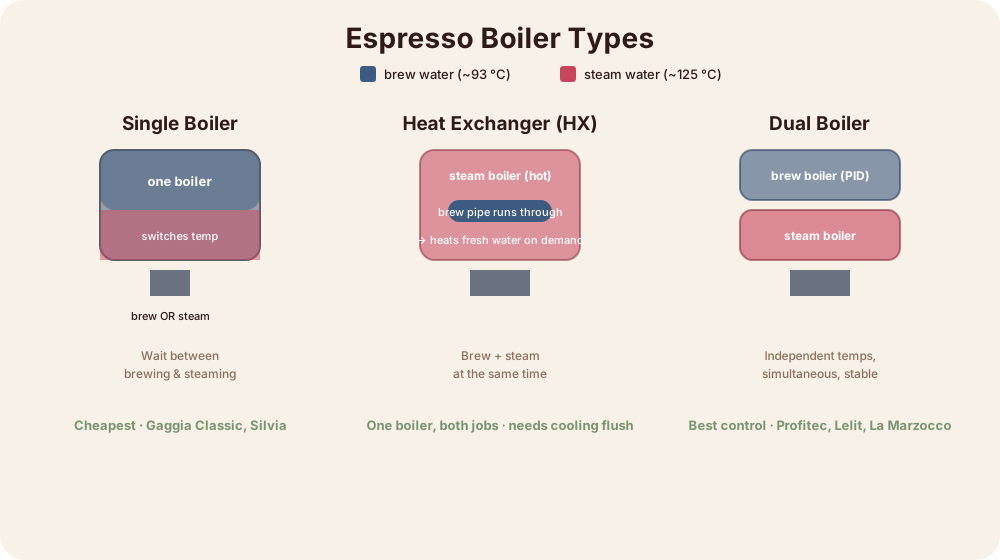
- The single-boiler thermocoil architecture requires sequential operation — pull the shot, then wait for steam temperature — which creates friction for households regularly making two or more milk-based drinks back to back; a heat-exchanger or dual-boiler machine eliminates that wait entirely.
- If you expect to upgrade only the grinder within a year or two, the Barista Express does not support that modular path — the grinder is integrated and non-removable, meaning an upgrade effectively requires replacing the entire machine rather than just the grinding component.
Closest alternatives
Featured in
**Build and Design**
The Barista Express is a substantial countertop machine. Its stainless-steel housing gives it a premium visual presence that punches above its price tier, and Breville offers it in multiple finishes — brushed stainless being the most pervasive on retail shelves — so it fits into both utilitarian and styled kitchen environments without looking provisional. The bean hopper sits directly atop the grinder unit, which is itself mounted above the portafilter dock, creating a vertical workflow: beans load at the top, ground coffee doses directly into the portafilter at the bottom. This inline architecture is the machine's defining spatial logic and its chief ergonomic advantage over two-piece setups. The 54mm portafilter is a proprietary Breville size, narrower than the 58mm standard found on prosumer Italian machines like the Rancilio Silvia or the Gaggia Classic Pro. This distinction matters for long-term ownership: third-party baskets, distribution tools, and tampers designed for the 58mm ecosystem will not fit without adapters, which somewhat limits the aftermarket accessory pathway.
The front panel organizes its controls around a central dial and a cluster of illuminated buttons. Shot volume, grind amount, and grind size are each independently adjustable through dedicated mechanisms rather than buried in a software menu, which is one of the genuine usability wins of this design. The steam wand is a single-hole manual type — not a panarello auto-frother — which means the machine expects you to learn actual milk-texturing technique rather than outsourcing it to automation. This is a philosophically significant choice by Breville: it makes the learning curve steeper than on entry-level machines with automatic steam systems, but it also means the skills you build are transferable to any manual wand you will ever encounter.
**Grinder Performance**
The integrated conical burr grinder is the most discussed and most debated component of the Barista Express. It offers a stepped grind adjustment across a meaningful range, from coarse enough for French press through fine espresso territory, though the espresso range is where users actually spend their time. The practical adjustment resolution within the espresso range is adequate for initial dialing-in — most users find a workable setting within a few sessions — but the grinder is classified in the DB facts as 'modest,' and that characterization is accurate in several ways. The burrs are smaller than those found in entry-level standalone grinders at similar price points, and the grinding speed and heat generation reflect that. For a single-boiler machine pulling one or two shots per session, this is an acceptable trade-off; for anyone producing four or more drinks back to back, the integrated grinder becomes a workflow bottleneck. Retention inside the grind chute — the ground coffee that sticks to the internal surfaces between doses — is a characteristic of this style of chute-based dosing system, and it introduces shot-to-shot dosing variability that dedicated grinders with low-retention designs largely avoid. The practical effect is that the first shot of the day can pull slightly differently from subsequent ones as stale grounds from the previous session flush through.
**Espresso and Shot Performance**
The thermocoil single-boiler system heats water rapidly for brewing, and the machine includes a pressure gauge on the front face that gives real-time feedback on extraction pressure — a feature less common at this price and one that accelerates learning. Espresso shots produced by the Barista Express, when properly dialed in with fresh beans, are genuinely good: balanced, with visible crema and the kind of clarity that rewards quality coffee. The single-boiler architecture means that pulling a shot and steaming milk cannot happen simultaneously. After extraction, the machine must transition to steam-temperature operation, a process that takes a noticeable interval. This sequential workflow — espresso first, steam second — is the fundamental rhythm of a single-boiler machine and is the primary workflow limitation compared to dual-boiler or heat-exchanger machines.
The manual steam wand, once mastered, produces steamed milk adequate for latte art at beginner levels. The wand articulates to accommodate different pitcher sizes, and the steam pressure available is sufficient for properly texturing 6–8 oz pitchers.
**Day-to-Day Workflow**
A typical Barista Express session looks like this: beans load into the hopper (or are dosed directly from a separate bag for freshness), the grind amount dial is set, the portafilter is placed under the grinder outlet and the grind button pressed, grounds fall into the basket, the user tamps (the machine ships with a magnetic tamper stored on the body), the portafilter locks into the group head, and the shot button initiates extraction. The pressure gauge confirms you are in the target range during the pull. After the shot, the steam wand heats up and milk work follows. The entire sequence is longer than a pod machine but shorter and less complex than managing two separate devices for the first time. Cleaning involves rinsing the portafilter and steam wand after each use, periodic backflushing with the supplied blind basket, and descaling on a schedule the machine itself prompts via indicator lights. The grinder burrs can be accessed for cleaning but require more disassembly than on a standalone grinder, which makes deep grinder cleaning a less frequent task.
**The Honest Case For and Against**
At $650–800 USD, the Barista Express occupies a defensible position: it delivers a complete, operational espresso setup without requiring separate grinder research, purchasing, or counter-space allocation. For a first-time espresso buyer, removing that decision layer has real value — not just financial, but cognitive. The machine's approachable controls and front-mounted pressure gauge create a feedback loop that teaches extraction fundamentals rather than hiding them behind automation. This is not a machine that does everything for you; it is a machine that shows you what is happening and lets you intervene.
The trade-offs, however, are structural and worth naming plainly. The 54mm portafilter locks you into Breville's proprietary accessory ecosystem. This is not an insurmountable problem — Breville's own basket lineup is solid, and third-party 54mm options exist — but if you aspire toward the broader 58mm aftermarket world of VST baskets, IMS precision baskets, and distribution tools, you will eventually hit a ceiling. The integrated grinder, rated 'modest' in the specs, produces adequate results for casual use but will be the first component experienced espresso drinkers identify as the limiting factor in shot quality. Upgrading the grinder means purchasing a standalone unit and potentially selling or repurposing the Barista Express entirely, since you cannot simply remove the built-in grinder and continue using the machine as a standalone espresso unit — the hopper and grinder are structurally integrated.
**Head-to-Head: Key Comparisons**
*Versus Breville Barista Express Impress ($1,149.99 USD at Breville):* The Impress adds an assisted tamping mechanism designed to deliver consistent tamp pressure and reduce mess, along with refinements to the dosing system. For users whose primary friction point is tamping inconsistency, the Impress addresses a real pain point. If you are price-sensitive and willing to learn manual tamping, the standard Barista Express at $650–800 delivers the same core espresso architecture at a meaningful discount.
*Versus the Breville Bambino Plus ($649.99 USD at Breville):* The Bambino Plus is the competing internal argument: it matches the Barista Express at the bottom of its price range but omits the integrated grinder, instead including an automatic milk-texturing system. If your priority is hands-off milk drinks and you are willing to budget a separate grinder later, the Bambino Plus is the machine to consider. If you want everything in one box on day one, the Barista Express wins that comparison.
*Versus the Gaggia Classic Pro (~$500 USD street price):* The Gaggia Classic Pro is the standard prosumer single-boiler recommendation from the enthusiast community. It uses a 58mm portafilter, a commercial-style group head with a 3-way solenoid valve, and a more powerful steam wand. It ships without a grinder, adding $150–300 to the total cost for a capable entry-level standalone. The total investment lands near or above the Barista Express price, but the Gaggia's 58mm portafilter and modifiable internals (the community has documented temperature and pressure modifications extensively) give it a longer upgrade runway. The Barista Express is simpler and faster to deploy; the Gaggia Classic Pro rewards deeper mechanical interest.
*Versus the Rancilio Silvia (~$750 USD):* The Silvia is a heavier, all-Italian-steel single-boiler machine with a 58mm portafilter and a reputation for durability over 10+ year ownership horizons. Like the Gaggia, it requires a separate grinder investment. Its temperature stability in stock form is debated in the community, and many users pair it with a PID controller modification. The Barista Express offers a more polished out-of-box experience; the Silvia offers more durable long-term hardware.
**Who Should Buy It, Plainly**
Buy the Barista Express if: you are making your first real espresso setup, you want one machine that covers everything without further research, you are comfortable with a manual steam wand, and you do not have strong opinions yet about portafilter size or grinder burr geometry. Do not buy it if: you are already an enthusiast who knows you want 58mm compatibility, if your household pulls more than four milk drinks daily (the single-boiler workflow becomes friction at volume), or if you anticipate wanting to upgrade only the grinder rather than the whole system within 18 months.
Pros
- All-in-one grinder + machine
- Great starter package
- Approachable controls
Cons
- Built-in grinder is modest
- Single boiler workflow
Who reviewed it
We synthesized this page from independent reviews and the manufacturer's own materials. Conclusions below are paraphrased, not quoted.
Prima Coffee
Prima Coffee has generally characterized the Barista Express as an excellent entry point that simplifies the new-buyer decision by bundling grinder and machine, while noting that serious enthusiasts will eventually want to separate those components for better individual performance.
Whole Latte Love
Whole Latte Love's coverage of the Barista Express positions it as one of the strongest all-in-one values at its price tier, particularly praising the pressure gauge and manual steam wand as features that educate the user rather than just automate the process.
CoffeeGeek
CoffeeGeek's community consensus on the Barista Express acknowledges it as a capable starter machine but flags the 54mm portafilter and integrated grinder as the two components that limit its long-term ceiling compared to separate-component setups.
James Hoffmann
Hoffmann's broader commentary on integrated grinder espresso machines suggests that while the convenience factor is real, the grinder is almost always the weakest link in combined units, a characterization that applies directly to the Barista Express's built-in conical.
Breville (Official)
Breville markets the Barista Express as a complete, approachable espresso solution for home users who want quality results without managing two separate devices, positioning it below the Barista Express Impress in the current lineup.
Source ↗
Frequently asked questions
What size portafilter does the Breville Barista Express use?
The Barista Express uses a 54mm portafilter, which is a proprietary Breville size. This is narrower than the 58mm standard found on most prosumer Italian machines, so third-party baskets and tampers designed for the 58mm market will not fit without adapters.
Does the Barista Express have a built-in grinder?
Yes. The machine integrates a conical burr grinder directly into the chassis, with the bean hopper sitting on top and ground coffee dosing directly into the portafilter below. This is the machine's primary selling point for new buyers, as it eliminates the need to purchase and configure a separate grinder.
What type of boiler does the Barista Express use, and how does it affect workflow?
The Barista Express uses a single thermocoil boiler. This means the machine cannot brew espresso and produce steam simultaneously — you pull your shot first, then the machine transitions to steam temperature for milk texturing. This sequential workflow is the main operational trade-off versus heat-exchanger or dual-boiler machines.
What is the price range for the Breville Barista Express?
The Barista Express is priced between $650 and $800 USD depending on retailer and finish. For context, Breville's own lineup places the upgraded Barista Express Impress at $1,149.99 and the Bambino Plus (without integrated grinder) at $649.99.
Is the Barista Express good for beginners?
Yes — it is one of the most recommended first espresso machines precisely because it bundles grinder and machine in one box, has approachable controls, and includes a front-mounted pressure gauge that provides real-time extraction feedback. The manual steam wand adds a learning curve but teaches transferable skills.
Can I upgrade the grinder on the Barista Express later?
No. The integrated grinder is a permanent part of the machine's structure and cannot be removed for a standalone upgrade. If you outgrow the built-in grinder, the practical path is purchasing a separate grinder and either replacing or repurposing the Barista Express entirely.
How does the Barista Express compare to the Breville Barista Express Impress?
The Impress ($1,149.99 at Breville) adds an assisted tamping mechanism for more consistent puck preparation and reduced mess. The core espresso architecture — thermocoil boiler, integrated grinder, 54mm portafilter — is shared between both models. If tamping consistency is your primary concern and budget allows, the Impress addresses it; otherwise the standard Barista Express delivers the same fundamental experience at a lower price.
How does the Barista Express compare to buying a Gaggia Classic Pro with a separate grinder?
The Gaggia Classic Pro (~$500 USD) uses a 58mm portafilter, a 3-way solenoid valve, and has a long modification and upgrade history in the enthusiast community. Adding a capable entry-level grinder brings the total cost to roughly the same range as the Barista Express. The Gaggia path offers more long-term upgrade runway and 58mm compatibility; the Barista Express offers simpler out-of-box setup and a more polished beginner experience.
What maintenance does the Barista Express require?
Routine maintenance includes rinsing the portafilter and steam wand after each use, periodic backflushing with a blind basket and cleaning tablet, and descaling on a schedule that the machine signals via indicator lights. The grinder burrs can be accessed for cleaning but require more disassembly than a standalone grinder, so deep burr cleaning is a less frequent task.
Is the steam wand on the Barista Express automatic or manual?
The steam wand is a manual single-hole type — it requires the user to control wand angle, pitcher position, and steam duration to texture milk properly. It does not include a panarello or automatic frothing system. This is more demanding to learn than auto-steam systems but produces results closer to what a barista achieves and builds transferable technique.
What are the main reasons NOT to buy the Barista Express?
The four primary reasons to look elsewhere: (1) the 54mm portafilter limits access to the broader 58mm aftermarket; (2) the integrated grinder has modest burr performance and built-in dosing retention that a dedicated standalone grinder avoids; (3) the single-boiler workflow creates friction for multi-drink household sessions; (4) the grinder cannot be upgraded independently, so improving shot quality eventually means replacing the whole machine.
Compare with
Gaggia
Gaggia Classic Pro
An affordable single-boiler classic and one of the most modified machines in home espresso.
Breville
Breville Bambino Plus
A compact entry espresso machine with near-instant heat-up and automatic milk steaming.
More espresso machines
Lelit
Lelit Bianca
A prosumer dual-boiler machine famous for its manual flow-control paddle.
La Marzocco
La Marzocco Linea Mini
The home machine derived from La Marzocco's legendary commercial Linea.
Gaggia
Gaggia Classic Pro
An affordable single-boiler classic and one of the most modified machines in home espresso.
ECM
ECM Synchronika
A flagship German dual-boiler machine prized for build quality and serviceability.
We may earn a commission when you buy through links on this page, at no additional cost to you.
Last updated: June 13, 2026