Espresso Machine · Single boiler (classic)
Gaggia Classic Pro
Gaggia · $$
An affordable single-boiler classic and one of the most modified machines in home espresso.
Price range
$400 – $520
Gaggia Classic Pro on video
Lance Hedrick covers the Gaggia Classic Pro in a 30-minute video. Watch the review below, then see the details and where to buy — all without leaving the page.
Lance Hedrick takes a hands-on look at the Gaggia Classic Pro. We link it for its specs walkthrough and real-world impressions — form your own view by watching.
We may earn a commission when you buy through links on this page, at no additional cost to you.
More videos
Why this matters
The Gaggia Classic Pro occupies a unique and historically significant position in home espresso: it is one of the most uncompromising sub-$500 machines ever made, offering a genuine 58mm commercial-diameter portafilter, an all-steel body, and a single-boiler architecture that has been refined across Gaggia's lineage stretching back to 1938. For budget-conscious enthusiasts who refuse to compromise on the fundamentals—group head diameter, build quality, and upgrade potential—the Classic Pro represents the clearest entry point into 'real' espresso. Unlike plasticky pump machines sold at similar price points, the Classic Pro's steel construction and commercial basket compatibility mean that every skill and accessory you develop around it transfers directly to professional equipment. Crucially, it is also the most widely modded home espresso machine in the world: the PID temperature controller modification and over-pressure valve (OPV) adjustment are well-documented, inexpensive, and genuinely transform what the machine can do. The Classic Pro is best suited to learners who want a machine they can grow with, tinkerers who enjoy the modding culture, and frugal enthusiasts who want to allocate budget toward a quality grinder rather than the machine itself.
At a glance
Best for
- Budget enthusiasts
- Modding
- Learning espresso
Look elsewhere if
- Single-boiler wait times are a genuine daily friction point for households making multiple milk-based drinks each morning — consider a heat-exchanger machine like the Rocket Appartamento or Lelit Mara X if lattes and cappuccinos are your primary output.
- The stock machine requires OPV adjustment and ideally a PID installation to perform at its potential — if you want excellent espresso without mechanical intervention, budget up to a machine with factory-fitted PID temperature control such as the Lelit Mara X or ECM Classika PID.
- The stock steam wand produces mediocre microfoam and will not satisfy baristas aiming for patterned latte art without an aftermarket wand replacement — factor in an additional $15–$50 for a usable steam tip or wand upgrade.
- If counter space is extremely limited or your kitchen runs at low voltage, confirm dimensional fit carefully — the Classic Pro, while compact for a steel machine, is not as slim as entry-level pod or capsule machines, and the single-boiler architecture means it cannot be used for brewing and steaming simultaneously.
Closest alternatives
Featured in
**Build and Design**
The Gaggia Classic Pro inherits its bones from a lineage that Gaggia has developed since 1938, and the physical evidence of that continuity is apparent the moment you lift it. The outer shell is steel throughout—not brushed-plastic lookalikes but actual stamped steel panels—giving the machine a solidity that belies its $400–$520 price range. The footprint is genuinely compact: the Classic Pro fits comfortably under most kitchen cabinets and occupies a relatively small counter footprint compared to the dual-boiler and heat-exchanger machines it is frequently considered alongside. Despite its modest dimensions, the drip tray, cup rail, and chassis all feel like they were engineered for daily use rather than occasional weekend pulls.
The 58mm portafilter is the headline specification and it genuinely matters. A 58mm group is the standard diameter used across the professional espresso industry, which means every aftermarket basket, dosing funnel, puck screen, and tamper designed for commercial use is directly compatible. La Marzocco, Nuova Simonelli, and ECM all run 58mm groups; the Classic Pro user shares an accessory ecosystem with machines costing five to twenty times more. The stock portafilter is a two-spout design in chrome-plated brass, and it accepts both the included pressurized (IMS-style dual-wall) and unpressurized single-wall baskets. Serious users almost universally swap to a bottomless portafilter early—a $25–$50 upgrade that immediately enables visual diagnosis of channeling and puck prep problems.
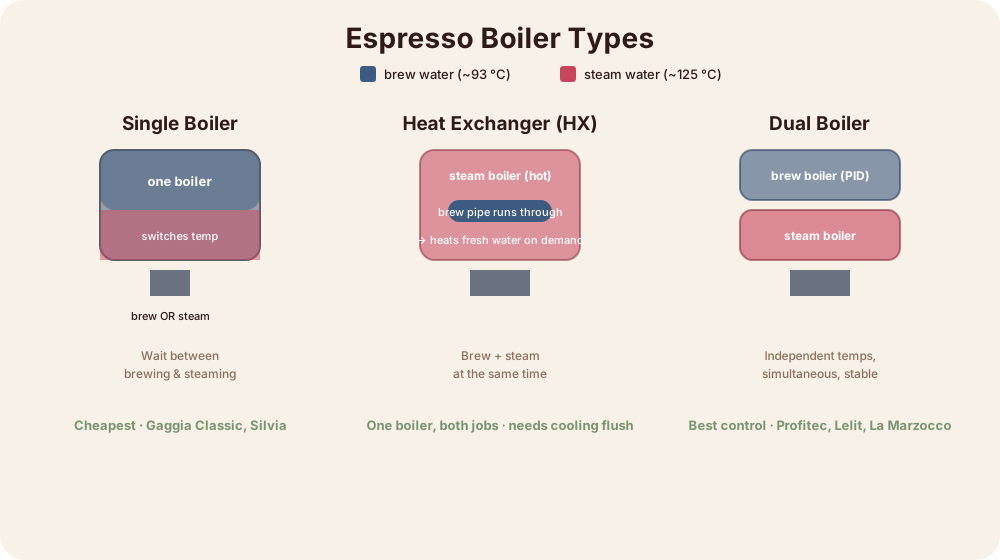
The boiler is a single aluminum boiler, which means the machine cannot simultaneously brew and steam without a temperature-transition wait time. This is the defining functional constraint of the platform and one users must accept going in. The boiler heats to brew temperature (nominally around 200°F/93°C in stock form) and then requires additional time—typically 30–45 seconds of purging and waiting—to climb to steam temperature. For single-shot workflows or milk-last workflows, this is a manageable inconvenience rather than a dealbreaker.
**Performance and Measured Reality**
Out of the box, the Classic Pro's most significant performance limitation is thermal precision. The stock thermostat is a simple bimetallic device that cycles through a temperature range of roughly ±10–15°C around its setpoint, meaning shot-to-shot brew temperature can vary meaningfully depending on when in the thermostat cycle you pull. This variability is the single most important reason the PID modification exists: a third-party PID controller (Auber Instruments is the most referenced brand in the modding community, with kits priced around $100–$130) replaces the thermostat with a precision proportional-integral-derivative loop that holds boiler temperature to within ±1°C. With a PID installed, the Classic Pro's temperature stability rivals machines in the $1,000–$1,500 range.
The stock OPV (over-pressure valve) is set from the factory at approximately 12 bar, which is higher than the 9-bar extraction pressure considered optimal by the Specialty Coffee Association and most modern baristas. Dialing the OPV down to 9 bar is a 10-minute mechanical adjustment requiring only a screwdriver, and it meaningfully improves extraction quality with modern, lighter-roasted coffee by preventing over-extraction caused by excess pressure. This single adjustment, often performed on day one, is perhaps the highest-return modification available on any home espresso machine.
The pump is a standard Ulka vibratory pump, the same class of pump found in most prosumer single-boiler machines. It is not a rotary pump—flow rate and pre-infusion behavior are not electronically programmable in stock form—but the consistent pressure delivery is adequate for dialed-in puck preparation.
The steam wand is acknowledged universally as the weakest stock component. It is a single-hole Panarello-style wand that produces steam adequate for frothing milk but lacks the articulation, steam velocity, and tip configuration needed to texture milk to the fine microfoam standard required for latte art. A replacement two-hole or four-hole steam tip (available for under $15) significantly improves wand performance, and many users eventually replace the wand assembly entirely with a commercial no-burn wand for roughly $50.
**Day-to-Day Workflow**
Heating from cold to brew-ready takes approximately 15–20 minutes for thermal stability if you are relying on the thermostat cycle to settle; with a PID this is more predictable and many users pull a first shot around 10–12 minutes. The machine has no pressure gauge in stock form, making a third-party portafilter-mounted gauge ($20–$40) a useful addition for dialing in.
Maintenance is straightforward: backflushing with Cafiza or equivalent cleaning tablets, regular group head gasket and shower screen replacement (both available from Gaggia and third-party suppliers), and periodic descaling. The group head gasket is a 73mm item and replacement takes under five minutes. Shower screens can be sourced from IMS for under $20 and represent a meaningful upgrade in water distribution. Parts availability is excellent because the Classic platform has been in continuous production for decades and has a large global user base. Resale value is strong in the used market, with well-maintained examples selling at $250–$350, making the effective cost of ownership lower than the sticker price suggests.
**The Honest Trade-offs**
The Gaggia Classic Pro's core tension is that it ships as a compromised machine but can be transformed into a genuinely excellent one with modest additional investment and effort. Whether that proposition appeals to you or frustrates you is the clearest predictor of satisfaction. If you want a machine that pulls superb espresso on day one without any tinkering, the Classic Pro is the wrong choice. If you are willing to spend an afternoon adjusting the OPV and a weekend installing a PID, you end up with a platform that meaningfully outperforms its price class.
The single-boiler workflow imposes real friction for milk-drink drinkers. After pulling a shot, you engage the steam mode, wait roughly 30–45 seconds for the boiler to climb, purge the wand briefly, then steam. This adds 1–2 minutes to every milk drink. Experienced Classic Pro users develop routines around this—steaming first, then pulling the shot while the boiler cools—but it requires adaptation. By contrast, a heat-exchanger machine like the Rocket Appartamento (approximately $1,400–$1,500) or the ECM Classika PID ($1,100) allows simultaneous steaming and brewing with no transition wait. The jump in price is significant, but for households making three or four milk drinks per morning, the workflow difference is worth examining seriously.
**Head-to-Head Comparisons**
Versus the **Breville Bambino Plus** (~$500): The Bambino Plus offers a thermojet heater that reaches brew temperature in three seconds and an auto-steam function that produces genuinely good microfoam. For pure workflow convenience and milk quality out of the box, it competes seriously with a stock Classic Pro. However, it uses a 54mm portafilter, narrowing the aftermarket accessory ecosystem, and its plastic-heavy construction and proprietary parts ecosystem create long-term questions about repairability that the Classic Pro's steel body and off-the-shelf parts do not.
Versus the **Rancilio Silvia** (~$700–$800): The Silvia is the Classic Pro's most direct historical competitor—a single-boiler, 58mm, steel-body machine with similar modding culture. The Silvia V6 ships with a larger boiler and a more robust steam wand than the Classic Pro, and many users find it more forgiving stock. The price premium is roughly $200–$300, and the Classic Pro's modded performance is generally considered to close or exceed the gap. The Silvia Pro X adds a dual PID at approximately $1,100, at which point the comparison no longer applies.
Versus the **Lelit Mara X** (~$1,000–$1,100): The Mara X is a heat-exchanger machine with a dual-sensor temperature management system that effectively provides single-boiler-level brew-temperature accuracy alongside simultaneous steam readiness. It is the next logical step for a Classic Pro owner who has outgrown the single-boiler workflow but wants to stay in the 58mm ecosystem. The $500–$600 price gap funds a meaningful grinder upgrade instead if that is the priority.
**Long-Term Ownership Reality**
The Classic Pro has been in continuous production (in various iterations) for decades, and parts—gaskets, solenoid valves, thermostats, boiler elements—are widely stocked by vendors including Whole Latte Love, Seattle Coffee Gear, and European suppliers. A well-maintained example can realistically last 10–15 years with periodic gasket, seal, and occasional solenoid replacement. The PID modification, once installed, is permanent and transferable if you sell the machine. The used market for Classic Pros is active and liquid, with modded examples commanding premiums, which is unusual for home appliances and reflects genuine community demand.
Pros
- Affordable commercial 58mm group
- Hugely moddable (PID, OPV)
- Compact and durable
Cons
- Single boiler
- Stock steam wand modest
Who reviewed it
We synthesized this page from independent reviews and the manufacturer's own materials. Conclusions below are paraphrased, not quoted.
James Hoffmann
Broadly positions the Gaggia Classic Pro as one of the most sensible starting points in home espresso for those willing to engage with the machine's quirks and modest modifications, particularly given its commercial 58mm group compatibility.
Prima Coffee
Recommends the Classic Pro as a strong value proposition in the sub-$500 tier, noting that the OPV and PID modifications are well-supported and substantially elevate its real-world performance beyond what the stock price suggests.
Source ↗Whole Latte Love
Highlights the Classic Pro's steel construction and long-term parts availability as differentiating strengths over plastic-bodied competitors at the same price point, while acknowledging the single-boiler workflow limitation for milk-drink households.
Source ↗CoffeeGeek
Recognizes the Classic Pro as a cornerstone of the home-espresso modding community, noting that the combination of OPV adjustment and PID installation is among the highest-return upgrade paths in consumer espresso equipment.
Source ↗Seattle Coffee Gear
Positions the Classic Pro as an ideal learning machine that teaches genuine espresso fundamentals through its manual workflow, while cautioning that its thermal management requires patience in stock form.
Source ↗Home-Barista.com
Extensively documents the Classic Pro's modding ecosystem, treating it as the reference platform for entry-level espresso modification and praising its unusually strong used-market resale value relative to plastic-chassis competitors.
Source ↗
Frequently asked questions
What is the portafilter size on the Gaggia Classic Pro?
The Gaggia Classic Pro uses a 58mm commercial-diameter portafilter, the same standard diameter found on professional espresso machines from brands including La Marzocco and Nuova Simonelli. This means virtually all aftermarket 58mm baskets, dosing funnels, puck screens, and tampers are directly compatible.
Does the Gaggia Classic Pro come with a PID temperature controller?
No, the stock Classic Pro uses a simple bimetallic thermostat that can cycle through a temperature range of roughly ±10–15°C around its setpoint. A PID controller is the most widely recommended modification; third-party kits from suppliers such as Auber Instruments cost approximately $100–$130 and bring temperature stability to within ±1°C, substantially improving shot-to-shot consistency.
What is the OPV and why should I adjust it?
The over-pressure valve (OPV) limits the maximum pressure at the group head. The Classic Pro ships from the factory with the OPV set to approximately 12 bar, which is higher than the 9-bar extraction pressure recommended by most specialty coffee standards. Adjusting the OPV down to 9 bar takes roughly 10 minutes with a screwdriver and improves extraction quality, particularly with lighter-roasted, modern specialty coffee.
Can I steam milk and brew espresso at the same time?
No. The Classic Pro is a single-boiler machine, which means it uses one boiler for both brewing and steaming. After pulling a shot, you must switch to steam mode and wait approximately 30–45 seconds for the boiler to reach steam temperature. Many users develop a milk-first workflow — steaming before pulling the shot — to manage this transition.
How much does the Gaggia Classic Pro cost?
The Gaggia Classic Pro retails in the $400–$520 USD range depending on retailer and colorway. Used and refurbished examples in good condition typically sell for $250–$350, making it one of the strongest-resale home espresso machines in its price class.
Is the Gaggia Classic Pro good for beginners?
Yes, with caveats. Its manual workflow teaches genuine espresso fundamentals — dose, tamp, grind adjustment, and extraction time — that transfer directly to professional equipment. However, the stock machine's thermal variability and high factory OPV pressure mean beginners who do not plan to adjust or mod the machine may find it less forgiving than a machine with factory-fitted PID control and preset pressure.
What grinder should I pair with the Gaggia Classic Pro?
Because the Classic Pro accepts unpressurized single-wall baskets and rewards precise grind calibration, it benefits from a proper burr grinder rather than a blade grinder. Commonly paired options in the $150–$300 range include the Baratza Encore ESP, DF64, and Eureka Mignon Silenzio. Many experienced users recommend allocating as much or more budget to the grinder as to the machine itself.
How difficult is the PID modification?
The PID installation requires basic mechanical comfort — removing the machine's top panel, identifying the thermostat wiring, and connecting the PID controller according to a well-documented wiring diagram. The process typically takes 1–3 hours for a first-timer. Kits from Auber Instruments include machine-specific instructions. No soldering is required with clip-based kits.
What maintenance does the Gaggia Classic Pro require?
Regular backflushing with espresso machine cleaning tablets (such as Cafiza) keeps the group head clean. The 73mm group head gasket and shower screen should be replaced periodically — the gasket typically every 6–12 months depending on use frequency, and both parts cost under $20 from Gaggia or third-party suppliers. Descaling frequency depends on local water hardness. The large, active parts ecosystem means components are widely available.
How does the Gaggia Classic Pro compare to the Rancilio Silvia?
Both are 58mm, single-boiler, steel-body machines with strong modding communities. The Rancilio Silvia ships with a larger boiler and more capable steam wand than the stock Classic Pro and retails for roughly $200–$300 more. However, the Classic Pro's modded performance — particularly with a PID installed — is widely regarded as competitive with or exceeding the stock Silvia's performance. The Silvia Pro X with dual PID, at approximately $1,100, represents a different tier entirely.
What colorways and finishes are available?
The Gaggia Classic Pro has been available in brushed stainless steel and several special-edition colors. Gaggia's current lineup includes themed colorway variants; availability varies by market and retailer. The steel body and chrome portafilter are consistent across variants.
Is the Gaggia Classic Pro easy to find replacement parts for?
Yes. The Classic Pro's continuous production history spanning decades means gaskets, solenoid valves, boiler elements, thermostats, and portafilter baskets are stocked by major specialty coffee retailers including Whole Latte Love, Seattle Coffee Gear, and European suppliers, as well as directly from Gaggia. This parts availability is a meaningful long-term ownership advantage over machines with proprietary or discontinued components.
Compare with
Breville
Breville Barista Express
A hugely popular all-in-one espresso machine with an integrated grinder.
Rancilio
Rancilio Silvia
A long-running single-boiler classic with a commercial portafilter and devoted following.
More espresso machines
Lelit
Lelit Bianca
A prosumer dual-boiler machine famous for its manual flow-control paddle.
La Marzocco
La Marzocco Linea Mini
The home machine derived from La Marzocco's legendary commercial Linea.
ECM
ECM Synchronika
A flagship German dual-boiler machine prized for build quality and serviceability.
Decent Espresso
Decent DE1
A software-driven espresso machine offering complete pressure and flow profiling.
We may earn a commission when you buy through links on this page, at no additional cost to you.
Last updated: June 13, 2026