Guides · Buying Guides
The Best Gooseneck Kettles of 2026
Precision pour, perfect extraction: the gooseneck kettles worth your counter space this year.
We may earn a commission when you buy through links on this page, at no additional cost to you.
Key facts
- Type
- Gooseneck electric and stovetop kettles
- Key Feature
- Narrow, curved spout for precise pour control
- Critical Variables
- Water temperature, brew time, grind size, coffee-to-water ratio
- Temperature Accuracy
- Typically ±1–2°C on quality models
- Ideal Capacity Range
- 600 ml to 1 liter for home brewing
- Top Pick
- Fellow Stagg EKG Pro with 60-minute hold
- Best Budget Option
- Hario V60 Buono Kettle stovetop model
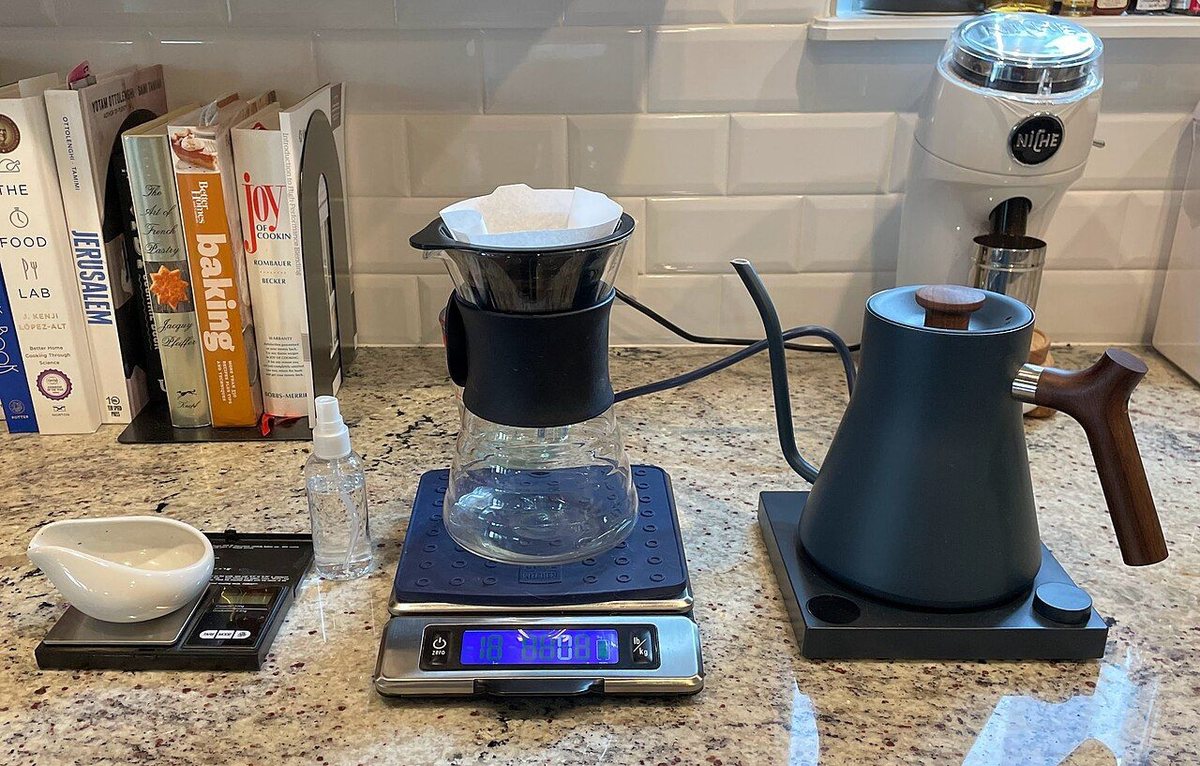
Why a Gooseneck Kettle Matters for Pour-Over
If you've spent any time reading about pour-over brewing, you've likely encountered the insistence on a gooseneck kettle — and it's not affectation. The long, curved neck narrows the water stream to a thin, controllable ribbon, giving you the ability to pour in slow, concentric circles or targeted pulses directly over your grounds. With a standard kettle, even a careful pour sends a gush of water that disturbs the coffee bed, channels unevenly, and undermines whatever precision your grind and ratio achieved.
According to Wikipedia's overview of coffee preparation, key variables in brewing include water temperature, brew time, grind size, and the ratio of coffee to water — all of which influence extraction and flavour. A gooseneck kettle addresses at least two of those directly: it gives you repeatable control over flow rate (which governs contact time) and, when paired with temperature control, lets you hit the exact degree your recipe demands.
Pour rate matters more than most beginners expect. A faster pour raises the water level quickly, compressing brew time; a slower, measured pour extends it. Neither is inherently wrong, but consistency is everything. The gooseneck form factor makes consistency physically achievable.
Temperature Control: Why It's Non-Negotiable
Water temperature is perhaps the most underappreciated variable in home brewing. As the Brew Temperature guide explains, different coffees extract optimally at different temperatures — light roasts often benefit from hotter water that drives out delicate floral and citrus compounds, while darker roasts can taste harsh if brewed too hot. Brewing near boiling indiscriminately is a shortcut that costs you nuance.
Variable-temperature kettles — those with a digital dial or preset modes — let you lock in a specific target before you pour. This matters because water poured straight from boil and water that has cooled for two minutes on the counter can differ by 5–10°C, a range wide enough to shift your cup from bright and complex to flat and over-extracted. With a temperature-controlled electric kettle, you set it, wait for the beep, and pour at exactly the degree you intended.
Electric kettles, per [S1], typically feature an enclosed heating element rated at 2–3 kW and automatically deactivate once the water reaches its boiling point. Temperature-controlled models go a step further, maintaining a user-set temperature — often with a "hold" function that keeps water warm for 60 minutes or more — so your brew window stays open even if your grinder takes longer than expected.
What to Look for When Buying
Before jumping to recommendations, here's what separates a good gooseneck kettle from a frustrating one:
- Temperature accuracy and readout: A clear, real-time display showing actual water temperature (not just a preset icon) lets you learn how your kettle behaves. Look for ±1–2°C accuracy.
- Hold function: Keeps water at your target temperature for a set period. Essential if you brew multiple cups or tend to get distracted mid-routine.
- Spout design: The gooseneck should have a gradual curve without kinks. A counterbalanced handle reduces wrist fatigue during long pours.
- Capacity: 600 ml suits a single V60 or Chemex; 1 L or more is better for batch brewing or households with multiple drinkers.
- Base stability: A wide, stable base with a 360° connector means you can set the kettle down mid-pour without hunting for the right orientation.
- Boil speed: Electric kettles with 1,000–1,200 W elements (common in North American 120V models) take longer to boil than the 2–3 kW European equivalents noted in [S1]. Factor that into your morning routine.
- Build quality: Stainless steel interiors resist mineral buildup better than plastic and don't impart off-flavours. Per [S1], kettles are typically made with stainless steel, though copper options exist.
Our Ranked Picks for 2026
1. Fellow Stagg EKG ProBuy ↗ — Best Overall
The Fellow Stagg EKG Pro is the kettle most serious home brewers gravititate toward, and for good reason. Its variable temperature dial is smooth and responsive, the LCD display shows both target and current temperature simultaneously, and the 60-minute hold function is long enough to cover any plausible morning brewing session. The counterbalanced handle and narrow, precisely angled gooseneck make flow rate control feel almost intuitive after a few sessions.
Capacity: 0.9 L. Best for: Dedicated pour-over enthusiasts who want the closest thing to a professional-grade tool at home. Trade-off: The Pro's price sits at the higher end of the category; if you're still deciding whether pour-over is your long-term method, the standard EKG may serve you better to start.
2. Fellow Stagg EKGBuy ↗ — Best for Most People
The standard Fellow Stagg EKG shares the Pro's iconic silhouette and precise spout geometry but comes in at a lower price point. It offers variable temperature control, a hold mode, and the same narrow gooseneck that made the EKG line a staple recommendation across the specialty coffee community. The analogue-style dial and minimal display give it a cleaner aesthetic than the Pro.
Capacity: 0.9 L. Best for: Brewers who want genuine precision without paying for the Pro's additional programmability. Trade-off: Fewer preset options and no Bluetooth connectivity (a Pro feature), which won't matter to most home brewers but is worth noting.
3. Hario V60 Buono KettleBuy ↗ — Best Budget Gooseneck
The Hario V60 Buono Kettle is the classic entry point into gooseneck brewing, and it remains one of the best stovetop goosenecks available. Its slender, arching spout delivers a remarkably controlled stream, and the timeless design has earned it a permanent place in coffee bars worldwide. The Buono doesn't include temperature control — you'll need a separate thermometer — but as a pure pour-control tool, it is essentially unmatched at its price.
Capacity: 1.2 L. Best for: Brewers on a budget, stovetop users, or anyone who already owns a reliable thermometer and wants to focus purely on flow control. Trade-off: No built-in temperature regulation; pairing with a thermometer adds a step and another piece of kit.
4. Brewista Artisan Gooseneck KettleBuy ↗ — Best for Precision Dialing
The Brewista Artisan Gooseneck Kettle is a strong alternative for brewers who want digital temperature control with a slightly different ergonomic feel. Its touch-sensitive controls and bright display make it easy to set temperatures in 1°C increments, and the hold function keeps water stable while you dial in your grind. The spout has a longer reach than the Fellow line, which some brewers prefer for wide-mouthed brewers like the Chemex.
Capacity: 1.0 L. Best for: Brewers using wider brewers (Chemex, Kalita Wave) or those who prefer touch controls to dials. Trade-off: The longer spout can feel less nimble for the very targeted pours some V60 recipes call for; ergonomics are personal, so handle one if you can before buying.
How to Use Your Gooseneck Kettle Well
Owning a precision kettle is only half the equation. Here's how to get the most from it:
- Set your temperature before you grind. Most electric kettles take 2–4 minutes to reach target temperature. Starting the kettle first means your water is ready when your grounds are.
- Pre-wet your filter. Pour a small amount of hot water through your paper filter before adding grounds. This removes papery taste and pre-heats your brewer — a step that pour-over brewing guides consistently recommend.
- Bloom your coffee. Begin with a small pour (roughly twice the weight of your coffee in water) and wait 30–45 seconds. This allows CO₂ to escape, which would otherwise impede even extraction.
- Pour in slow, controlled circles. Aim for the bed of grounds, not the filter walls. Keep your wrist loose and let the gooseneck do the work.
- Monitor temperature across the pour. Water in your kettle will cool as you pour — especially in a stovetop kettle without a hold function. If your kettle holds temperature, this is less of a concern. If not, keep your pours brisk enough that temperature drift stays within a degree or two.
As coffee preparation research notes, extraction character is highly dependent on the temperature of the water and its contact time with grounds — two variables your kettle governs more directly than any other piece of equipment.
Care and Maintenance
Even a premium kettle will underperform if it's neglected. A few habits keep yours in good shape:
- Descale regularly. Mineral deposits from hard water coat the heating element and reduce efficiency over time. A solution of equal parts water and white vinegar, run through a full heat cycle and then rinsed thoroughly, handles most buildup. Check your manufacturer's recommendation for frequency — monthly in hard-water areas is common.
- Empty after each use. Leaving water to sit promotes scale and, in some cases, off-flavours in subsequent brews.
- Wipe the exterior. Stainless steel polishes up easily with a damp cloth. Avoid abrasive pads that scratch the finish.
- Inspect the spout. Mineral deposits can narrow the gooseneck opening over time. A thin bottle brush keeps it clear.
The Bottom Line
For anyone serious about pour-over brewing and brew temperature precision, a gooseneck kettle with temperature control is not a luxury — it's foundational equipment. The Fellow Stagg EKG Pro earns our overall recommendation for its combination of precision, hold function, and build quality. The standard Fellow Stagg EKG is the smarter buy for most home brewers who don't need the Pro's extras. Budget-conscious brewers should look hard at the Hario V60 Buono Kettle, the gooseneck that taught a generation of home brewers how to pour. And the Brewista Artisan Gooseneck Kettle deserves serious consideration if you brew on wider vessels or prefer touch-panel controls.
Whichever you choose, the investment pays off in the cup — cup after cup.
Where to buy
Every product mentioned in this guide.
- Fellow Stagg EKG ProCheck price on Amazon ↗
Kettle · $180 – $240
- Fellow Stagg EKGCheck price on Amazon ↗
Kettle · $150 – $210
- Hario V60 Buono KettleCheck price on Amazon ↗
Kettle · $40 – $65
- Brewista Artisan Gooseneck KettleBuy on Amazon ↗
Kettle · $110 – $165
Frequently asked questions
- What makes a gooseneck kettle different from a regular kettle?
- A gooseneck kettle has a long, curved, narrow spout that restricts water flow to a thin, precise stream. Standard kettles pour in a wide gush that's difficult to control, which can disrupt your coffee bed and lead to uneven extraction. For pour-over methods — where flow rate and placement directly affect flavour — the gooseneck design is essential.
- Do I need temperature control, or can I just boil and wait?
- You can brew without a temperature-controlled kettle, but you'll be guessing. Water that has cooled for two minutes off boil can differ from a one-minute rest by several degrees — enough to noticeably shift extraction. A variable-temperature electric kettle lets you target a specific degree and hold it, making your results repeatable rather than approximate.
- What temperature should I brew pour-over coffee at?
- Most specialty coffee guides suggest a range of roughly 90–96°C (194–205°F), varying by roast level and recipe. Light roasts often benefit from higher temperatures to extract delicate floral and citrus notes, while darker roasts may taste harsh at the top of that range. Our Brew Temperature guide goes deeper on this.
- How much capacity do I need in a gooseneck kettle?
- For a single cup (one V60 or similar), 600–700 ml is sufficient. If you brew for two or regularly use a Chemex or larger brewer, a 1 L kettle is more practical. The Hario V60 Buono Kettle at 1.2 L and the Brewista Artisan at 1.0 L give you more headroom; the Fellow Stagg models hold 0.9 L.
- Is the Fellow Stagg EKG Pro worth the upgrade over the standard EKG?
- For most home brewers, the standard Fellow Stagg EKG delivers everything you need: precise variable temperature, a hold function, and the same excellent spout geometry. The Pro adds programmable presets and Bluetooth connectivity — features that matter if you follow strict recipes across multiple coffees or want to log brew data. If that doesn't describe your routine, the standard EKG is the smarter buy.
- Can I use a stovetop gooseneck kettle for pour-over?
- Absolutely. The Hario V60 Buono Kettle is a stovetop model and remains one of the most respected gooseneck options available. The trade-off is that you'll need a separate thermometer to monitor water temperature, and you won't have a hold function — but for brewers who want to keep things simple or already own a thermometer, it's an excellent choice.
- How often should I descale my electric gooseneck kettle?
- This depends on your local water hardness. In hard-water areas, monthly descaling is common. A simple solution of equal parts white vinegar and water, heated and then thoroughly rinsed out, handles most mineral buildup. Check your kettle's manual for the manufacturer's specific recommendation.
See also