Knowledge · brewing
Brewing Coffee
A complete reference to extraction science, brewing variables, and the frameworks used by professionals to evaluate and reproduce great coffee.
Key facts
- Definition
- Process of dissolving water-soluble compounds from ground coffee into water
- Key Compounds
- Acids, sugars, melanoidins, lipids, aromatic molecules
- Core Variables
- Grind size, water quality, temperature, ratio, time, agitation
- Optimal Brew Temperature
- 90–96 °C for drip and pour-over methods
- Standard Brew Ratio
- 15:1 to 18:1 water to coffee by mass
- Best Grinding Tool
- Burr mills for uniform particle distribution
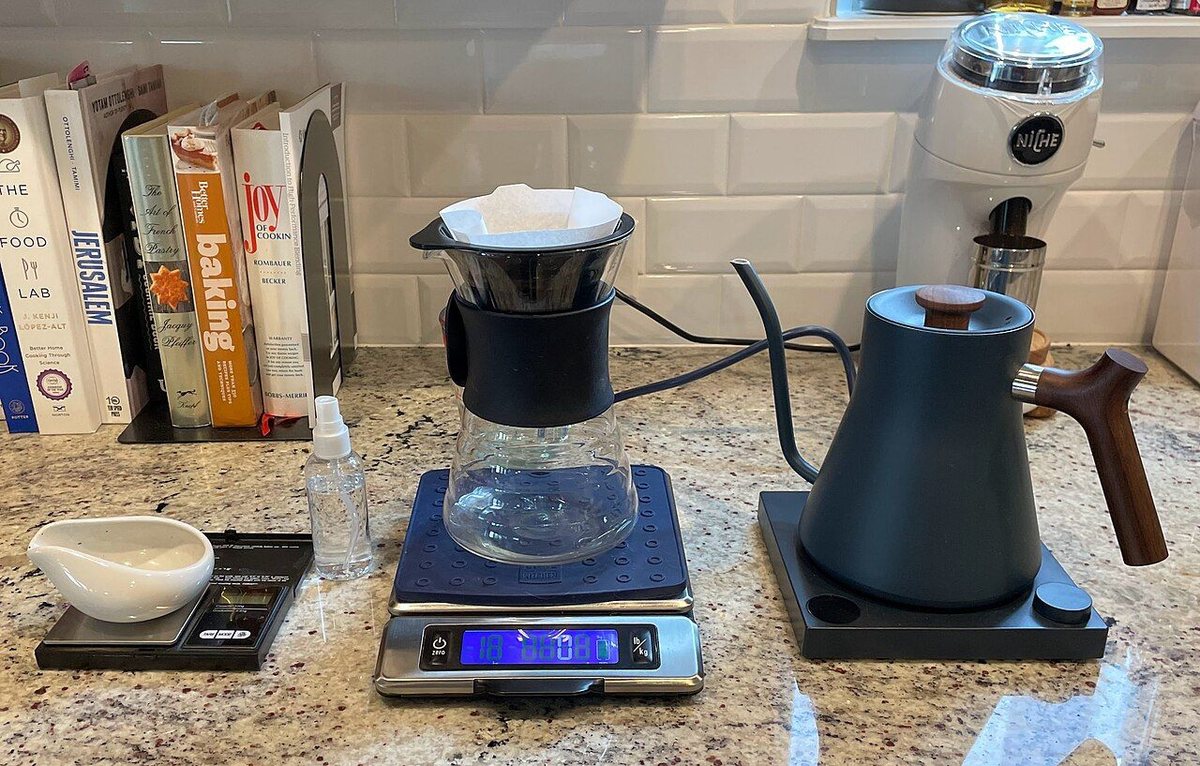
What Is Brewing?
Brewing coffee is the process of combining roasted, ground coffee with water so that water-soluble compounds — acids, sugars, melanoidins, lipids, and aromatic molecules — dissolve into the liquid, creating the beverage we drink. The Specialty Coffee Association (SCA) and coffee science broadly define brewing as a controlled extraction: a deliberate effort to move a desired proportion of a coffee's dissolvable mass into the cup.
While preparation styles vary enormously — from a slowly hand-poured V60 to a fully automated espresso machine — all share four fundamental steps: the roasted beans are ground, the ground coffee contacts water for a defined time, the liquid is separated from the spent grounds, and the brewed coffee is served or stored. Every decision a brewer makes maps onto at least one extraction variable.
Characteristics that different preparation approaches emphasise or suppress include acidity (brightness), aroma (particularly delicate floral and citrus notes), mouthfeel (body), astringency, bitterness, and the duration of flavour perception in the mouth, commonly called the finish.
The Six Core Brewing Variables
Even with the same roast, the character of the extraction is highly dependent on a cluster of interacting variables. Understanding each individually is the first step to understanding how they compound.
1. Grind Size & Particle Distribution
Grind size is arguably the most powerful single variable available to a brewer. The fineness of the grind determines how much surface area is exposed to water, directly controlling the rate and completeness of extraction.
- Brewing methods with longer water-contact times require a coarser grind to avoid over-extraction.
- A grind that is too fine for the method will expose too much surface area, producing a bitter, harsh, over-extracted taste.
- A grind that is too coarse will produce weak, under-extracted coffee unless a higher coffee dose compensates.
- Grind uniformity is highly desirable: an uneven particle distribution means fine particles over-extract and coarse particles under-extract simultaneously, muddying the cup.
Burr mills — using two revolving abrasive elements of stainless steel or ceramic — are the preferred tool because they crush and shear beans with minimal frictional heat, releasing oils and producing a comparatively uniform particle distribution. Blade grinders, by contrast, chop beans unevenly, generating a wide spread of particle sizes that makes consistent extraction difficult.
Ground coffee deteriorates faster than whole roasted beans because of the greater surface area exposed to oxygen. Grinding immediately before brewing is the standard professional practice.
2. Water Quality & Composition
Water is roughly 98–99% of brewed coffee by mass, making its chemistry a critical but frequently overlooked variable. The mineral composition of brew water — particularly the levels of magnesium, calcium, and bicarbonate — affects both the efficiency of extraction and the perceived balance of the final cup. Hard water rich in bicarbonate can suppress acidity and produce flat-tasting coffee; very soft or distilled water can produce thin, sour results and may damage metal equipment over time.
3. Brew Temperature
Coffee is usually brewed hot, at a temperature close to the boiling point of water. Brew temperature influences the solubility of different compound classes: higher temperatures extract more rapidly and can favour the dissolution of bitter or astringent compounds, while lower temperatures slow extraction and may leave desirable acids and sweetness behind.
The commonly cited professional range for drip and pour-over brewing sits between approximately 90 °C and 96 °C (194 °F–205 °F), though the precise optimum depends on roast level, grind size, and brew method. Cold brew — in which grounds steep in cold or room-temperature water for many hours — is deliberately far below this range, producing a chemically distinct extraction profile characterised by lower perceived acidity.
4. Brew Ratio
The brew ratio — the mass of dry coffee grounds relative to the mass (or volume) of water used — sets the upper limit of potential strength in the cup. Preferred brew ratios of water to coffee commonly fall in the range of 15:1 to 18:1 by mass; even within this relatively narrow band, differences in strength and body are easily perceived by an experienced drinker. A ratio of 16:1, for example, means 62.5 g of coffee per 1,000 g of water.
Brew ratio and extraction yield interact: the same ratio can produce a very different cup depending on how completely the coffee's soluble mass is extracted.
5. Brew Time & Contact Time
The duration of contact between water and grounds governs how far extraction proceeds. In methods where contact time is fixed by the device (e.g. immersion brewers), adjusting grind size is the primary lever for correcting under- or over-extraction. In methods where time is adjustable (e.g. manual pour-over), a brewer may use a finer grind with a shorter brew time, or a coarser grind with a longer time, to reach a similar extraction yield while using less coffee.
6. Agitation & Turbulence
Agitation — stirring, swirling, blooming with a pre-infusion pour, or the turbulence of pressurised extraction — distributes water evenly through the coffee bed, reduces channelling, and accelerates the early stages of extraction. Uneven flow through a coffee bed is one of the most common sources of inconsistency across brew methods.
Extraction Yield and TDS: Measuring What's in the Cup
Two numbers sit at the centre of professional brewing evaluation. For a deeper treatment, see the dedicated article on Extraction: Yield & Strength.
Extraction yield (commonly expressed as a percentage) represents the proportion of the coffee's total dry mass that has dissolved into the brew water. Not all soluble material is desirable: under-extracted coffee (low yield) tends toward sourness and grassiness; over-extracted coffee (high yield) tends toward bitterness and astringency.
Total Dissolved Solids (TDS), typically measured with a refractometer and expressed as a percentage or in parts per million (ppm), describes the concentration of dissolved coffee compounds in the finished beverage — broadly equivalent to the brewer's concept of strength. A beverage can be low in TDS (weak) despite having a high extraction yield if a very high water-to-coffee ratio was used, illustrating why the two metrics are related but distinct.
Extraction yield can be calculated from TDS and brew ratio using a standard formula, allowing baristas and quality-control teams to audit consistency across batches without relying solely on taste.
The SCA Brewing Control Chart
The SCA Brewing Control Chart (derived from work originally developed in the mid-twentieth century and refined by the SCA) is the canonical graphical tool for visualising the relationship between extraction yield, TDS/strength, and brew ratio. It plots strength on one axis against extraction yield on the other, with brew ratio curves overlaid, defining a central "ideal" zone — sometimes called the target rectangle — that represents the range of combinations most tasters have historically found balanced and acceptable.
Key features of the chart:
- The target zone occupies a band of extraction yield and strength considered optimal by SCA standards; coffee that falls outside it is categorised as too strong, too weak, over-extracted, or under-extracted.
- Brew ratio curves run diagonally across the chart, illustrating how the same ratio can land in or outside the target zone depending on extraction completeness.
- The chart is a diagnostic tool, not a prescriptive recipe: different preparation methods, roast levels, and drinker preferences legitimately produce preferred cups outside the centre of the target zone.
The chart remains widely taught in SCA curricula and barista training programmes as a framework for systematic troubleshooting.
Brewing Methods Overview
All brewing methods are ultimately combinations of the six variables above, organised into a contact architecture. Major categories include:
- Percolation / Pour-Over: water passes continuously through a bed of grounds (e.g. drip machines, V60, Chemex). Grind size and pour technique control extraction rate.
- Immersion / Steeping: grounds are submerged in water for a set time, then separated (e.g. French press, AeroPress in immersion mode, cold brew). Contact time and ratio are the dominant variables.
- Pressure: water is forced through a tightly packed, finely ground puck at elevated pressure (espresso). The combination of fine grind, high pressure, and short contact time produces a concentrated beverage with a distinctive emulsified texture.
- Hybrid: methods combining elements of both percolation and immersion (e.g. AeroPress in percolation mode, Clever Dripper).
- Cold Brew: extended cold-water immersion over many hours, bypassing thermal extraction dynamics entirely.
Each method creates a different emphasis on the sensory characteristics noted above — acidity, body, aroma, finish — making method selection itself an expressive choice.
Freshness, Storage, and Practical Consistency
Extraction quality is bounded by ingredient quality. Roast freshness and grind freshness both constrain what any brewing technique can achieve:
- Ground coffee deteriorates faster than whole roasted beans due to the greatly increased surface area exposed to oxygen and moisture.
- Whole roasted coffee is frequently vacuum-packed or sealed with one-way valves to prevent oxidation.
- Grinding immediately before brewing is the standard recommendation for preserving volatile aroma compounds.
Process automation — from machines that grind, dose, and brew automatically to single-serve pod systems — trades some degree of variable control for repeatability and convenience. Professional and enthusiast practice favours manual or semi-manual control precisely because it allows each variable to be independently adjusted in response to changes in the coffee or environment.
In this section
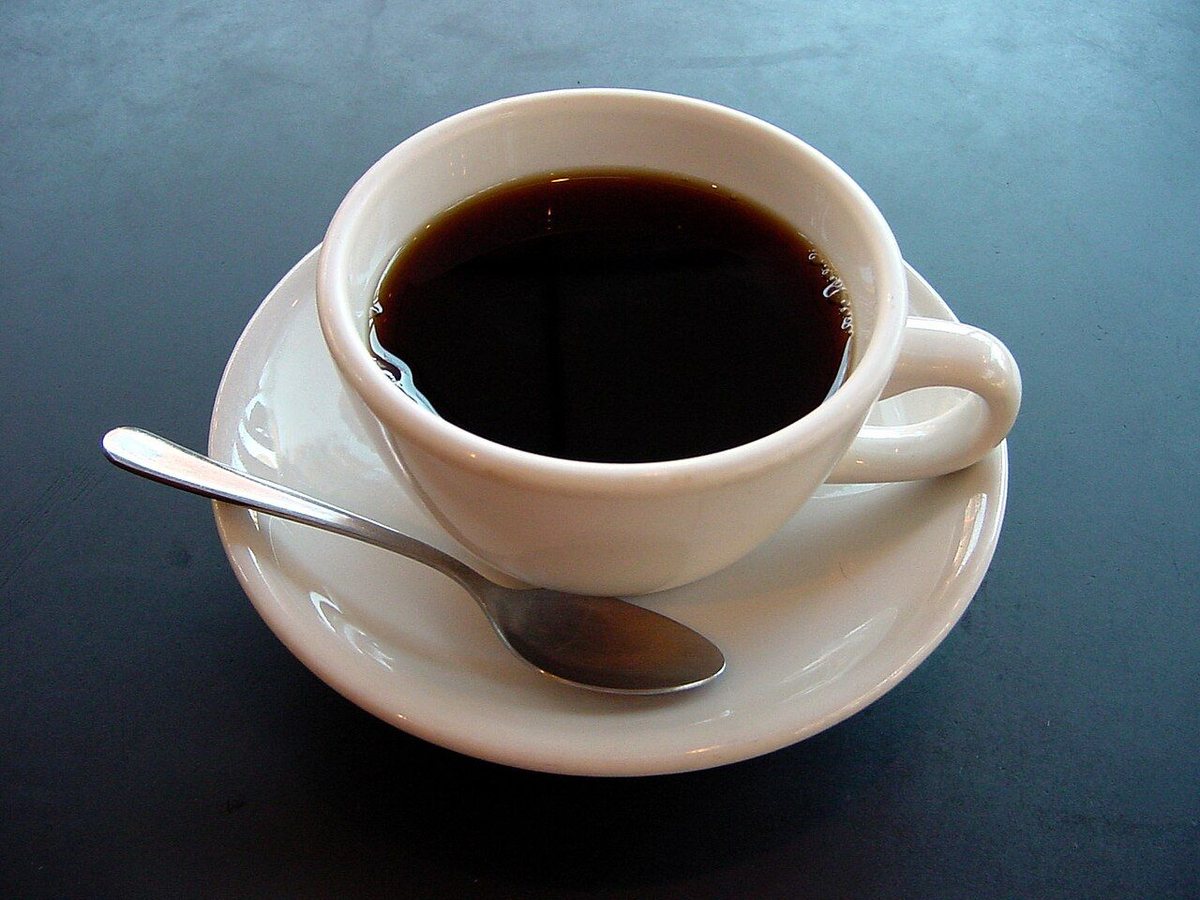
Extraction: Yield & Strength
Extraction yield and brew strength are the two quantitative axes that define whether a cup of coffee tastes balanced, under-extracted, or over-extracted. Understanding how grind size, water temperature, brew time, and dose interact on the SCA Brewing Control Chart gives brewers a precise, repeatable framework for dialing in any method.
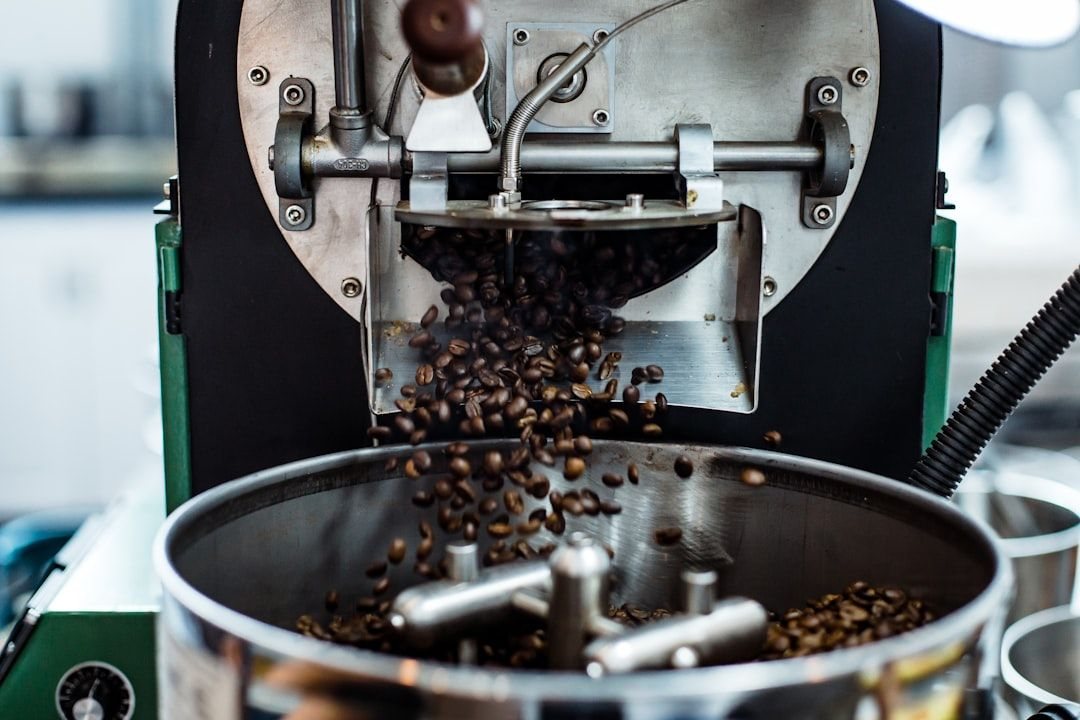
Grinding & Particle Size
Grind particle size is the single most consequential variable a brewer controls. It determines how much surface area coffee presents to water, how quickly solubles dissolve, and whether the resulting cup is balanced, over-extracted, or under-extracted. Understanding particle size distribution, burr geometry, and method-specific targets is foundational to consistent, high-quality coffee.
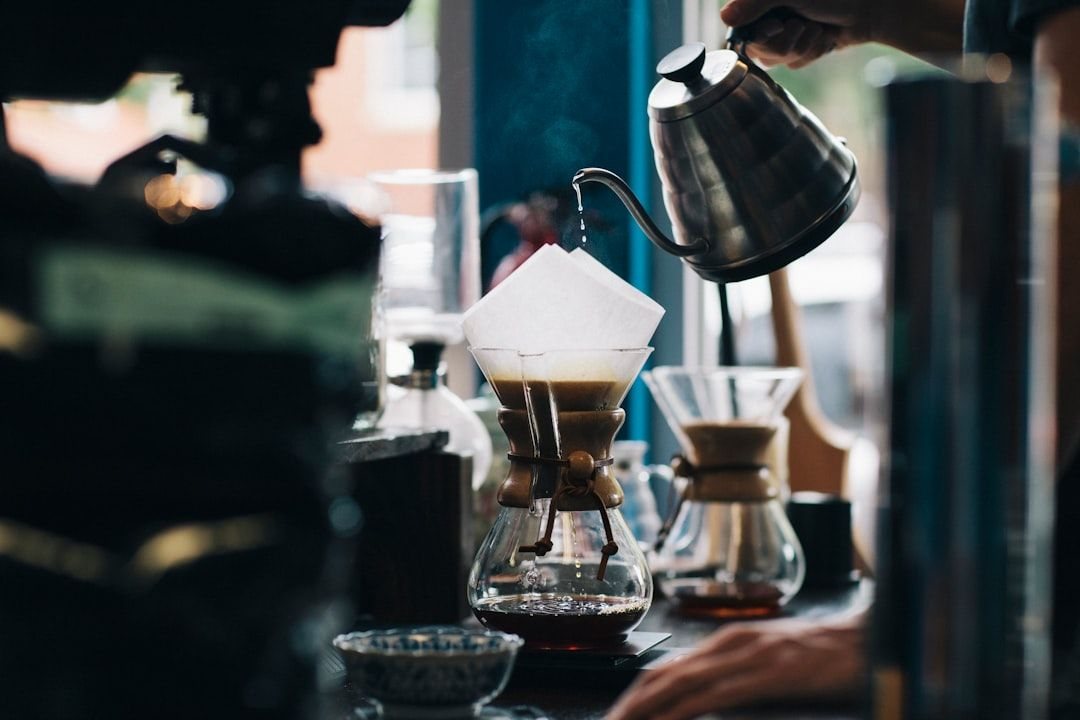
Brewing Methods
Every cup of coffee is the product of a brewing method — a system that determines how water meets ground coffee, how long they stay in contact, how agitated that contact is, and how the spent grounds are ultimately separated from the liquid. Understanding the three primary method families — percolation, immersion, and pressure — is the foundation of understanding why two cups from the same bag of beans can taste radically different.
Brew Ratio
Brew ratio — the proportion of ground coffee to water by weight — is the single most direct lever a brewer has over beverage strength. Understanding how ratio interacts with (but remains independent of) extraction yield is fundamental to consistently delicious coffee, whether you are dialling in a pour-over or pulling an espresso.
Brew Temperature
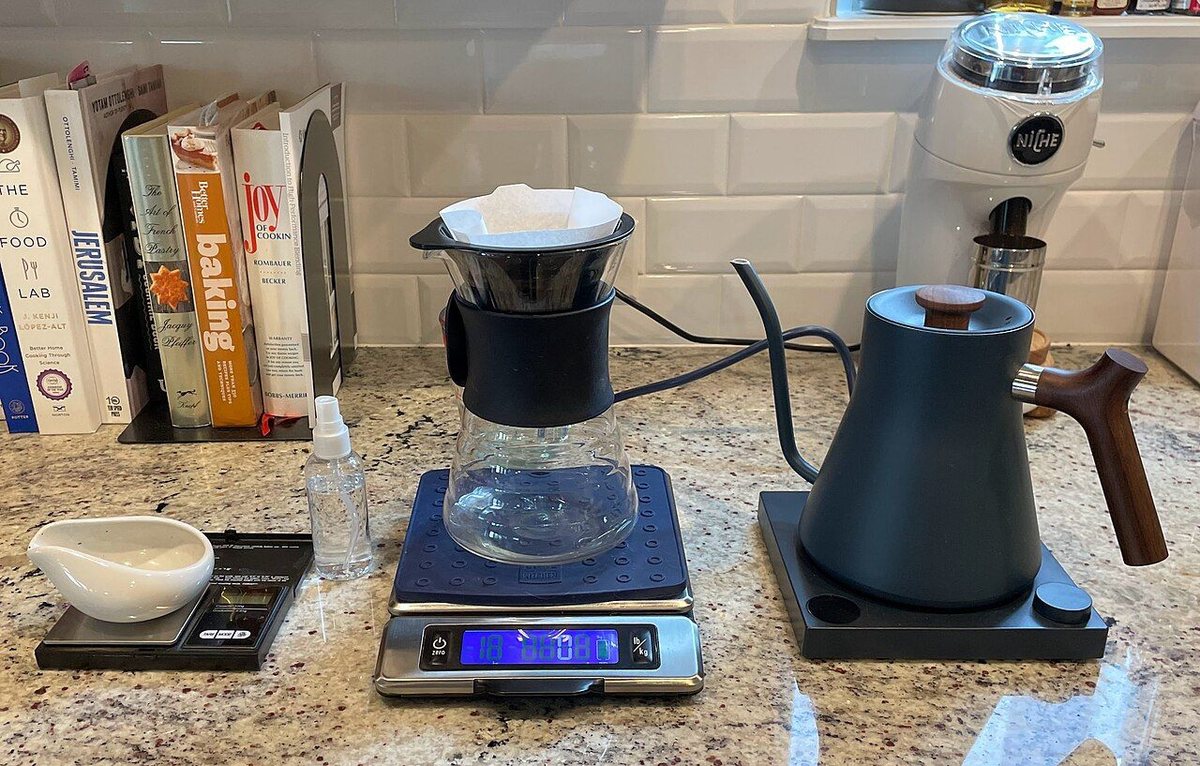
Brew temperature is one of the most consequential variables in coffee preparation, governing the speed, selectivity, and completeness of extraction. The commonly cited optimal range—90–96 °C (195–205 °F)—reflects decades of practical refinement and sits just below the boiling point of water at sea level. Understanding why temperature matters, how it interacts with grind size and brew time, and how equipment maintains it consistently is essential knowledge for anyone seeking repeatable, high-quality results.
Brewing Troubleshooting
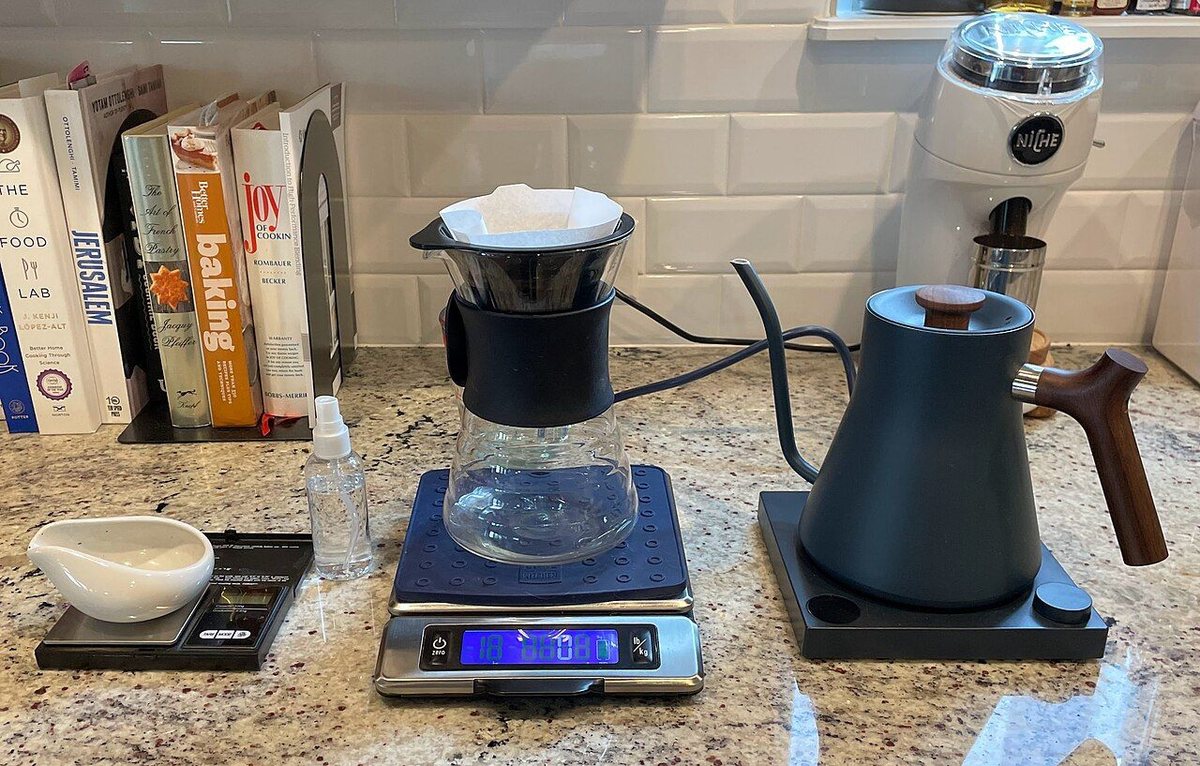
A systematic guide to diagnosing and fixing the most common coffee brewing problems — from sour and bitter cups to weak brews, channeling, and astringency — with actionable steps and a quick-reference decision table.
Water for Coffee
Water makes up approximately 98% of a brewed cup of coffee, yet its chemistry is frequently the most overlooked variable in the brewing process. The mineral composition of water — its hardness, alkalinity, and total dissolved solids — directly determines how efficiently flavour compounds are extracted from the grounds, how acids in the cup are buffered, and whether the final beverage tastes vibrant, flat, or harsh.
Frequently asked questions
- What is the most important variable in brewing coffee?
- Grind size and grind uniformity are frequently cited as the most impactful single variable because they directly control extraction rate and completeness. However, all six variables — grind, water quality, temperature, brew ratio, contact time, and agitation — interact, so no one variable operates in isolation.
- What brew ratio should I use?
- Preferred brew ratios of water to coffee commonly fall in the range of 15:1 to 18:1 by mass, a range in which differences in strength and body are easily perceived. The right ratio depends on the method, the roast, and personal preference; professionals use TDS measurement alongside the SCA Brewing Control Chart to evaluate whether a given ratio is producing the intended cup.
- What is extraction yield and why does it matter?
- Extraction yield is the percentage of a coffee's total dry mass that has dissolved into the brew water. Too low a yield (under-extraction) typically produces sour, grassy, or thin results; too high a yield (over-extraction) produces bitterness and astringency. Hitting an appropriate yield, in combination with an appropriate TDS/strength, is the central goal of controlled brewing.
- What temperature should brew water be?
- The commonly cited professional range for drip and pour-over methods is approximately 90 °C to 96 °C (194 °F–205 °F), though the optimum shifts with roast level, grind size, and method. Cold brew uses cold or room-temperature water deliberately, producing a chemically distinct extraction over a much longer contact time.
- Why does grind uniformity matter?
- An uneven particle distribution means that fine particles over-extract and coarse particles under-extract simultaneously within the same brew, producing a cup that can taste both bitter and sour at once. Burr mills are preferred over blade grinders because they produce a comparatively uniform particle size with minimal frictional heat.
- What is the SCA Brewing Control Chart?
- The SCA Brewing Control Chart is a graphical tool that plots extraction yield against TDS (strength), with brew ratio curves overlaid, to define a target zone of combinations considered balanced by SCA standards. It is widely used as a diagnostic and educational framework in professional barista training, helping brewers identify whether a cup is too weak, too strong, under-extracted, or over-extracted.
See also