Guides · Comparisons
Hario V60 vs Kalita Wave: Which Dripper?
Cone vs flat-bed: flow dynamics, technique sensitivity, and the cup each produces — so you can pick the dripper that actually suits your morning.
Key facts
- V60 Design
- Cone-shaped with single large opening, spiral ridges
- Kalita Wave Design
- Flat bed with three small holes, crimped filter
- V60 Flow Rate
- Fast, gravity-driven, highly sensitive to pour technique
- Wave Flow Rate
- Slower, more uniform, forgiving of technique variation
- Grind Size
- Medium to medium-fine for both; V60 slightly finer
- Best For
- V60: practiced brewers; Wave: consistency-focused users
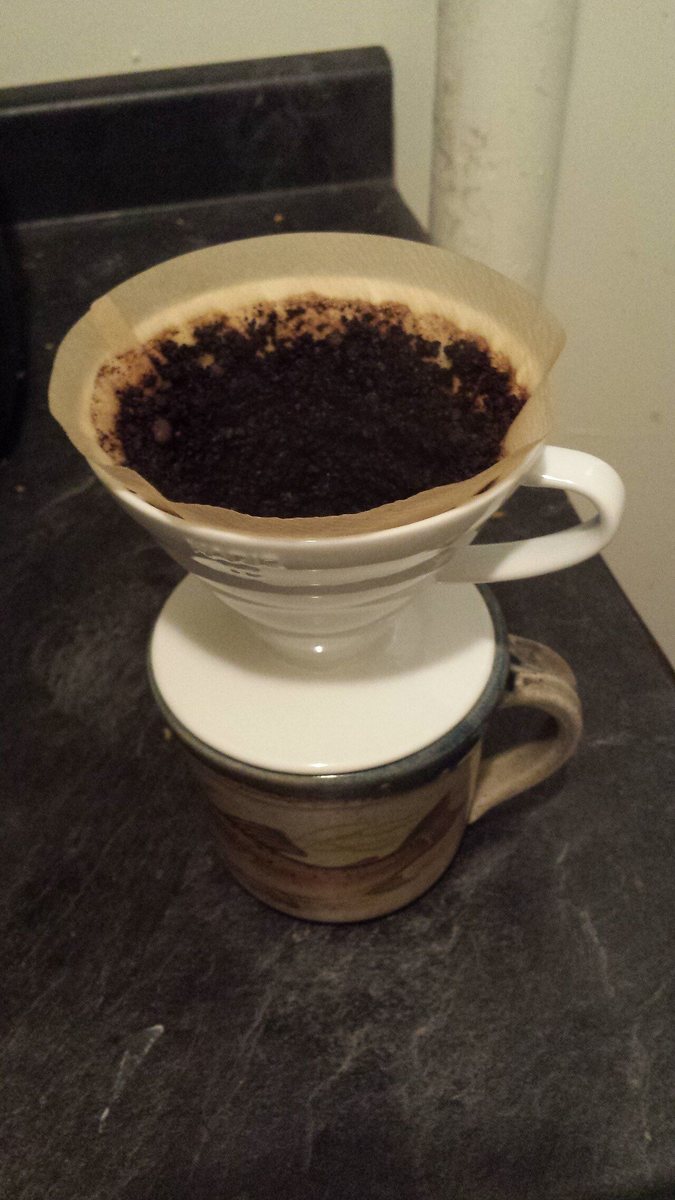
V60 and Kalita Wave share a pour-over format but differ sharply in technique demands, flow rate, and cup character.
| Which Dripper? | Hario V60 | Kalita Wave |
|---|---|---|
| Best for | Clarity-focused, skilled brewers | Beginners, repeatable daily brews |
| Bed geometry | 60-degree cone, tapers to point | Flat bottom, even saturation edge-to-edge |
| Drain design | Single large hole, fast open drain | Three small holes, slower restricted flow |
| Technique sensitivity | High — pour rate controls extraction | Low — forgiving of uneven pours |
| Cup character | Light-bodied, bright, high clarity | Balanced, consistent, repeatable |
| Grind target | Medium-fine; finer to slow fast drain | Medium; coarser suits restricted drain |
| Price | Budget-friendly | Budget-friendly |
| Learning curve | Steep — rewards consistent technique | Shallow — higher floor for acceptable results |
| Where to buy | Check price | Check price |
What Makes These Two Drippers Different {#what-makes-these-two-drippers-different}
At first glance, the Hario V60-02 and the Kalita Wave 185 look like minor variations on the same idea: ground coffee, a paper filter, hot water poured by hand, a vessel underneath. In practice, they express two distinct design philosophies that produce meaningfully different brewing experiences — and, in the hands of a given brewer, meaningfully different cups.
The V60 is a cone-shaped dripper with a single large opening at the bottom and a spiral ridge pattern on the interior walls. Water drains through the apex of the cone under the influence of gravity, and the entire bed of grounds funnels toward that single exit point. The Kalita Wave, by contrast, has a flat, perforated base — three small holes rather than one large one — and uses a crimped, flat-bottomed filter designed to keep the coffee bed level and promote even saturation from edge to edge.
Those two structural facts — cone vs flat bed, one hole vs three — explain nearly everything else about how these brewers behave.
Flow Rate and Bed Geometry {#flow-rate-and-bed-geometry}
Flow rate is the single most important mechanical variable separating the two drippers, and it flows directly (no pun intended) from geometry.
In the V60, the cone shape means the coffee bed tapers to a point. As water moves downward, it accelerates toward the drain. The spiral ridges on the interior wall help keep the filter off the glass or ceramic, maintaining an air gap that allows water to escape quickly and freely. The result is a fast, gravity-driven drain that gives the brewer enormous leverage: slow your pour and you lengthen contact time; pour aggressively and you shorten it. This is both the V60's superpower and its main demand on the user.
The Kalita Wave's flat bed and three-hole base create a more restricted, uniform drain. Water pools briefly across the entire flat surface before passing through any of the three holes, which slows outflow relative to a wide-open cone and encourages a longer, more even dwell time. The crimped Wave filter also stands off the dripper walls, creating an insulating air gap. Crucially, the flat geometry means water must travel the same vertical distance regardless of where it lands in the bed — center or edge. In a cone, water poured toward the edge of the bed travels a longer path to the drain than water poured at the center, making even saturation harder to achieve.
Key variables in coffee preparation — grind size, water temperature, brew time, and the ratio of coffee to water — all interact with these flow dynamics. A change in grind fineness that barely registers in a forgiving flat-bed brewer can stall or race a V60 dramatically.
Technique Sensitivity {#technique-sensitivity}
This is where the two drippers diverge most sharply in day-to-day use.
The V60 is widely regarded as one of the most technique-sensitive manual brewers available. Because the drain is open and fast, the brewer's pour pattern, pour rate, and timing are the primary tools for controlling extraction. Pour in tight circles and you encourage agitation and faster extraction. Pour slowly in the center and you create a gentler, more channeled flow. Use a high-turbulence technique — aggressive center pours, high water falls — and you can shorten total brew time significantly. This sensitivity means the V60 rewards practice and consistency; it also means that on a rushed morning, or in the hands of someone still developing their technique, results can vary noticeably from brew to brew.
As noted in pour-over brewing fundamentals, uniformity of grind is highly desirable because an uneven particle-size distribution amplifies exactly the kind of flow inconsistencies the V60 is prone to. Beans that are too finely ground for a given method expose too much surface area and risk over-extraction; too coarse, and the fast drain of a cone means under-extraction before you know it.
The Kalita Wave is built for consistency across variable technique. The flat bed makes channeling — where water finds a preferential path through the grounds, bypassing part of the bed — much harder to trigger. The restricted three-hole drain gives the brewer more margin for error in pour rate. You can pour somewhat unevenly, pause mid-brew, or use a simple two-pour technique and still get a balanced, repeatable cup. This is not to say technique doesn't matter on a Wave — it does — but the sensitivity curve is shallower, and the floor for acceptable results is higher.
Grind, Ratio, and Recipe Considerations {#grind-ratio-and-recipe-considerations}
Both drippers perform best with a medium to medium-fine grind, but the V60 tends to reward a slightly finer grind relative to the Wave for a given recipe. The open drain of the cone requires finer grounds to slow flow enough to achieve adequate extraction in typical brew times of around three to four minutes. On the Wave, a slightly coarser grind is often used, because the restricted drain already provides more dwell time.
Preferred brew ratios of water to coffee generally fall in the 15–18:1 range by mass, and differences even within that range are perceptible to an experienced drinker. Both drippers operate happily within this window. A 1:15 ratio (for example, 30 g coffee to 450 ml water) is a common starting point for the V60; Wave brewers often start in the same range and adjust based on cup character rather than fundamentally different ratios.
Water temperature matters on both brewers — close to boiling is standard for most pour-over brewing applications — and the freshness of the grind and roast both influence extraction outcomes significantly, regardless of which dripper you use.
One important recipe note: bloom (pre-infusion) matters on both brewers. A 30–45 second bloom with roughly twice the coffee weight in water allows CO2 to off-gas from fresh grounds, leading to more even extraction in the main pour. Skip it on the V60 and you risk uneven saturation of the cone; skip it on the Wave and you lose some of the flat-bed geometry's natural advantage.
The Cup: What Each Produces {#the-cup-what-each-produces}
Because preparation method influences acidity, aroma, mouthfeel, and finish, the structural differences between these two drippers do translate into perceptible cup differences — though the quality of the coffee and the skill of the brewer ultimately matter more than the hardware.
The V60 cup at its best is celebrated for clarity and brightness. The fast drain and relatively thin coffee bed tend to produce a light-bodied, high-clarity brew with vivid acidity and delicate aromatic expression — the kind of cup where floral and citrus notes in an Ethiopian natural or a Kenyan washed coffee can really sing. The V60 is also less forgiving when things go wrong: a rushed or inconsistent brew can yield a cup that tastes sharp, hollow, or uneven.
The Kalita Wave cup tends toward balance and body. The longer, more uniform dwell time and flat extraction plane typically produce a slightly fuller-bodied result with rounder acidity. Where the V60 excels at showcasing delicate high notes, the Wave tends to present a more integrated, harmonious picture of a coffee — still transparent and clean by any reasonable standard, but warmer and less knife-edged in character. For coffees with complex mid-palate sweetness — a well-processed Colombian or a juicy Guatemalan — the Wave's balanced extraction can be especially flattering.
It's worth noting that these cup profiles are tendencies, not guarantees. An experienced V60 brewer using a measured, low-turbulence technique can produce a full-bodied, structured cup. A Wave brewer using aggressive pours can coax out more brightness. The geometry sets the range of likely outcomes; technique and coffee quality determine where within that range you land.
Materials, Durability, and Practicalities {#materials-durability-and-practicalities}
Both the Hario V60-02 and the Kalita Wave 185 are available in multiple materials — glass, ceramic, plastic, and stainless steel variants exist for each — and material choice affects heat retention and, to a modest degree, brew consistency.
Glass and ceramic versions look beautiful on a brew bar but lose heat to the environment quickly, which can depress extraction slightly in cooler kitchens. Pre-warming the dripper with hot water is standard practice and largely solves this. Plastic versions are lightweight, nearly unbreakable, and excellent heat retainers — serious competition brewers often use plastic V60s precisely because the thin walls don't conduct heat away from the brew bed. Stainless steel options provide durability and are popular for travel.
Filter availability is worth factoring in. V60 filters — the conical, tabbed Hario papers — are widely available in most grocery stores and online. Kalita Wave filters have a more specific crimped profile and are somewhat less ubiquitous in physical retail, though easily ordered. If you travel frequently or live somewhere with limited specialty supply, this is a practical consideration.
Cleaning is simple for both: a quick rinse after each use, and periodic removal of any oily residue with mild soap.
Who Should Pick the V60 {#who-should-pick-the-v60}
The Hario V60-02 is the right choice if:
- You enjoy the process of refining your technique and view minor variation as a learning opportunity rather than a frustration.
- You're drawn to light-roasted, high-clarity coffees — particularly washed Africans or high-grown Centrals where brightness and aromatic delicacy are the headline.
- You already own a quality burr grinder and a gooseneck kettle, or plan to, and are ready to invest in the supporting equipment that makes the V60 sing.
- You want a dripper that scales with your skill: still usable at day one, but with headroom for years of technique development.
- You appreciate a lower purchase price (particularly in the plastic version) and widespread filter availability.
The V60 is not the best first dripper for someone who wants a reliably excellent cup on a busy morning without much mental overhead. It will reward patience; it will also punish inattention.
Who Should Pick the Kalita Wave {#who-should-pick-the-kalita-wave}
The Kalita Wave 185 is the right choice if:
- You want consistent, repeatable results with less technique sensitivity — a cup that tastes roughly the same whether you're fully awake or half-asleep.
- You're brewing for guests or a household where multiple people might use the same dripper with varying skill levels.
- You prefer balanced, full-bodied cups and enjoy coffees where sweetness and mid-palate complexity are the focus rather than sharp brightness.
- You're new to manual pour-over and want to build fundamentals without the steep learning curve of an open-drain cone.
- You value the flat bed's resistance to channeling — a particular advantage if your grinder produces a less-than-perfectly-uniform grind.
The Wave's trade-off is real: it is slightly less expressive at the very top of its range than a perfectly executed V60 brew. For most brewers, most mornings, that ceiling difference is irrelevant. But competitive or dedicated home brewers chasing maximum clarity and complexity may eventually want the V60's precision tool.
Side-by-Side Summary {#side-by-side-summary}
| Hario V60-02 | Kalita Wave 185 | |
|---|---|---|
| Bed shape | Conical | Flat |
| Drain | Single large hole | Three small holes |
| Flow rate | Fast, variable | Slower, restricted |
| Technique sensitivity | High | Moderate |
| Cup character | Bright, light-bodied, high clarity | Balanced, rounder body |
| Best for | Light roasts, skilled brewers | Consistent results, all levels |
| Filter availability | Very wide | Good, specialty-focused |
Both are outstanding brewers. The choice is not about which is objectively better — it is about which suits your habits, your palate, and your willingness to engage with the variables that extraction science makes available to you. For most beginners, the Wave is the kinder starting point. For brewers ready to put in the reps, the V60 is one of the most rewarding manual brewers ever designed.
Gear for this
Frequently asked questions
- Is the Hario V60 better than the Kalita Wave?
- Neither is objectively better — they suit different brewers and priorities. The V60 rewards technique and produces high-clarity, bright cups; the Kalita Wave offers more consistent, forgiving results with a rounder, balanced character. The best dripper is the one that matches your skill level and the cup you want to drink.
- Can a beginner use the Hario V60?
- Yes, but expect a learning curve. The V60's open, fast-draining cone is highly sensitive to pour rate, grind size, and timing. Beginners can absolutely use one, but inconsistent results early on are normal. The Kalita Wave's flat bed and restricted drain are more forgiving for those still building their technique.
- What grind size should I use for each dripper?
- Both drippers work best with a medium to medium-fine grind, but the V60 typically rewards a slightly finer grind to slow the fast-draining cone and achieve adequate extraction. The Wave's restricted three-hole base provides more dwell time, so a touch coarser often works well. Uniform grind particle size matters for both — a quality burr grinder is strongly recommended.
- Do the V60 and Kalita Wave use the same filters?
- No. The V60 uses conical, tabbed filters specific to its shape; the Kalita Wave uses a uniquely crimped, flat-bottomed filter. These are not interchangeable. V60 filters are broadly available in supermarkets; Wave filters are more commonly found through specialty coffee retailers or online.
- What brew ratio should I use for pour-over?
- A brew ratio of 15–18:1 water to coffee by mass is a widely used starting range for manual pour-over — for example, 30 g of coffee to 450–540 ml of water. Both the V60 and Kalita Wave operate well within this window. Differences even within this range are perceptible to an experienced drinker, so adjust based on taste.
- Does the Kalita Wave produce a worse cup than the V60?
- Not worse — different. The Wave tends to produce a more balanced, slightly fuller-bodied cup that is excellent for a wide range of coffees. The V60 at its best can express more clarity and acidity, particularly with light-roasted, high-terroir coffees. For most brewers on most mornings, the Wave's cup quality is fully satisfying; the difference only becomes meaningful at the very top of each brewer's performance ceiling.
See also