Knowledge · geography
Cerrado Mineiro, Brazil
Brazil growing region
Key facts
- Location
- High savanna plateau in Minas Gerais, Brazil
- Origin status
- Brazil's first coffee region with Denomination of Origin, 2013
- Altitude
- 800 to 1,300 meters
- Key varieties
- Mundo Novo, Catuaí, Yellow Bourbon, Acaiá
- Processing methods
- Natural and pulped-natural
- Flavor profile
- Heavy body, low acidity, chocolate and caramel notes
- Harvest months
- May through September
- Beans we stock
- 124 from Brazil
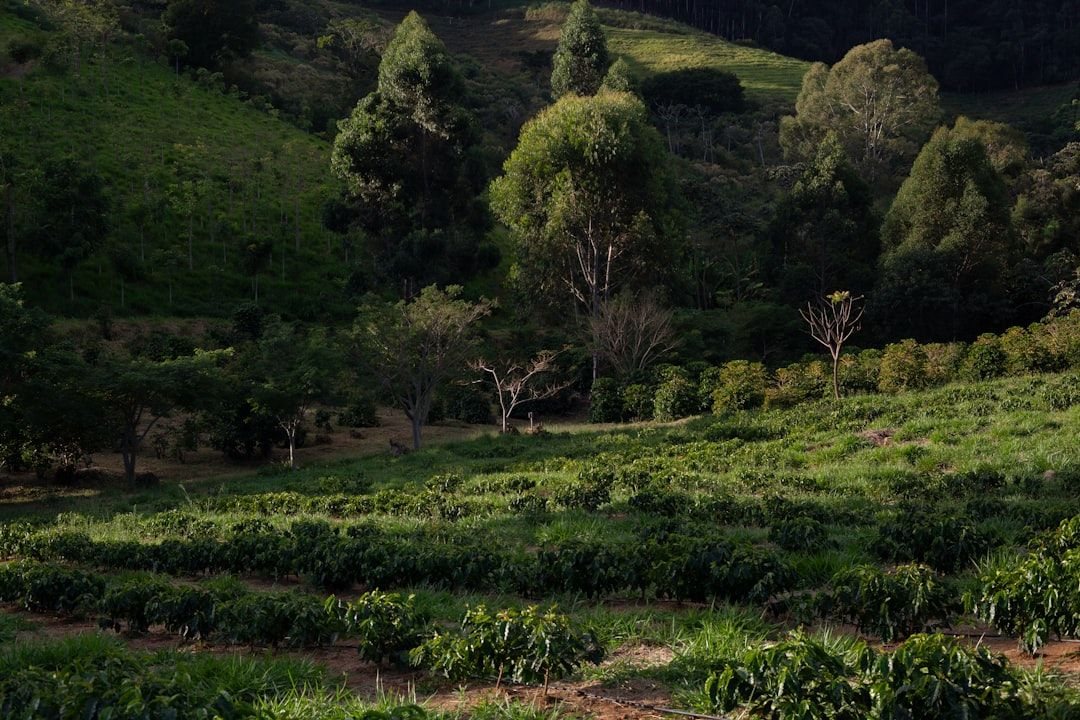
The Cerrado Mineiro, a high savanna plateau in Minas Gerais, became Brazil's first coffee region to earn a Denomination of Origin, recognised in 2013, formalising a clearly defined terroir of about 55 municipalities. Its flat-to-rolling topography between roughly 800 and 1,300 metres and pronounced wet/dry seasons make it ideal for mechanised harvesting and uniform natural and pulped-natural processing. The coffees — mostly Mundo Novo, Catuaí, and Yellow Bourbon — are classically Brazilian: heavy body, low acidity, and milk-chocolate, peanut, and caramel sweetness that form the backbone of countless espresso blends worldwide. The Cerrado shows how scale, climate, and organisation made Brazil the world's largest producer.
At a glance
- Altitude: 800–1300 masl
- Typical varieties: Mundo Novo, Catuai, Yellow Bourbon, Acaiá
- Common processes: Natural, Pulped Natural
- Harvest: 5, 6, 7, 8, 9
Climate
Savanna climate with distinct wet and dry seasons enabling reliable natural drying.
Soil & terroir
Deep, acidic cerrado soils, often requiring correction.
See also