Knowledge · industry
First Wave Coffee
How mass-market production, vacuum packing, and instant coffee made the beverage a global staple — and set the stage for everything that followed.
Key facts
- Time period
- Late nineteenth century through mid-twentieth century
- Key priorities
- Low price, wide availability, consistent taste
- Defining technologies
- Vacuum packing, instant coffee, percolators
- Major brands
- Folgers and Maxwell House
- Largest producer
- Brazil, since 1852
What Is the First Wave of Coffee?
The first wave of coffee describes the period — broadly spanning the late nineteenth century through the mid-twentieth century — during which coffee transformed from a regional or artisanal product into a mass-market commodity consumed by millions of households. The defining priorities of this era were low price, wide availability, and consistent taste, with little emphasis on origin, variety, or brewing craft.
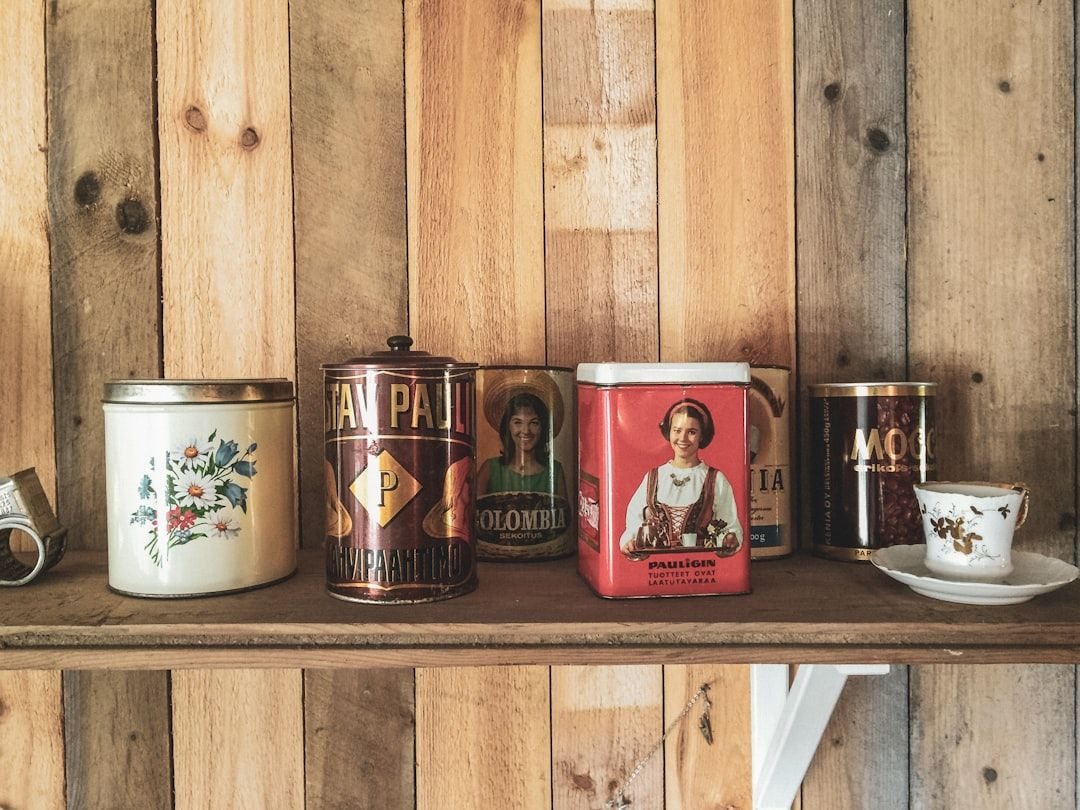
As described in commentary on the later waves of coffee culture, "instant coffee, grocery store canned coffee, and diner coffee were all hallmarks of first wave coffee." The era is also characterised by pre-ground, vacuum-packed, mass-market cans from brands like Folgers and Maxwell House. Understanding the first wave is inseparable from understanding the broader coffee industry and the history of coffee as a global commodity.
Historical Roots: Coffee as a Commodity
Coffee's trajectory toward mass-market status was centuries in the making. By 1852, Brazil had become the world's largest producer of coffee and has held that status ever since — a dominance that created the conditions for industrial-scale supply. Since 1950, several other major producers emerged, notably Colombia, Ivory Coast, Ethiopia, and Vietnam, cementing coffee's place as one of the world's most traded agricultural goods.
The sheer volume of coffee flowing through global markets by the late nineteenth century made it inevitable that industrial processing would follow. What the first wave did was systematise that supply into reliable, shelf-stable products that could reach ordinary consumers far from any port or roastery. The coffee supply chain of this era was optimised almost entirely for throughput and cost reduction, with quality benchmarks set at the floor rather than the ceiling.
Vacuum Packing and the Shelf-Stable Revolution
One of the pivotal technologies of the first wave was vacuum packing — the removal of air from canned or packaged coffee to extend its shelf life. Before this innovation, roasted and ground coffee staled rapidly, making wide distribution impractical. Vacuum-sealed cans allowed coffee to be roasted, ground, and packaged in centralised facilities, then shipped to grocery stores across vast geographic areas without significant flavour degradation — at least by the standards of the time.
This process enabled the rise of national brands that could guarantee a standardised product regardless of where the consumer lived. The trade-off was considerable: pre-grinding accelerates the oxidation of volatile aromatic compounds, and the roasting profiles used in mass production — typically darker, to mask the variability of commodity-grade beans — further compressed the flavour range. The goal was uniformity, not complexity.
Instant Coffee: Coffee Without Barriers
No technology epitomised the first wave more completely than instant coffee. Soluble coffee — produced by brewing coffee at industrial scale and then spray-drying or freeze-drying the resulting liquid — reduced preparation to the addition of hot water. It required no equipment, no technique, and no particular knowledge.
Instant coffee's appeal was not merely domestic convenience. It became a logistical staple in military contexts, a fixture in offices and institutions, and the dominant format in several national markets. In the late twentieth century, instant coffee still dominated the UK market, illustrating how deeply first-wave formats embedded themselves in consumption habits that persisted well after the wave itself had crested.
The flavour profile of most instant coffees reflected their production method: the high-heat processing required for drying destroyed many of the delicate compounds responsible for brightness and aromatic nuance, leaving a beverage that was reliably bitter and caffeine-bearing but seldom distinguished.
Percolators and At-Home Brewing
For consumers who brewed at home rather than reaching for a jar of instant, the percolator was the dominant appliance of the first wave. Percolators work by cycling boiling water repeatedly through a basket of ground coffee — a process that, while simple, tends to over-extract and overheat the brew, producing a bitter, flat cup by modern standards.
The percolator nonetheless served the first wave's core proposition: it was cheap, durable, and required no skilled intervention. When combined with pre-ground, vacuum-packed coffee from a trusted brand, it delivered a "coffee" that was recognisable and consistent, even if specialists today would judge the extraction quality as poor. At-home consumption was the defining mode of both the first and, later, the second wave.
The Big Brands and Mass-Market Culture
The commercial infrastructure of the first wave was built around a small number of dominant household brands. Folgers and Maxwell House are the most frequently cited exemplars — companies that competed primarily on price, availability, and advertising rather than on sourcing transparency or roast quality.
These brands sourced coffee as a generic commodity, blending beans from multiple origins to maintain price points and flavour consistency across harvests. The concept of single-origin coffee, or attention to the individual character of a specific farm or region, was entirely absent from first-wave marketing. Coffee was coffee: dark, hot, and reliably stimulating.
This era also saw the standardisation of coffee culture in workplaces and diners. The term "coffee break" itself dates to 1952, according to etymological records — a timestamp that places the institutionalisation of coffee consumption squarely within the first-wave period.
Quality Trade-Offs and the Commodity Trap
The first wave's achievements in accessibility came with a well-documented set of quality trade-offs:
- Robusta blending: Mass-market brands frequently blended Coffea arabica with C. robusta — a hardier, higher-yielding species with a harsher, more bitter flavour profile — to reduce costs. The two most commonly grown coffee bean types are C. arabica and C. robusta, and robusta's lower cost made it attractive to commodity blenders.
- Dark roasting as camouflage: Darker roast profiles were used to standardise flavour across variable-quality lots, burning off defect-associated tastes at the expense of origin character.
- Pre-grinding and staling: Vacuum packing delayed but did not eliminate staling; by the time many consumers brewed their coffee, significant aromatic degradation had already occurred.
- No origin transparency: Consumers had no information about where their coffee was grown, at what altitude, or by whom — the entire supply chain was invisible.
These trade-offs were not simply corporate indifference; they reflected the economic logic of a system designed to supply vast quantities of affordable coffee to a mass audience. But they created a ceiling on quality that, by the 1960s, a new generation of roasters and consumers was beginning to find unacceptable.
Legacy: Setting Up the Later Waves
The first wave's most enduring contribution was paradoxical: by making coffee ubiquitous, it created the cultural foundation on which more discerning consumption could later be built. The second wave — initiated by pioneers like Peet's Coffee & Tea of Berkeley, California, in the late 1960s — arose in explicit reaction to first-wave commoditisation, introducing consumers to origin countries, artisanal roasting, and espresso-based beverages.
The third wave, which gathered momentum from the 1990s onward, pushed further still: toward single-farm sourcing, light roasting designed to reveal rather than obscure origin character, and the elevation of coffee to a craft product. The term "specialty coffee" itself — first used in 1974 by Erna Knutsen in the Tea & Coffee Trade Journal — was coined precisely to distinguish high-quality beans from the commodity stream that first-wave brands had normalised.
As one observer summarised the first wave of American coffee culture, it was "probably the 19th-century surge that put Folgers on every table" — a description that captures both its democratic reach and its qualitative limits. The first wave democratised coffee; the waves that followed began the long project of dignifying it.
Frequently asked questions
- What years does the first wave of coffee cover?
- The first wave is broadly associated with the late nineteenth century through roughly the mid-twentieth century, though its products and habits persisted well into the 1990s and beyond in many markets. There is no single agreed end date; the wave is defined by characteristics — mass production, commodity sourcing, instant and canned coffee — rather than strict calendar boundaries.
- What are the defining characteristics of first wave coffee?
- The first wave is characterised by a focus on low price and consistent taste rather than origin or quality. Its hallmarks include instant coffee, vacuum-packed pre-ground canned coffee, percolator brewing, and dominant household brands that treated coffee as an undifferentiated commodity.
- Which brands are most associated with the first wave?
- Folgers and Maxwell House are the most frequently cited examples of first-wave brands. They competed primarily on price, availability, and advertising, blending beans from multiple origins to maintain consistency and low cost, with no emphasis on single-origin sourcing or roast transparency.
- How did vacuum packing change coffee?
- Vacuum packing removed air from sealed cans of roasted, ground coffee, slowing oxidation and extending shelf life. This made it practical to roast and grind coffee in centralised facilities and distribute it nationally, enabling the rise of mass-market brands — though at the cost of freshness and aromatic complexity.
- Why was first wave coffee quality considered poor by later standards?
- First wave coffee prioritised cost and consistency over cup quality. Common trade-offs included blending arabica with lower-cost robusta, using dark roast profiles to mask variability, pre-grinding coffee that staled before use, and providing no origin transparency. These practices sacrificed flavour nuance for affordability and shelf stability.
- How did the first wave lead to the second and third waves?
- By making coffee universally accessible, the first wave built a vast consumer base. But its quality ceiling eventually prompted a reaction: the second wave, beginning with roasters like Peet's in the late 1960s, introduced origin-awareness and espresso culture, while the third wave went further with single-farm sourcing, light roasting, and specialty grading standards.
See also