Honey · Medium Dark
Bolivia: Jeivert Panuni
Roasted by Has Bean
Honey-processed Bolivian coffee with layered berry flavors and juicy acidity.
From the roaster
Bolivia: Jeivert Panuni, Honey
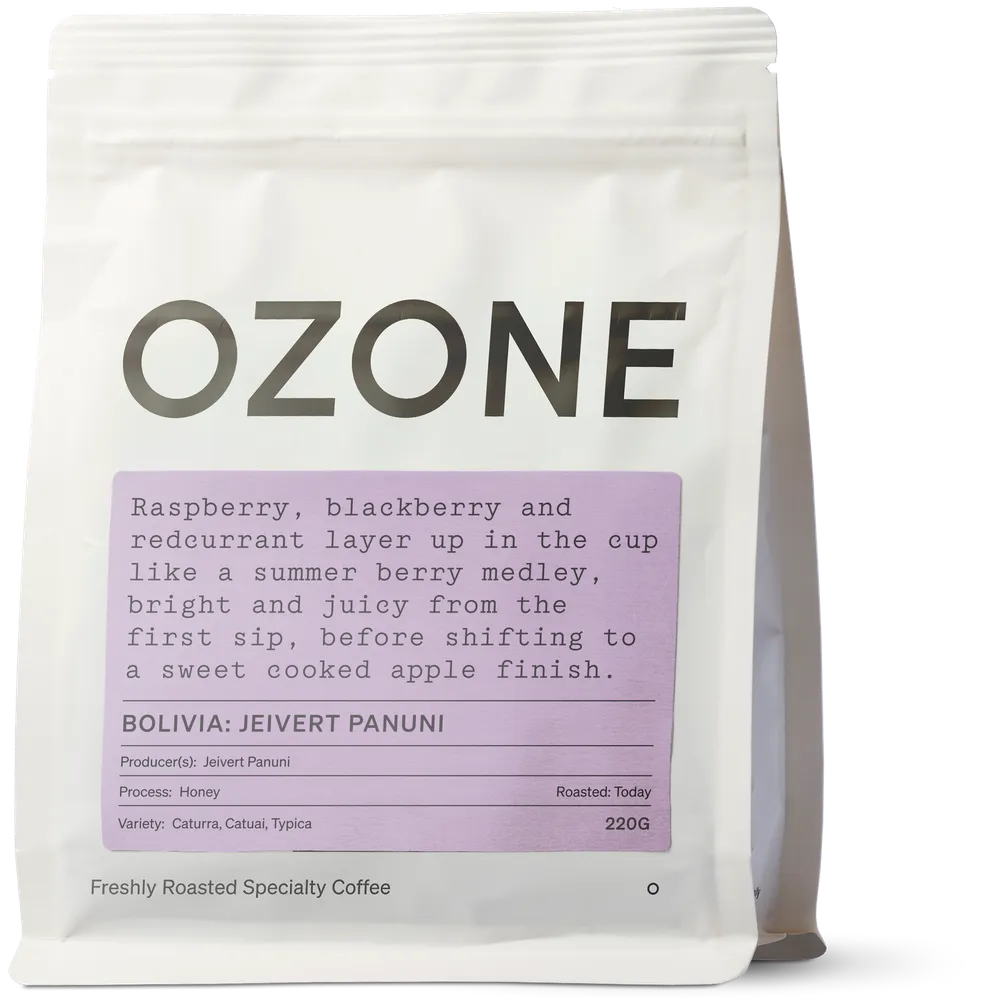
Raspberry, blackberry and redcurrant layer up in the cup like a summer berry medley, bright and juicy from the first sip, before shifting to a sweet cooked apple finish.
The remote region of Irupana sits in the South Yungas province towards the most westerly edge of Bolivia, nestled among the Andes at the edge of the country. It's to the south of Caranavi, the largest coffee-growing region in Bolivia, and shares a similar verdant – albeit slightly drier – high-altitude terrain that makes it excellent for growing coffee. Farms here are small (around 5 hectares on average) and the area has a strong, proud tradition of coffee farming. It's also a place with deep historical roots: Irupana was home to Pedro Domingo Murillo, a late 18th-century revolutionary who led the 1809 uprising against Spanish rule in La Paz, before being defeated by royalist forces at the Battle of Irupana and executed in 1810. He's remembered today as one of Bolivia's great independence martyrs.
We've only sourced coffee from Irupana a handful of times previously. Coffee from more remote parts of Bolivia is often made up of contributions from multiple smallholders, which means we can't always trace it back to individual farms. Thanks to improved traceability and deeper collaboration with the Sol de la Mañana programme, we're now seeing more single-producer lots like this one from Jeivert – and Roland was particularly excited about that development for the 2025 harvest.
Jeivert is a second-generation producer whose farm, La Avanzada – "The Advance" – is named in the spirit of Murillo's forward-looking defiance. He began his journey through the Irupana Cooperativo, which is where we first encountered his coffee back in 2016. By 2017, he'd gained enough experience to strike out on his own, setting up his own micro-mill to process his coffee independently. It proved a prescient move: the co-operative closed in 2019 as the number of local producers declined, many switching to coca leaf production. His wet mill is modest by commercial standards – purpose-built, with a brick drying room housing raised beds that protect the coffee from the elements while maintaining good airflow – but it's been transformative for the area. Jeivert's partner in the operation is his friend Grover Machaca, who has a 2-hectare farm nearby and brings his cherry to La Avanzada for processing. We have a solo lot from Grover this year too – you can grab a bag to brew side by side here.
Jeivert has experimented with both washed and honey processing, and it was Daniela Rodriguez of Agricafe who pointed him firmly towards honey – both for the exceptional cup quality it produces and because it's a relatively rare processing style in Bolivia's washed-dominated market. The results speak for themselves.
Traceability
-
Country: Bolivia
-
Region: Irupana
-
Department: La Paz
-
Province: Sud Yungas
-
Producer: Jeivert Pañuni
-
Farm: La Avanzada
-
Elevation: 1,800 m.a.s.l
-
Variety: Caturra, Catuai, Typica
-
Processing method: Honey
Roast Information
Medium Dark. Through the gap and let this develop a little in the gap before pushing through to the edge of second as the roast finishes.
Cupping Scores
Cupping Notes: Raspberry, redcurrant, cooked apple
Cup of Excellence Cupping Scores
-
Clean Cup: 7/8
-
Sweetness: 7/8
-
Acidity: 6/8
-
Mouthfeel: 6/8
-
Flavour: 7/8
-
Aftertaste: 6/8
-
Balance: 6/8
-
Overall: 7/8
-
Correction: +36
-
Total: 88/100
If you'd like to find out more about how we score coffees, make sure to read our blog post "What Do Coffee Cupping Scores Actually Mean?"
— Has Bean
Context
This honey-processed coffee from producer Jeivert Pañuni in Bolivia's Irupana region showcases the characteristic sweetness and body typical of the honey-processing method. The blend of Caturra, Catuai, and Typica varietals contributes complexity across the cup, with the roaster Has Bean identifying distinct berry notes—raspberry, blackberry, and redcurrant—alongside bright, juicy qualities and cooked apple sweetness. This profile suggests a coffee that balances acidity with fruit-forward expression, bridging the cleaner profiles often associated with washed coffees and the fuller body of natural-processed lots.
In the Encyclopedia
Frequently asked questions
What does Bolivia: Jeivert Panuni taste like?
Expect tasting notes of Raspberry, blackberry, redcurrant, bright, juicy, and sweet cooked apple.
How is Bolivia: Jeivert Panuni processed?
Bolivia: Jeivert Panuni uses the Honey process.
What roast level is Bolivia: Jeivert Panuni?
It is roasted to a medium dark level.
More from Has Bean
View all →Anaerobic Natural
Thailand: Aoy & Nui
Typica from Thailand with red cherry, banana, and vanilla cream notes.
Washed
Bolivia: Don Carlos, Mosto Washed
Washed Caturra and Catuai from Finca Don Carlos in Caranavi featuring sultana, apricot and golden sugar notes.
Kenya · Washed
Kenya: Kiriga, AB
Washed Kenyan coffee with cherry, lime sweets, and blackcurrant notes.
Dry Fermented Washed
Bolivia: Pedro Flores, Dry Fermented Washed
Bolivia Catuai with crisp apple, redcurrant, and biscuity balance from dry fermentation.
More Honey coffees
Tim Wendelboe
Los Pirineos Pacamara - Honey Process
Intense Pacamara with ripe stone fruits and cacao notes.
Tim Wendelboe
Los Pirineos Pacamara Espresso - Honey Process
Intense Pacamara espresso with stone fruits and cacao nibs.
Black & White Coffee Roasters · Ethiopia
Bombe - Honey
Honey-processed Ethiopian with floral and yellow fruit notes, tasting like oolong tea with lemon.
Code Black Coffee · Colombia
Colombia Cerro Azul Honey Gesha Espresso - Single Origin
Colombia Cerro Azul Honey Geisha espresso with citrus, floral, and melon notes.
Last verified: June 27, 2026 · Browse all beans.