Discover · Spotlights
The Nordic Roasting Movement
How Oslo, Stockholm, and Copenhagen roasters changed the global coffee conversation — and what their philosophy means for your cup today.
We may earn a commission when you buy through links on this page, at no additional cost to you.
Key facts
- Origin
- Oslo, Stockholm, and Copenhagen, early 2000s
- Core philosophy
- Light roasting reveals origin character through transparency
- Key innovation
- Shorter roast curves and lower end temperatures
- Associated movement
- Third wave of coffee
- Notable figures
- Tim Wendelboe, Klaus Thomsen, Joanna Alm
- Emphasis
- Single-origin sourcing and direct producer relationships
The Nordic Difference
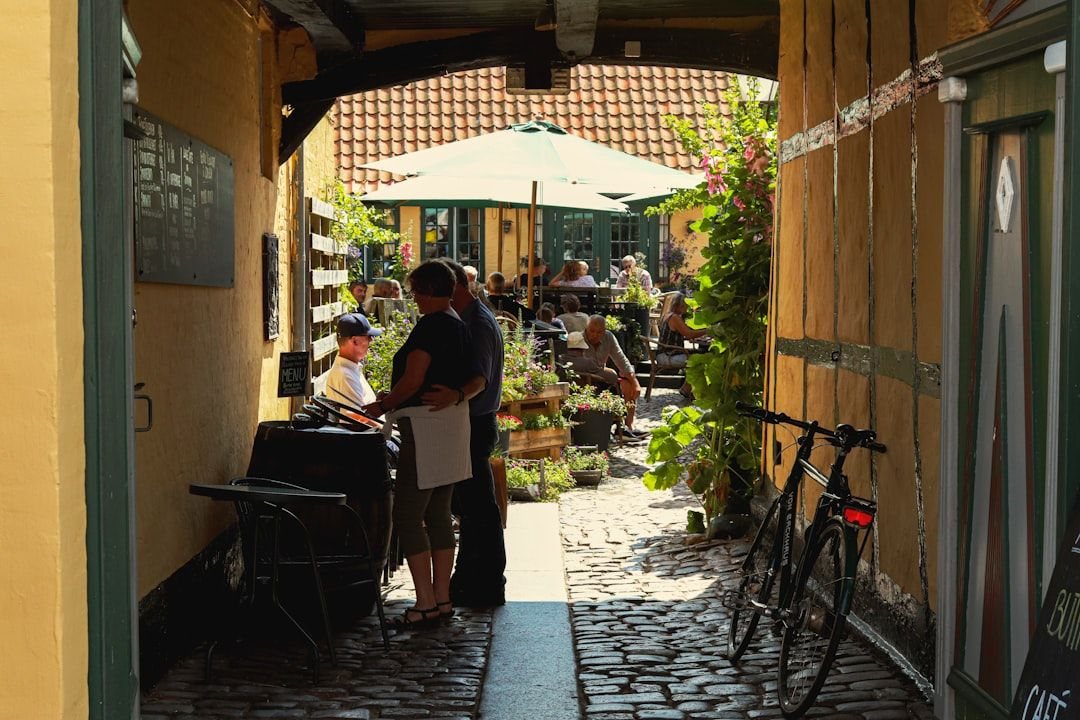
Sometime in the early 2000s, a quiet revolution was brewing at the northern edge of Europe. While much of the world's specialty coffee scene was still debating the merits of Starbucks-style dark roasts, a handful of roasters in Oslo, Stockholm, and Copenhagen were pushing in a radically different direction: shorter roast curves, lower end temperatures, and a relentless curiosity about what a single farm's coffee actually tasted like before heat overwhelmed it.
The philosophy was not simply aesthetic. It was rooted in a conviction — articulated loudly and consistently by Nordic practitioners — that light roasting is fundamentally an act of transparency. If a bean from a high-altitude Ethiopian farm carried notes of jasmine and bergamot in its green state, the roaster's job was to preserve and reveal that character, not mask it beneath the char and body of a French roast. As [S1] makes clear, it is the Maillard reaction and related chemical transformations during roasting that create coffee's characteristic flavors; the Nordic insight was that controlling the degree of those reactions — rather than maximising them — could unlock entirely new sensory territory.
This approach aligned closely with what the broader specialty world was beginning to call the third wave of coffee: a movement emphasising single-origin sourcing, high-quality green beans scoring 80 points or more on a 100-point scale, and craft preparation. But the Scandinavians gave that movement its sharpest aesthetic edge, its most rigorous sourcing ethics, and arguably its most internationally recognised ambassadors.
Key Figures and Roasters
Tim Wendelboe, Oslo
No account of the Nordic roasting movement is complete without Tim WendelboeShop ↗. The Oslo-based roaster and former World Barista Champion (2004) became one of the defining voices of the light-roast philosophy — training baristas, publishing practical guides, and sourcing green coffee directly from producers in Ethiopia, Colombia, and Rwanda. His eponymous micro-roastery, opened in 2007, operates on a scale that prizes precision over volume: small-batch roasting, close producer relationships, and a cupping-room ethos that treats every lot as a research subject.
Wendelboe's influence has been felt far beyond Norway. His barista training programmes attracted students from across Europe and North America, effectively seeding the Nordic methodology into a generation of roasters who would carry it home. The combination of World Barista Championship credibility and an evangelical commitment to roast development made him a singular figure — someone who could demonstrate, in competition and in the cup, that lighter roasts were not an affectation but a discipline.
The Coffee Collective, Copenhagen
The Coffee CollectiveShop ↗ brought the Nordic philosophy to Denmark with an emphasis on direct trade and producer transparency that was ahead of its time when the roastery launched in 2007. Co-founded by World Barista Champion Klaus Thomsen (2006), the Copenhagen operation pairs rigorous sourcing — including farm visits and published price premiums paid to producers — with a roasting style designed to let origin character lead.
What distinguishes The Coffee Collective is a particular intellectual honesty about the supply chain. They have consistently published details about what they pay for green coffee relative to market prices, a practice that challenges roasters everywhere to be accountable not just for what ends up in the cup but for what happens at the farm gate. That ethical architecture is inseparable from the terroir-forward flavour philosophy: if you're paying for exceptional provenance, you have every reason to roast in a way that honours it.
Drop Coffee, Stockholm
Stockholm's Drop CoffeeShop ↗ represents a slightly later but equally consequential chapter of the Nordic story. Founded by Joanna Alm, Drop Coffee built a reputation for exceptional sourcing from East Africa and Latin America, rendered through a roasting approach that prioritises sweetness and clarity over body and bitterness. The roastery earned recognition at the Nordic Roasting Championships and gained a loyal international following through its mail-order offering.
Drop Coffee is a useful case study because it illustrates how the Nordic movement was never monolithic. Alm brought her own aesthetic sensibility — one that valued gentleness and balance alongside the brightness that defines the style — and helped prove that the philosophy could support genuine variety of expression rather than a single sonic frequency of acidity.
La Cabra, Aarhus
Not every Nordic pioneer is based in a capital city. La CabraShop ↗, founded in Aarhus, Denmark, extended the movement's geographic and conceptual reach. Known for an exceptionally clean, fruit-forward house style, La Cabra has developed a particularly strong presence in the filter coffee world and built retail and wholesale relationships across Europe and Asia. Their approach to roasting is characterised by what their material describes as a pursuit of clarity and sweetness — flavour outcomes that require both careful green selection and precise heat management during the roast.
La Cabra also invested early in café design and hospitality as an extension of the coffee philosophy, arguing implicitly that the environment in which coffee is served shapes how its terroir qualities are perceived. That holistic thinking — from farm to interior design — reflects the Nordic movement's broader ambition to treat coffee as a serious sensory and cultural practice.
The Philosophy in Detail
At its core, the Nordic roasting philosophy rests on a few interlocking ideas.
Single-origin sourcing as a prerequisite. Blending coffee from multiple origins can mask defects and create consistency, but it also erases the individual character of each component. Nordic roasters largely moved away from house blends — or at least subordinated them — in favour of lots that could be traced to a specific farm, cooperative, or even a single processing lot. This made terroir legible in a way that blending never could.
Light roasting as a listening practice. The Nordic style pushed roast profiles to what the specialty world calls light to medium-light development, stopping before or just at first crack in some cases, or shortly after in others. The goal was not sourness — a common mischaracterisation — but the preservation of the delicate aromatic compounds that high heat destroys. Done well, the result is a cup with pronounced floral, fruit, or tea-like qualities that simply do not survive darker roasting.
Direct trade and producer relationships. Many Nordic roasters built direct sourcing relationships, sometimes investing in farms, co-designing processing methods with producers, or funding infrastructure improvements. This wasn't purely altruistic — better-processed coffee, cared for at origin, gives the roaster better raw material to work with. But it created a supply-chain ethic that has since become a benchmark across the global specialty industry.
Transparency and education. Nordic roasters were unusually vocal. They wrote, competed, taught, and published. The World Barista Championship became something of a Nordic platform in the mid-2000s, with Scandinavian competitors winning multiple consecutive years and using those stages to demonstrate light-roast espresso prepared in ways that challenged received wisdom about what competition coffee looked and tasted like.
Roots in the Third Wave
The Nordic movement did not emerge in a vacuum. As [S2] notes, the broader third wave of coffee — the shift toward single-origin sourcing, specialty grades, and light roasting to preserve distinctive flavours — had roots going back to the 1970s in the United States, with the term itself gaining currency after Timothy Castle used it in 1999 and Trish Rothgeb popularised it in a 2003 article.
What the Nordic roasters did was take that existing intellectual framework and apply it with a particular rigour, competition pedigree, and cultural authority. Scandinavian design culture — with its values of simplicity, functionality, and honest materials — provided a compatible aesthetic context. A Nordic coffee bar designed to minimise distraction and maximise focus on the cup was, in a sense, applying the same philosophy as Nordic furniture or architecture: remove the unnecessary, honour the material.
This alignment of coffee values with a broader cultural identity made the Nordic style legible and aspirational to an international audience. It was not just a roasting technique; it was a complete sensibility.
Global Influence and Legacy
The reach of the Nordic roasting movement today is visible in almost every major coffee city on earth. Roasters in Tokyo, Melbourne, London, New York, Seoul, and São Paulo have adopted the light-roast, terroir-forward approach that Oslo and Copenhagen helped define. The vocabulary of specialty coffee — cup score, processing method, varietal, elevation — is now common across all of these markets, and much of the competitive and educational infrastructure that disseminated it traces back to Nordic practitioners.
The UK's own third-wave scene, as S2 notes, saw James Hoffmann's Square Mile open in 2008 and London host the World Barista Championship in 2010 — a moment that illustrated how the Nordic wave was rippling outward into adjacent coffee cultures. Australia, meanwhile, developed its own distinct café culture that absorbed and reinterpreted light-roast values through a Melbourne filter. In each case, the Nordic contribution was foundational: it established that the most interesting cup of coffee was one that asked you to pay attention to where it came from.
For contemporary coffee drinkers, the legacy is practical as well as historical. If you've ever been surprised by a coffee that tasted like blueberries or stone fruit or black tea rather than "just coffee," you were tasting the downstream result of what Nordic roasters argued for and proved was possible. The sensory range of what we consider an acceptable — even excellent — cup has permanently expanded.
Exploring Nordic Roasters on Coffeester
All four roasters discussed in this article are available to explore and order from directly on Coffeester. Tim Wendelboe, The Coffee Collective, Drop Coffee, and La Cabra represent the full breadth of the Nordic style — from the precise, research-driven Oslo model to the fruit-forward Aarhus approach. Each roastery brings a distinct voice to the same underlying philosophy, and exploring their current offerings side by side is one of the most instructive ways to understand what terroir-forward coffee actually means in the cup.
If you're new to the style, a useful entry point is to compare a washed Ethiopian from one roastery with an anaerobic or natural-processed lot from another: the contrast will show you both the range of the Nordic palette and the consistency of the underlying aesthetic values that unite it.
Roasters featured
Frequently asked questions
- What makes Nordic-style coffee different from other specialty roasts?
- Nordic-style coffee is characterised by light to medium-light roast profiles designed to preserve the inherent terroir qualities of a single-origin bean — floral, fruit, and tea-like aromatics that darker roasting would destroy. The approach pairs that roast philosophy with direct-trade sourcing and a high degree of supply-chain transparency, giving every cup a traceable identity.
- Is light-roast coffee more acidic?
- Light roasts do tend to have more perceived brightness, which some drinkers interpret as acidity. But well-executed Nordic-style roasting aims for sweetness and clarity rather than sourness — the goal is to preserve delicate aromatics, not to produce an unpleasant sharpness. Brewing method matters significantly: a longer, lower-temperature brew will soften perceived acidity considerably.
- Which Nordic roasters can I buy on Coffeester?
- Coffeester currently carries Tim Wendelboe (Oslo), The Coffee Collective (Copenhagen), Drop Coffee (Stockholm), and La Cabra (Aarhus) — four of the most influential roasters in the movement, each with a distinct house style and sourcing philosophy.
- Who coined the term 'third wave coffee' and how does it relate to the Nordic movement?
- The term is generally attributed to coffee professional Trish Rothgeb, who used it in a 2003 article, though Timothy Castle had used it earlier in a 1999/2000 piece in Tea & Coffee Asia. The Nordic roasters did not invent the third wave, but they became some of its most visible and rigorous practitioners — winning World Barista Championships and educating a global generation of roasters in light-roast, terroir-forward technique.
- Do Nordic roasters only use African coffees?
- No. While East African origins — particularly Ethiopia, Kenya, and Rwanda — are well represented in Nordic portfolios because of their naturally fruit-forward and floral character, roasters like Tim Wendelboe also source extensively from Colombia and other Latin American producers. The key criterion is quality and traceability, not geography of origin.
See also