Guides · How To
How to Taste Coffee Like a Pro
A practical guide to coffee cupping, the SCA flavor wheel, and building a vocabulary for what you taste.
Key facts
- Also known as
- Structured method for evaluating brewed coffee
- Core purpose
- Assess quality, consistency, and flavor across lots
- Specialty threshold
- 80 or above on SCA 100-point scale
- Standard ratio
- 8.25 g coffee per 150 ml water
- Water temperature
- Around 93°C (200°F)
- Key evaluation attributes
- Body, acidity, sweetness, flavor, finish
What Is Coffee Cupping — and Why Should You Care?
Coffee cupping is, at its core, a structured method for evaluating brewed coffee by observing its tastes and aromas. As Wikipedia's overview of coffee cupping describes it, the practice "is a professional practice but can be done informally by anyone or by professionals known as Q Graders." That last part matters: you don't need a certification to cup. You need a spoon, some freshly ground coffee, hot water, and a willingness to slow down.
Why bother? Because slurping coffee off a spoon — deliberately, with attention — forces you to notice things that disappear when you're drinking on autopilot. The slight citric brightness of an Ethiopian natural. The way a Guatemalan washed coffee coats your tongue differently than a Sumatran wet-hulled. The finish that lingers for thirty seconds after you swallow. Cupping makes those differences legible.
Professional buyers, roasters, and Q Graders use cupping to assess quality and consistency across lots. The Specialty Coffee Association (SCA) has codified this into a formal scoring protocol — coffee that scores 80 or above on the SCA's 100-point scale qualifies as specialty grade, with the Outstanding tier reserved for 90–100 and Excellent for 85–89.99. You can read the full procedural detail in our SCA cupping protocol guide. For now, let's focus on what you actually do.
Setting Up Your Home Cupping Session
You don't need a professional cupping lab. A clean kitchen table, a few matching cups or wide-mouthed mugs (ideally 200–240 ml), a kettle, a grinder, and a tablespoon will do. Here's what to prepare:
- Coffee: Use 8.25 g of coffee per 150 ml of water — the SCA's standard ratio. At home, roughly one heaping tablespoon per six-ounce cup is a workable approximation.
- Grind: Medium-coarse, similar to a coarse sea salt. Grind fresh, immediately before brewing.
- Water: Bring filtered water to around 93°C (200°F) — just off the boil.
- Cups: Rinse them with hot water first so they're warm. Place the dry grounds in each cup before you begin.
- Spoons: Deep-bowled cupping spoons work best, but any large soup spoon is fine.
- A notepad: Or your phone. You will forget what you tasted if you don't write it down.
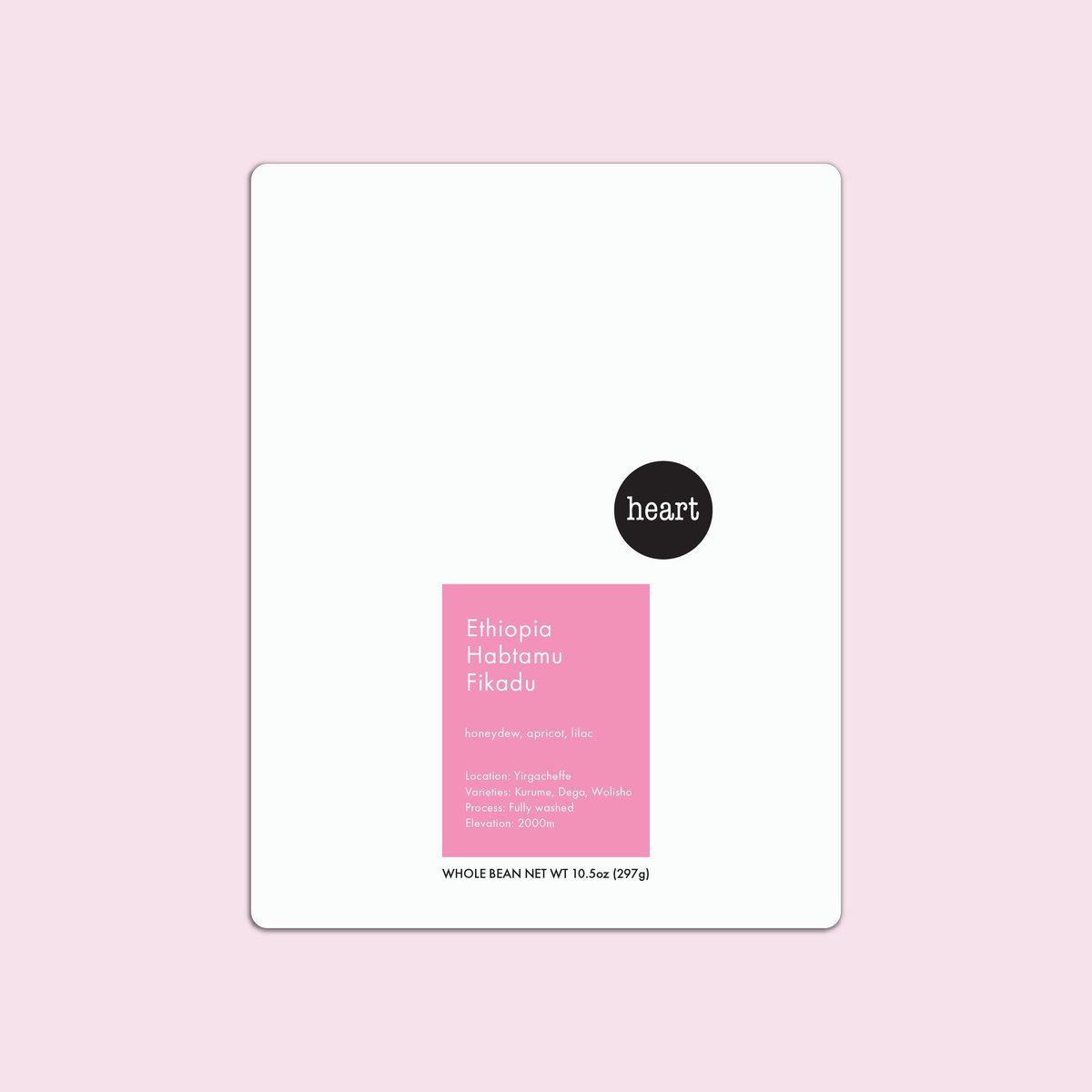
Tip: Cupping at least two or three different coffees side by side dramatically sharpens your perception. Contrast is your friend. If you want a high-quality starting point, the Ethiopia Habtamu Fikadu from Heart Coffee Roasters — a naturally processed single-origin from a producer whose lot reflects Heart's commitment to traceability — is a compelling choice for a first cupping session, especially alongside a washed Central American coffee to highlight how processing method shapes flavor.
The Four-Stage Cupping Process
Stage 1 — Dry Fragrance
Before you add water, lean over each cup and inhale deeply. This is the dry fragrance — the volatile aromatics released from freshly ground coffee before any heat is applied. Jot down what you notice. Is it floral? Chocolatey? Cereal-like, reminiscent of toast or malt? Does it smell bright and fruity, or deep and earthy?
These descriptors aren't arbitrary. The SCA cupping protocol treats fragrance and aroma as separate evaluated attributes, and your nose is often more sensitive than your tongue — pre-loading your brain with aromatic impressions helps you find those same notes in the cup.
Stage 2 — Wet Aroma
Pour your hot water directly over the grounds in a slow, even spiral, wetting all the coffee. Start a four-minute timer. The coffee will bloom and form a crust on the surface. At around the two-minute mark, lean in and inhale again — this is the wet aroma, and it's often the most expressive moment of the entire session. You may detect notes that vanish once the coffee cools.
At the four-minute mark, use your spoon to gently break the crust — push it forward three times, then skim the foam and grounds off the surface. Lean in as you break it. This release of steam carries a concentrated burst of aroma that professionals pay close attention to.
Stage 3 — Slurping and Evaluation
Once you've skimmed the cups and the coffee has cooled to around 70°C (roughly 8–10 minutes after pouring), begin tasting. Load your spoon and slurp vigorously — this isn't rude, it's essential. Slurping aerates the coffee and sprays it across the full surface of your tongue and the back of your palate, the way wine tasters swirl to expose surface area. You're evaluating five core attributes:
- Body — The texture or mouthfeel of the coffee. Does it feel thin and tea-like, or heavy and syrupy? Oily or dry? A Sumatran wet-hulled coffee might feel full and almost chewy; a light-roast Kenyan washed might feel delicate and juicy.
- Acidity — A "sharp and tangy feeling, like when biting into an orange," as the cupping literature puts it. Good acidity is lively and pleasant; poor acidity is harsh or sour. Note whether it's citric (lemon, orange), malic (apple, pear), or tartaric (grape-like).
- Sweetness — Is the coffee naturally sweet — brown sugar, fruit, caramel — or does it taste flat and hollow where sweetness should be? Sweetness and acidity interact; a coffee can be both bright and sweet at the same time.
- Flavor — The full character in the cup. This is where your flavor wheel earns its keep (more on that in the next section). Describe what you taste as specifically as you can: "dark chocolate" is better than "rich," "bergamot" is better than "citrusy."
- Aftertaste / Finish — How long does the flavor linger after you swallow? Is it clean and brief, or does it trail into something pleasant — or unpleasant? Long, sweet finishes are prized; harsh, astringent, or rubbery finishes are defects.
Repeat this evaluation as the coffee cools. Many coffees change substantially between 70°C and room temperature. A coffee that tastes flat at near-boiling may open up into something remarkable as it cools — and vice versa.
Stage 4 — Scoring and Reflection
After tasting each cup multiple times, revisit your notes. Score each attribute if you like — the SCA uses a 6-to-10 scale per attribute — or simply write a sentence about each. The goal isn't to assign a number; it's to give language to what you experienced, and to connect that language to memory so you can recognize it next time.
Using the Coffee Taster's Flavor Wheel
The Coffee Taster's Flavor Wheel is an indispensable tool for building tasting vocabulary. Originally developed by the SCAA and updated in collaboration with World Coffee Research, the wheel organizes flavor descriptors from broad categories at the center ("Fruity," "Nutty/Cocoa," "Spices," "Roasted") to increasingly specific terms at the outer edges ("Grapefruit," "Dark Chocolate," "Clove").
You can explore the full wheel and how to use it in our detailed flavor wheel guide. Here's a practical workflow:
- Start in the center. When you taste something, first identify the broadest category: Is it fruity? Floral? Nutty? Roasted?
- Move outward. Once you've locked in the category, narrow to the subcategory. "Fruity" → "Berry" → "Blackberry."
- Cross-check with aroma. Does the aroma you noted in Stage 1 match what you're tasting? Often it will, but sometimes a coffee smells one way and tastes another — that discrepancy is worth noting.
- Don't force it. If a descriptor doesn't fit, it doesn't fit. "I taste something stone-fruit-adjacent but lighter" is a perfectly valid note. Precision comes with practice.
The wheel also maps well to the tasting descriptors glossary we maintain, where descriptors like "earthy" (fresh wet soil, sometimes associated with Asian coffees), "floral" (jasmine, honeysuckle), and "fruity/citrussy" (correlated with perceived acidity) each have defined benchmarks drawn from the professional lexicon.
Aroma Descriptors: The Full Vocabulary
Aromas in coffee cupping are famously varied — and sometimes counterintuitive. Understanding what each descriptor actually means prevents confusion and speeds up learning:
- Floral: Jasmine, honeysuckle, dandelion. Often found in light-roast African coffees. Rarely high-intensity on its own; usually paired with fruity notes.
- Fruity/Citrussy: Berry, citrus, stone fruit. High-acidity coffees often carry citrus characteristics; natural-process coffees frequently express berry-like aromatics.
- Nutty: Fresh nut aroma — walnut, hazelnut, almond — distinct from rancid or bitter-almond notes, which are defects.
- Chocolate-like: Cocoa powder, dark chocolate, milk chocolate. Sometimes described as sweet. Very common in medium-roast Central and South American coffees.
- Caramel: The scent and flavor of caramelized sugar — not burnt. A warm, sweet descriptor.
- Cereal/Malty/Toast: Roasted grain, malt extract, fresh toast or bread. These terms are often used interchangeably by tasters.
- Spicy: Sweet spices — clove, cinnamon, allspice. Note: this is sweet spice, not savory heat.
- Earthy: Fresh wet soil or humus. Common in coffees from Asia; sometimes associated with the wet-hulling process used in Sumatra.
- Ashy / Burnt/Smoky: Indicators of roast level. Not automatically negative — they describe degree of roast — but at high intensity they signal an over-roasted coffee.
- Chemical/Medicinal / Rubber-like / Animal-like: Generally signs of processing defects, fermentation faults, or storage issues. Useful to know so you can identify and name problems.
For a complete reference, bookmark our tasting descriptors guide.
Building Your Palate Over Time
Palate development is cumulative. Every session adds a data point. Here's how to accelerate it:
Cup the same coffee more than once. Your perception changes as you learn vocabulary. A coffee you described as "earthy" at first might reveal "dark cherry" once you have the descriptor in your toolkit.
Cup across origins. Ethiopian naturals, Kenyan washed, Guatemalan washed, Sumatran wet-hulled, Colombian honey process — each represents a distinct flavor tradition. Side-by-side cupping accelerates your ability to distinguish regional character. The SCA notes that "since coffee beans embody telltale flavours from the region where they were grown, cuppers may attempt to identify the coffee's origin" — origin identification is a real, learnable skill.
Take notes every time. Memory for taste fades quickly. A brief written or voice-memo note — "tropical fruit, bright, thin body, short finish" — becomes a searchable personal reference.
Taste reference foods deliberately. If the wheel says "bergamot," find some Earl Grey tea or a bergamot orange. If it says "malic acidity," bite into a Granny Smith apple. Building sensory anchors in the real world makes coffee descriptors snap into focus.
Roast level is a variable, not a constant. The same green coffee at different roast levels will taste radically different. Light roasts tend to express more acidity, terroir character, and floral or fruity notes; dark roasts foreground roast-derived flavors like chocolate, caramel, and smoky notes. Cupping across roast levels of the same origin is a revelatory exercise.
Be patient with yourself. Professional Q Graders train for years. The goal of home cupping isn't to pass an exam — it's to taste more, understand more, and enjoy coffee more deeply.
A Note on Specialty Coffee Scoring
Understanding where professional evaluation fits in helps contextualize your own tasting. The SCA's 100-point scale — the same one used in formal cupping — defines specialty coffee as scoring 80 or above. Coffee scoring 90–100 is graded Outstanding; 85–89.99 is Excellent; 80–84.99 is Very Good. A coffee must also have no more than 0 to 5 defects per 350 g of milled beans to qualify.
When you cup at home, you're using a simplified version of the same methodology that determines whether a coffee qualifies as specialty grade. Your notes on acidity, body, sweetness, and finish directly parallel the attributes Q Graders score. The more you practice, the more your informal assessments will align with — and sometimes diverge meaningfully from — professional evaluations. That divergence is interesting data: taste is personal, and your preferences are valid even when they don't match a score.
Coffees demonstrating this
From our catalog of in-stock beans.
Frequently asked questions
- Do I need special equipment to cup coffee at home?
- No. The essentials are freshly ground coffee, hot water (around 93°C / 200°F), wide-mouthed cups, a large spoon, and a notepad. A cupping spoon with a deep bowl helps with slurping, but a standard soup spoon works fine. A consistent grinder matters more than any specialized cupping gear.
- Why do cuppers slurp the coffee so loudly?
- Slurping aerates the coffee and forces it to spray across your entire palate — the tip, sides, and back of your tongue, as well as your retronasal passages. This maximizes flavor exposure and makes subtle notes far easier to detect. It's the same principle behind swirling wine before tasting.
- How is cupping different from just drinking coffee?
- Cupping is a structured, comparative evaluation. You're assessing specific attributes — body, acidity, sweetness, flavor, and aftertaste — methodically and simultaneously across multiple coffees. The goal is analysis and vocabulary-building, not just enjoyment. That said, the two aren't mutually exclusive.
- What is the SCA flavor wheel and where can I find it?
- The Coffee Taster's Flavor Wheel, developed originally by the SCAA and updated with World Coffee Research, maps coffee flavor descriptors from broad categories (fruity, floral, nutty, roasted) to highly specific terms (bergamot, jasmine, hazelnut). You can explore it in depth in our flavor wheel guide at /knowledge/sensory/flavor-wheel.
- How long does it take to build a palate for coffee?
- There's no fixed timeline — palate development is cumulative and ongoing. Professional Q Graders train for years, but meaningful improvement in your ability to distinguish and name flavors can happen after just a handful of focused cupping sessions. Consistency and note-taking are the biggest accelerants.
- What does 'acidity' mean in coffee — is it the same as sourness?
- Not exactly. In cupping terminology, acidity refers to a lively, sharp, tangy quality — think biting into an orange — that adds brightness and complexity. Good acidity is a positive attribute. Sourness, by contrast, typically describes an unpleasant, unbalanced sharpness that can indicate under-extraction or a processing defect. High-quality acidity and sourness are distinct experiences once you learn to separate them.
- What score does a coffee need to qualify as specialty grade?
- According to the SCA's widely accepted definition, a coffee must score 80 or above on the SCA's 100-point cupping form to qualify as specialty grade. It must also have no more than 0 to 5 defects per 350 g of milled beans.
See also