Knowledge · industry
Organic Coffee
Certification standards, smallholder economics, shade-growing overlap, and the realities behind the organic label
Key facts
- Definition
- Coffee produced without synthetic pesticides, herbicides, or artificial fertilizers
- Certifying Bodies
- USDA National Organic Program and FAO/WHO Codex Alimentarius Commission
- Transition Period
- Three years without prohibited synthetic substances before certification
- Permitted Fertilizers
- Chicken manure, coffee pulp, compost, bocachi, cattle manure
- Primary Origins
- Latin America produces 75% of world's organic coffee
- Related Practice
- Often overlaps with shade-grown coffee cultivation systems
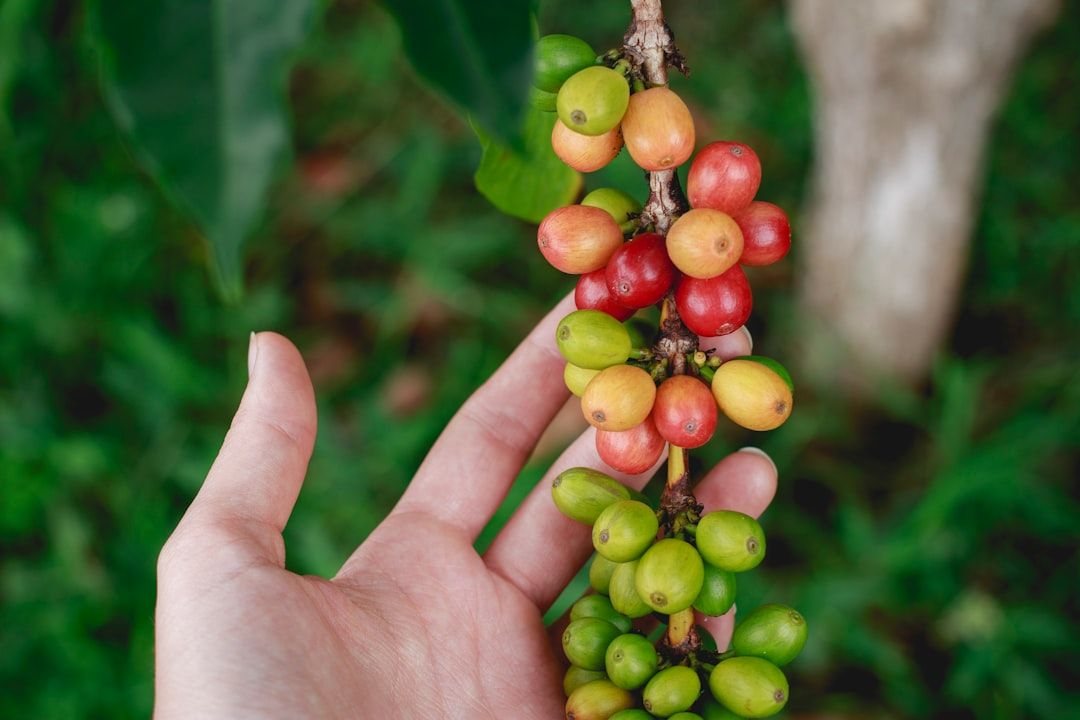
What "Organic" Means for Coffee
Organic coffee is coffee produced without the aid of artificial chemical substances, including certain synthetic pesticides, herbicides, and artificial fertilizers. The term acquires legal meaning only when a recognized certifying body has verified that a farm and its supply chain comply with a defined set of input and land-management standards.
In the United States, the USDA National Organic Program (NOP), administered by the Agricultural Marketing Service, sets the rules for what may be labeled organic and sold domestically. At the international level, the FAO/WHO Codex Alimentarius Commission provides guidelines for the production, processing, labeling, and marketing of organically produced foods, including coffee. These two frameworks do not always align perfectly, which matters to exporters selling into multiple markets.
A point frequently misunderstood by consumers: the former vice-chair of the U.S. National Organic Standards Board has stated explicitly that "organic labels are not statements regarding the healthiness, nutritional value, or overall safety of consuming such products." Certification is a production-method standard, not a health guarantee.
Prohibited Inputs and What Must Replace Them
The core prohibition in organic coffee certification concerns synthetic inputs. Specifically:
- Fertilizers: Synthetic nitrogen, phosphate, and potash are prohibited. Farms must use 100% organic fertilizer alternatives.
- Pesticides and herbicides: Synthetic formulations are not permitted on certified land.
- Post-harvest handling: The Organic Food Production Act of 1990 (OFPA) governs how harvested beans are handled throughout the production process, regulating chemical use after the cherry leaves the farm.
Permitted organic fertilizer sources include chicken manure, coffee pulp, bocachi (a fermented compost common in Central America), and general compost. Coffee pulp is particularly valuable because the coffee plant produces it as a by-product: the outer skin of the cherry is rich in nitrogen, phosphorus, and potassium—the same three macronutrients the plant needs most—and returning it to the soil creates a closed-loop fertility cycle. Cattle manure and biogreen preparations are also used to supply these essential nutrients.
Organic fertilizers carry a practical advantage beyond compliance: they reduce soil erosion and increase fertility by lowering bulk density, meaning farmers are replenishing nutrients rather than depleting them with each crop cycle. One recognized challenge, however, is that roughly one-third of would-be organic farmers have reported difficulty obtaining sufficient organic fertilizers, and transportation costs can make sourcing them prohibitive unless local supply chains exist.
The Transition Period and Certification Costs
Obtaining organic certification is not instantaneous. Under USDA NOP rules, land must not have been exposed to prohibited synthetic pesticides or other prohibited substances for three years prior to the first certified harvest. This transition period represents a significant financial burden: a farm must farm as if it were organic—foregoing the yield-boosting or pest-controlling effects of synthetic inputs—while receiving only conventional prices for its coffee.
Additional requirements that must be met before certification is granted include:
- A sufficient buffer zone between the organic plot and the nearest conventional crop, to prevent chemical drift or contamination.
- A sustainable crop rotation plan designed to prevent erosion, limit soil nutrient depletion, and naturally manage pest pressure.
- Ongoing record-keeping and third-party inspection by an accredited certifier.
It is worth noting that although USDA standards discourage chemical use on cropland within three years preceding harvest, exemptions can be made in certain circumstances—meaning that not all USDA-certified organic products are necessarily free of all chemical residues. This nuance is rarely communicated at the retail level.
For smallholders—who form the backbone of global coffee production, with tens of millions of small producers worldwide relying on coffee for a living—the direct costs of annual certification fees, documentation, and third-party audits can be disproportionately high relative to farm revenue. This structural challenge means that many farmers who farm organically in practice are unable to afford the label that would allow them to capture the associated price premium.
Shade-Growing, Biodiversity, and Climate Overlap
Organic coffee and shade-grown coffee are distinct certifications, but they frequently overlap in practice. Organic standards encourage agroforestry systems because the shade canopy supports the biological processes—pest predation by birds, nutrient cycling, moisture retention—that substitute for synthetic inputs.
According to CATIE (the Center for Tropical Agricultural Research and Higher Education in Costa Rica), 75% of the world's organic coffee comes from Latin America, a region where traditional shade-grown cultivation remains common. The environmental co-benefits of this system are well documented:
- Bird populations develop mutually beneficial relationships with coffee fields, providing natural insect control and fertilization.
- Shade canopies contribute to soil erosion minimization and support healthy local ecosystems.
- Agroforestry systems in coffee-growing regions contribute to carbon stocks, and afforestation in areas with high coffee agroforestry density has opened pathways for carbon offsetting, insetting, and footprint reduction—providing potential additional income streams for farmers who might otherwise struggle to justify the cost of organic management.
- These systems also have a role in climate change adaptation and mitigation, with technical assistance and capacity-building identified as low-cost mechanisms that support the collaboration between organic farming, reforestation, and climate goals.
This intersection means that organic certification is often one component of a broader sustainability profile, frequently stacked with Fair Trade, Rainforest Alliance, or Bird-Friendly certifications.
Geographic Distribution and Leading Producers
Organic coffee production is concentrated in Latin America but spans multiple continents. Key facts from available data:
- Peru was the leading exporter of organic coffee as of 2010, with over 423,000 bags exported that year.
- Honduras and Mexico each produce over 100,000 bags of organic coffee annually.
- Other significant producers include Brazil, Colombia, El Salvador, and Guatemala.
- Beyond Latin America, Indonesia and Ethiopia are notable producers in Asia and Africa respectively.
Organic production has generally been on an upward trend in Latin America. As of 2010, roughly 10% of one-time organic growers had reverted to conventional production due to price competition, but this trend had begun reversing as consumer demand grew and financing with manageable interest rates became more accessible.
Understanding this geography matters for anyone tracing coffee through the supply chain: the majority of organic coffee travels from smallholder plots in developing nations to roasters and retailers in industrialized economies, a dynamic that shapes both its price premium and its vulnerability to certification cost burdens.
Smallholder Economics
The economics of organic certification for smallholders are genuinely complex. The potential benefits are real: an organic price premium, access to specialty markets, and reduced long-term input costs as soil health improves. But the barriers are equally real:
- Transition period income gap: Three years of organic practice with conventional-price revenue.
- Fertilizer access: Approximately one-third of farmers report difficulty obtaining sufficient organic fertilizers; because transportation costs are a primary hindrance, sourcing nearby is nearly essential.
- Certification fees: Annual third-party inspection and documentation costs fall heavily on small operations.
- Price volatility: Coffee prices fluctuate widely on commodity markets, meaning the organic premium—while meaningful—does not eliminate income uncertainty. Coffee sales have historically swung dramatically, as seen in the broader coffee industry during prolonged price crises.
Organic fertilizers do offer a long-run economic argument: because they replenish soil nutrients rather than depleting them, they reduce input costs for future crops. Coffee pulp recycling is the clearest example—it converts a processing by-product into a fertility input at minimal cost. But the upfront transition period remains a structural obstacle that group certification schemes and cooperative models have tried, with mixed results, to address.
Flavor Claims and What the Evidence Supports
A persistent marketing claim holds that organic coffee tastes better. This claim deserves careful examination. Certification standards are process-based, not sensory-outcome-based. The flavor of a finished cup is determined primarily by variety, terroir, harvest ripeness, processing method, roast development, and brew technique—none of which are directly controlled by organic certification.
Where a correlation between organic practices and cup quality does sometimes appear, it is most plausibly explained by associated variables: organic farms are disproportionately shade-grown, often at higher altitudes, and operated by smallholders with an incentive to harvest selectively—all factors independently associated with higher cup quality in specialty coffee. The organic input restriction itself is not a reliable predictor of flavor.
Consumers interested in flavor quality are better served by evaluating origin, variety, processing, and roast transparency—topics explored in depth across the third wave coffee movement—than by treating the organic label as a proxy for sensory excellence.
Frequently asked questions
- What makes coffee officially "organic"?
- Coffee is officially organic when it has been grown on land free of prohibited synthetic pesticides, herbicides, and fertilizers for at least three years before harvest, produced with only permitted organic inputs such as compost, coffee pulp, or animal manure, and verified by an accredited third-party certifier. In the United States, the USDA National Organic Program sets and enforces these standards.
- Does organic certification mean the coffee is pesticide-free?
- Not necessarily. The USDA NOP requires that prohibited substances not be used on the land for three years prior to harvest, but exemptions can be made. The former vice-chair of the U.S. National Organic Standards Board has stated that organic labels are not statements about the safety or healthiness of the product. Trace residues are possible in some certified organic products.
- How long does it take to get organic coffee certification?
- The standard transition period is three years during which the land must be managed without prohibited synthetic inputs before the first certified-organic harvest can occur. During this period farmers bear the costs of organic management without access to the organic price premium, which is a significant financial burden for smallholders.
- Is organic coffee always shade-grown?
- Organic and shade-grown are separate certifications, but they frequently overlap. Organic standards favor agroforestry because the shade canopy supports the biological processes—natural pest control, nutrient cycling, erosion prevention—that substitute for synthetic inputs. According to CATIE, 75% of the world's organic coffee originates in Latin America, where shade-grown cultivation is common.
- Does organic coffee taste better?
- Organic certification is a production-method standard with no direct sensory requirements. Any observed correlation between organic coffee and higher cup quality is most likely explained by associated factors such as shade-growing, higher altitude farming, and selective hand-harvesting—not the absence of synthetic inputs per se. Flavor is determined by variety, terroir, processing, roast, and brew method.
- Why is organic certification difficult for smallholders?
- Smallholders face several overlapping barriers: the three-year transition period during which they receive no premium, difficulty sourcing sufficient organic fertilizers (approximately one-third of farmers report this problem), annual third-party certification fees that are disproportionately large relative to small farm revenues, and ongoing coffee price volatility that erodes the value of the premium.
See also