Knowledge · plant
Growing Coffee: Altitude, Shade & Soil
How altitude, shade, soil, and agronomic practice shape bean quality and ecosystem health
Key facts
- Primary Species
- Coffea arabica, responsible for most specialty coffee
- Ideal Temperature Range
- 18–22 °C mean annual for arabica
- Annual Rainfall
- 1,500–2,500 mm for arabica
- Optimal Soil pH
- 6.0–6.5, deep and well-drained
- High-Altitude Maturation
- Up to nine months from flowering to harvest
- Altitude Bean Grades
- Hard bean (HB) and strictly hard bean (SHB)
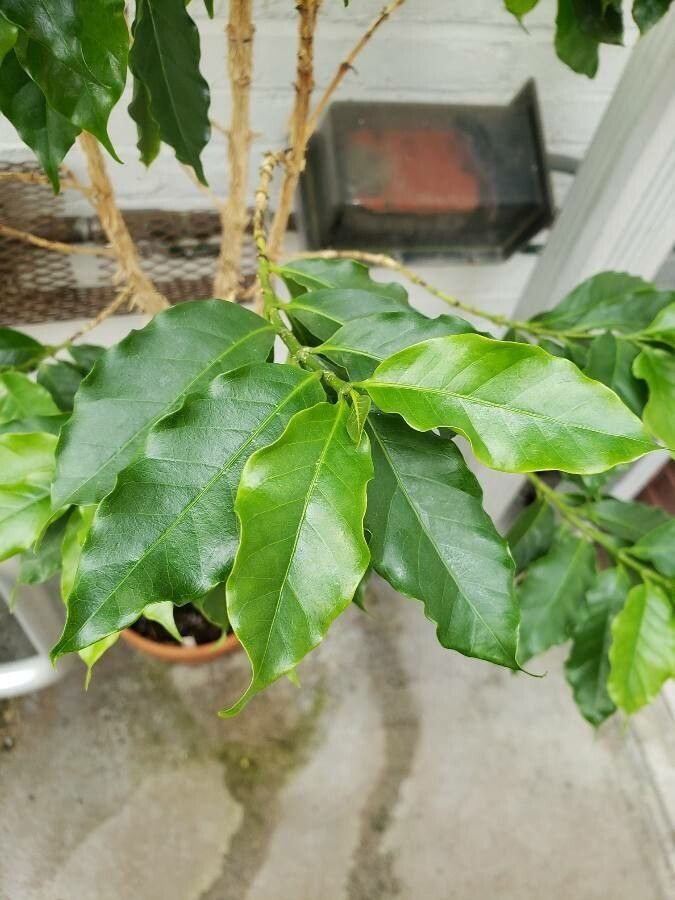
The Coffee Plant and Its Natural Habitat
To understand cultivation requirements, it helps to begin with the plant itself. Coffea arabica, the species responsible for most of the world's specialty coffee, is in its wild form a small tree or shrub that grows beneath the canopy of montane forests in Ethiopia and South Sudan. Coffea canephora (Robusta) originates in the lowland forests of West and Central Africa. Both species evolved under specific temperature, light, and moisture regimes, and commercial cultivation is most successful when those conditions are approximated or thoughtfully managed.
Understanding the coffee plant's biology—its shallow roots, its sensitivity to frost and to intense direct radiation, its need for a defined dry season to trigger synchronized flowering—is the foundation for every cultivation decision a farmer makes.
Altitude and Bean Development
Altitude is among the most-discussed variables in coffee quality, and for good reason: it shapes nearly every physical and chemical attribute of the mature bean.
At higher elevations, mean daily temperatures are lower and diurnal temperature variation—the swing between daytime highs and nighttime lows—is more pronounced. These cooler conditions slow the metabolism of the developing coffee cherry. Where a cherry at low elevation might complete its maturation cycle in a matter of months, the same cultivar grown at altitude may take considerably longer to ripen fully, with some high-elevation arabicas taking around nine months from flowering to harvest-ready cherry. This extended maturation allows more time for sugars, organic acids, and aromatic precursors to accumulate in the seed.
The practical results are measurable:
- Denser beans: Slower cell development produces a harder, denser bean—often described as hard bean (HB) or strictly hard bean (SHB) in Central American grading systems, terms that correlate with elevation thresholds.
- Brighter acidity: Higher concentrations of malic, citric, and phosphoric acids contribute the crisp, fruit-forward acidity associated with washed Ethiopian or Guatemalan highland coffees.
- Greater aromatic complexity: Slower enzymatic activity during maturation is associated with a richer palette of volatile aromatic compounds after roasting.
Elevation alone, however, is not deterministic. A farm at 1,500 m in a hot, dry region may produce cherries that ripen as quickly as a farm at 900 m in a cool, humid climate. Altitude functions as a proxy for temperature, which is the operative variable.
Latitude, Temperature Band, and the Coffee Belt
Arabica is typically cultivated between approximately 25° North and 25° South of the equator—the so-called Coffee Belt—though most high-quality production concentrates between the Tropics of Cancer and Capricorn. Within this band, arabica performs best in what is commonly described as a mean annual temperature range of roughly 18–22 °C (64–72 °F), while robusta tolerates warmer and more humid lowland conditions.
Frost is lethal to both species, and even brief cold snaps can cause significant crop loss. Brazil's lower-latitude, higher-elevation plateaus, such as those in Minas Gerais and São Paulo state, sit at the margins of frost risk—a fact that drives planting and insurance decisions. Conversely, sustained heat above roughly 30 °C (86 °F) accelerates cherry maturation to a degree that compromises cup quality, a concern increasingly relevant given climate-driven temperature shifts.
Latitude also interacts with seasonality. Near the equator, countries such as Colombia benefit from two distinct flowering seasons annually—a main crop and a secondary (mitaca) crop—because the relatively uniform daylength allows for multiple flowering triggers. Further from the equator, a single pronounced dry season followed by rains produces one major flowering and one main harvest per year.
Rainfall, Dry Seasons, and Irrigation
Coffee requires substantial and well-distributed rainfall, typically cited as somewhere in the range of 1,500–2,500 mm annually for arabica, though specific needs vary by cultivar, soil type, and temperature. Crucially, the pattern of rainfall matters as much as the total volume.
A distinct dry season of one to three months is agronomically valuable: water stress triggers synchronized flowering across a plantation. When rains return—or when farmers irrigate after a dry period—plants respond with a mass flowering event, producing the small, intensely fragrant white blossoms known in some growing regions as the jasmine bloom. This synchronization simplifies harvest logistics considerably, since cherries across a block ripen within a narrower window.
Excessive or poorly distributed rainfall creates its own challenges:
- Prolonged wet periods encourage fungal diseases, particularly coffee leaf rust (Hemileia vastatrix), which has historically driven major shifts in cultivation practice.
- Waterlogged soils impede root respiration and promote root rot.
- Rain at harvest time can split ripe cherries and initiate fermentation on the tree, degrading cup quality.
In regions with unreliable rainfall, supplemental irrigation extends the viable growing zone but adds cost and water-management complexity.
Soil, Volcanic Terroir, and Nutrition
Coffee thrives in deep, well-drained, loamy soils with good organic matter content and a slightly acidic pH, commonly cited in the range of 6.0–6.5. The plant's relatively shallow but extensive root system is sensitive to both compaction and waterlogging.
Volcanic soils have earned particular renown in coffee cultivation. Regions built on volcanic geology—Guatemala's Antigua valley, the slopes of Volcán Barú in Panama, Colombia's Nariño department, Ethiopia's Sidama zone, and Indonesia's Sumatra and Java—share several soil characteristics that benefit coffee:
- High mineral content (potassium, phosphorus, calcium, magnesium) that supports robust plant nutrition
- Excellent drainage combined with good moisture retention due to the porous, friable texture of volcanic ash-derived soils
- High organic matter in soils that have been under forest cover and enriched by decades of leaf litter decomposition
The concept of terroir—the idea that geography, geology, and microclimate imprint identifiable characteristics on the finished cup—is well-established in specialty coffee discourse, even if the precise biochemical mechanisms linking specific minerals to specific flavors remain an active area of research. What is clear is that soil fertility directly influences vegetative vigor, cherry development, and ultimately the composition of the green bean.
Soil management practices—composting, cover cropping, mulching with pulped cherry husks, and avoiding synthetic inputs that alter pH—are central to both quality and long-term farm sustainability. On steep hillside farms, erosion control is critical; shade-grown systems and contour planting both help retain topsoil.
Shade vs. Sun Cultivation and Agroforestry
One of the most consequential decisions in coffee farming is whether to grow under shade or in full sun. This choice reverberates through ecology, quality, and economics.
Traditional Shade Systems
As noted above, arabica evolved as an understorey plant. Traditionally, commercial coffee was grown beneath a diverse canopy of shade trees. This rustic polyculture approach mimics natural forest structure and supports remarkable biodiversity. Research summarized from shade-grown coffee systems documents:
- Plant species richness of 90–120 species on a single traditional plantation
- Tree species richness of 13–58 species per site
- 184 bird species recorded in traditional shade plantations near Soconusco, Chiapas, compared to as few as 6–12 in unshaded monoculture
- Bird abundance and diversity 30% and 15% greater, respectively, in shaded farms versus sun farms in Guatemala
- 28 mammal species documented in shade-coffee systems in India's Western Ghats
This biodiversity is not merely ecological decoration. Birds and mammals provide significant natural pest control. A study in Jamaica found that excluding birds from one coffee plantation resulted in a 70% increase in the proportion of coffee fruits infected by the coffee berry borer—a devastating insect pest.
Insect communities in shaded polycultures are themselves complex: over 600 insect species from 258 families were recorded at ground level to two meters in a single shaded plantation near Tapachula, Chiapas, with predators and parasites representing 42% of total species—a food-web structure that suppresses potential crop pests.
Shade systems also deliver agronomic and environmental benefits:
- Improved soil stability and erosion resistance
- Enhanced water retention compared to full-sun systems
- Carbon sequestration that contributes to climate change mitigation
- Buffering of temperature extremes, which matters increasingly as ambient temperatures rise
- Leaf litter from shade trees contributes to soil organic matter
The Shift to Sun Cultivation
Since the mid-1970s, the development of sun-tolerant cultivars—partly in response to outbreaks of coffee leaf rust—enabled a transition toward high-density, open-canopy plantations. Sun cultivation allows for higher planting densities, more uniform fertilizer and pesticide application, and, in many contexts, higher short-term yields. These factors drove widespread adoption, particularly in Latin America.
However, the proportion of land used to cultivate shade-grown coffee, relative to total coffee cultivation area, fell by nearly 20% between 1996 and 2014, a trend with significant ecological consequences. Full-sun monocultures support drastically lower biodiversity and require greater chemical inputs to compensate for the ecosystem services—pest control, nutrient cycling, erosion control—that shade systems provide naturally.
Agroforestry as a Middle Path
Modern agroforestry approaches seek to combine the productivity advantages of improved cultivars with the ecological services of shade. Farmers may maintain a structured multi-strata canopy with nitrogen-fixing trees, fruit trees, and timber species alongside coffee—gaining income diversification, shade benefits, and carbon credits while sustaining reasonable yields. This model aligns with specialty coffee quality goals, since shaded, slower-ripening cherries often exhibit greater flavor complexity.
Ripening, Picking, and the Altitude–Quality Connection
The relationship between altitude, shade, and cherry ripening converges at harvest. Cherries ripen around eight months after the emergence of the flower—though this window is influenced by temperature and, therefore, altitude. At higher elevations, cooler temperatures extend this maturation period, which is linked to the denser, more complex beans prized in specialty markets.
Harvest method interacts directly with quality. Selective hand-picking—rotating through trees every eight to ten days to pick only cherries at peak ripeness—preserves the quality gains of slow, altitude-driven maturation. It is labor-intensive and therefore primarily used for higher-end arabica production. Strip picking, by contrast, removes all cherries regardless of ripeness, mixing mature red cherries with unripe green ones. Lots including unripe fruit tend to produce cups characterized by bitterness and astringency, while fully ripe red cherries, with their higher aromatic oil content and lower organic acid content, produce more fragrant, smooth, and balanced results.
Planting Density and Pruning
Planting density is a key lever in farm management, with significant trade-offs. Higher-density plantings can maximize yield per hectare in favorable conditions—sun-cultivation systems in particular exploit this. However, high density increases competition for water and nutrients, increases humidity within the canopy (raising disease pressure), and complicates harvesting and management.
Lower-density plantings under shade, by contrast, allow individual trees to develop more fully, may support better cherry development per tree, and facilitate the multi-strata agroforestry model.
Pruning serves multiple agronomic functions in coffee cultivation:
- Rejuvenation: Coffee plants bear fruit primarily on one-year-old lateral branches. Without pruning, the productive zone migrates progressively higher up the plant, making harvest difficult and reducing yield. Systematic pruning—whether single-stem, multi-stem, or stumping approaches—keeps the plant productive and manageable.
- Disease management: Opening the canopy through pruning improves air circulation and reduces the moist microclimate that favors fungal diseases.
- Renovation: Older, declining plants can be regenerated through hard stumping, cutting the main stem close to the ground to stimulate new growth from the base.
Pruning regimes are calibrated to cultivar, local climate, and labor availability, and differ substantially between smallholder systems and large estates.
From Seed to First Harvest
Coffee is a long-cycle crop that demands patience and sustained investment before the first commercial return. The general timeline:
- Nursery phase: Seeds are germinated in nursery beds or containers, often taking several months to reach transplant size as seedlings.
- Field establishment: Young plants are set out in the field, typically with shade or nurse trees already in place if an agroforestry model is used.
- Vegetative growth: A coffee plant usually starts to produce flowers three to four years after planting, during which time the farm generates no cherry revenue.
- First harvest: The first useful harvest is generally possible around five years after planting.
- Peak production: Plants typically reach peak productive capacity over subsequent years, with productive lifespans of several decades possible under good management—though yields decline without active renovation pruning.
This multi-year lag between planting investment and first revenue is a significant financial challenge for smallholders, particularly in the context of commodity price volatility. Coffee production is a major source of income for millions of households—estimates suggest 12.5 million households, with some 25 million small producers relying on coffee for their livelihoods—making the economics of the establishment period a matter of food security as much as agronomy.
The interplay of altitude, climate, soil, shade management, planting density, and pruning means that no two farms produce identical coffee, even when using the same cultivar or genetic material. This complexity is precisely what gives origin coffee its character—and why understanding cultivation factors is essential to understanding what is in the cup.
Frequently asked questions
- Why does higher altitude generally produce better-quality coffee?
- At higher elevations, lower temperatures slow the development of the coffee cherry, extending the maturation period. This allows more time for sugars, organic acids, and aromatic precursors to accumulate in the seed, resulting in denser beans with brighter acidity and greater flavor complexity. Altitude functions as a proxy for temperature—the cooler conditions are the operative variable.
- What is shade-grown coffee and why does it matter?
- Shade-grown coffee is cultivated under a canopy of trees rather than in full-sun monoculture. It mimics the natural forest habitat of arabica coffee, supporting high biodiversity—including birds that provide natural pest control—while improving soil stability, water retention, and carbon storage. Research shows shade farms can host dramatically more bird and plant species than unshaded monocultures.
- How long does it take a coffee plant to produce its first harvest?
- A coffee plant typically begins to flower three to four years after planting, with the first useful harvest generally possible around five years after planting. This long establishment period, during which the farm generates no cherry revenue, is a significant financial challenge for smallholder farmers.
- What makes volcanic soil particularly good for coffee?
- Volcanic soils tend to be rich in minerals such as potassium, phosphorus, calcium, and magnesium; they drain well while retaining adequate moisture due to their porous, friable texture; and they are often high in organic matter. These characteristics support strong plant nutrition and healthy cherry development, contributing to the distinctive cup profiles associated with volcanic-origin coffees.
- What is the difference between strip picking and selective picking?
- Strip picking removes all cherries from the branch at once, regardless of ripeness, and can be done by machine or by hand. Selective picking involves hand-harvesting only ripe cherries, with pickers returning to the same trees every eight to ten days. Selective picking is more labor-intensive and primarily used for higher-end arabica, since mixing ripe and unripe cherries in strip picking can produce bitter, astringent flavors.
- How does a dry season benefit coffee cultivation?
- A distinct dry season of one to three months creates water stress that triggers synchronized flowering across a coffee plantation. When rains return, plants respond with a mass flowering event, which means cherries ripen within a narrower window—greatly simplifying harvest logistics and improving quality consistency.
- What is the purpose of pruning coffee plants?
- Pruning serves several functions: it keeps the productive fruiting zone accessible by preventing it from migrating too high on the plant; it improves air circulation to reduce fungal disease pressure; and through hard stumping it can rejuvenate old or declining plants by stimulating new growth from the base. Without pruning, yields decline and harvest becomes increasingly difficult.
See also