Knowledge · plant
Arabica Coffee
Origin, genetics, cultivation, and the characteristics that make Coffea arabica the foundation of specialty coffee.
Key facts
- Origin
- Ethiopian and South Sudanese montane forests
- Caffeine Content
- Approximately 1.2% by dry weight
- Genetics
- Allotetraploid hybrid of C. canephora and C. eugenioides
- Ideal Altitude
- 1,200 to 1,500 metres
- Optimal Temperature
- 15 to 24 degrees Celsius
- Time to Maturity
- Approximately seven years
Origin and Natural Distribution
Coffea arabica is endemic to the montane forests of southwestern Ethiopia and the Boma Plateau of South Sudan, where it grows naturally as an understory shrub beneath the forest canopy. These highland forests — characterised by rich biodiversity, seasonal rainfall, and moderate temperatures — represent the species' evolutionary home and the primary reservoir of its genetic diversity.
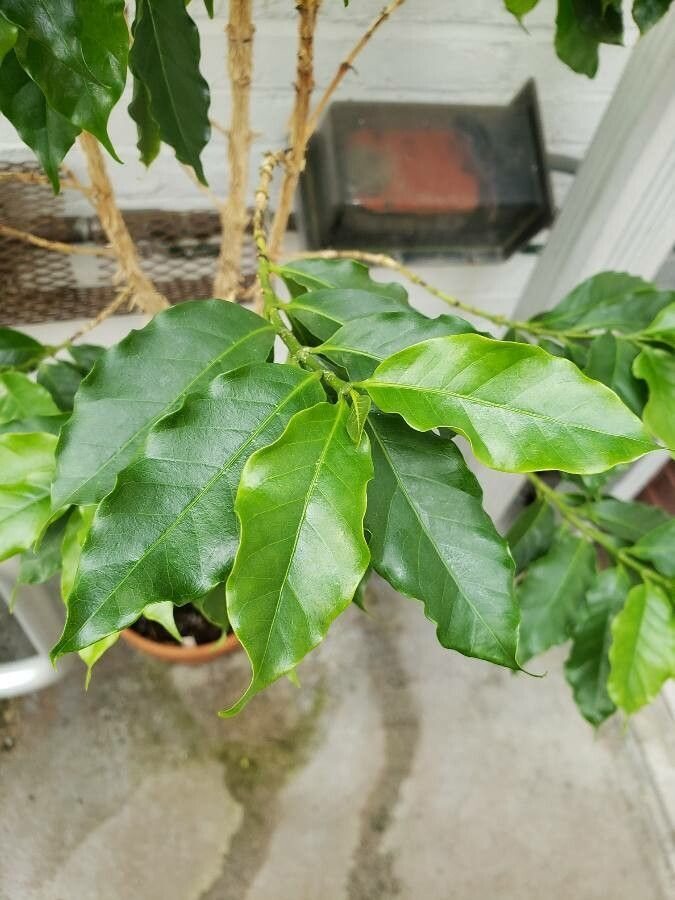
The species has also been recorded on Mount Marsabit in northern Kenya, though current evidence suggests this population is naturalised rather than truly native. Wild plants in their natural habitat grow between 9 and 12 metres tall, displaying an open branching system, glossy dark-green elliptic-ovate leaves, and clusters of two to nine highly fragrant white flowers. The fruit is a drupe — universally called a coffee cherry — that matures to bright red or purple and typically contains two seeds: the coffee beans.
From Ethiopia and Yemen, where Arab scholars first documented its use as a beverage brewed from roasted beans, arabica spread across the globe. Cultivation reached Indonesia in 1699 via Yemeni trade, and Hawaii by the early nineteenth century. Today it is grown across the tropics, from Central and South America to East Africa, Southeast Asia, and beyond — anywhere between the Tropic of Cancer and the Tropic of Capricorn. See Growing Coffee: Altitude, Shade & Soil for a detailed treatment of the environmental requirements of coffee cultivation.
Taxonomy and Botanical History
The species was formally described by Carl Linnaeus in Species Plantarum in 1753, drawing on earlier work by Antoine de Jussieu (1715), Gaspard Bauhin (1623), and Prospero Alpini (1592) — a lineage of botanical scholarship stretching back nearly two centuries before Linnaeus formalised the name. Coffea arabica belongs to the family Rubiaceae (the coffee and madder family) and sits within the genus Coffea, which now encompasses more than 130 accepted species.
Arabica is unusual within the genus because it is polyploid: it carries four copies of its eleven chromosomes (44 total), compared with the two copies found in diploid relatives such as C. canephora and C. eugenioides. This makes it an allotetraploid — a species that arose through hybridisation between two distinct diploid ancestors whose combined genomes were then doubled.
Allotetraploid Genetics: The Canephora × Eugenioides Hybrid
Genetic and genomic evidence confirms that Coffea arabica originated from a single natural hybridisation between Coffea canephora (robusta) and Coffea eugenioides, two diploid African species. This event is estimated to have occurred between approximately 1.08 million and 543,000 years ago, linked to shifting environmental conditions in East Africa during that period.
The consequence of this origin is profound for breeders and growers alike. Because the entire species descends from essentially one hybridisation event, C. arabica is self-pollinating and displays exceptionally low genetic diversity relative to most crop plants. While self-pollination ensures consistency — a plant breeds true to type — it also means the species has a narrow buffer against pathogens and environmental stresses. Every traditional arabica variety inherits two complete but distinct sub-genomes (one from each diploid parent), contributing to the biochemical complexity associated with its cup quality, but also to its vulnerabilities.
For a deeper treatment of coffee genetics and ongoing breeding efforts, see Coffee Genetics & Breeding.
Caffeine Content and Biochemistry
Arabica beans contain approximately 1.2% caffeine by dry weight — roughly half the caffeine concentration found in C. canephora. This lower caffeine level is often cited as a contributor to arabica's perceived smoothness and reduced bitterness, since caffeine itself is a primary source of bitter taste in coffee.
Caffeine in coffee serves an ecological function: it acts as a natural pesticide against insects and other herbivores, while simultaneously reinforcing pollinator behaviour in bees by creating olfactory memory. The relatively modest caffeine content in arabica reflects both its genetic heritage from C. eugenioides — a low-caffeine species — and its evolution in a shaded montane environment with lower pest pressure than lowland habitats.
Beyond caffeine, arabica's cup character is defined by its organic acid profile, chlorogenic acid content, and volatile aromatic compounds — characteristics shaped by altitude, variety, processing, and roast, but rooted ultimately in the species' unique allotetraploid biochemistry.
Ideal Altitude and Climate
Arabica is a highland crop. It is typically cultivated at altitudes between 1,200 and 1,500 metres, though plantations exist from near sea level up to approximately 2,800 metres. Greater altitude generally means cooler temperatures that slow cherry maturation, allowing more complex sugars and acids to develop — a key reason high-grown arabicas are prized in specialty markets.
Key climatic requirements include:
- Temperature: performs best between 15 and 24 °C; tolerates cool conditions but not frost
- Rainfall: requires approximately 1.2–1.8 metres of rain per year, ideally well distributed across seasons
- Shade: unlike C. canephora, arabica prefers to grow in partial or light shade, reflecting its origin as a forest understory species
- Soil: thrives in well-drained, fertile soils characteristic of montane forest environments
Commercially, trees are frequently pruned to around 2–5 metres to facilitate harvesting, well below the 9–12 metres reached in the wild. The crop takes approximately seven years to reach full maturity, and begins producing flowers — small, white, and intensely fragrant — three to four years after planting.
Susceptibility to Coffee Leaf Rust and Other Threats
The most consequential vulnerability of C. arabica is its susceptibility to coffee leaf rust (Hemileia vastatrix), the fungal pathogen that has devastated arabica plantations repeatedly since the nineteenth century, most catastrophically in Ceylon (Sri Lanka) in the 1870s and across Central America in the early twenty-first century.
This susceptibility flows directly from arabica's low genetic diversity: because the global arabica gene pool is so narrow, a pathogen that overcomes the defences of one plant can often infect nearly all plants of the same variety across continents. The Coffee Genetics & Breeding article covers the ongoing work to introgress rust-resistance genes — primarily from C. canephora and other diploid relatives — into arabica through programmes such as those at CIRAD and national research institutes.
Additional threats include the coffee berry borer (Hypothenemus hampei), prolonged drought, and the long-term pressure of climate change, which is projected to reduce suitable growing zones for arabica in several major producing regions.
Major Variety Groups
Despite its limited genetic diversity, arabica has diversified into a wide range of varieties and cultivars through centuries of cultivation, natural mutation, and targeted breeding. The major groups include:
- Typica: the foundational variety from which most New World arabicas descend; known for clean, delicate cup profiles but relatively low yields and high rust susceptibility
- Bourbon: a natural mutation of Typica that emerged on the island of Réunion (formerly Bourbon); produces sweeter, rounder cups and higher yields than Typica, and is the parent of many modern varieties
- Gesha (Geisha): originating from the Gori Gesha forest in southwestern Ethiopia; celebrated for exceptional floral and tea-like aromatic complexity, and commanding some of the highest prices in specialty coffee
- Caturra, Catuai, and Mundo Novo: compact or hybrid varieties developed in Brazil and Central America for higher yields and manageability; widely planted commercially
- Híbrido de Timor and F1 hybrids: crosses incorporating C. canephora genetics or wild Ethiopian material, bred specifically for disease resistance and hybrid vigour
The full taxonomy and cup characteristics of these groups are covered in Coffee Varieties & Cultivars.
Why Arabica Dominates Specialty Coffee
Arabica's primacy in specialty coffee rests on several converging factors. Its lower caffeine content reduces harshness; its allotetraploid biochemistry supports a wider range of volatile aromatic compounds; and its requirement for high-altitude, shade-grown cultivation naturally aligns with the slow cherry development that produces more complex sugars and acids. The result is a species capable of expressing extraordinary terroir — the combination of variety, altitude, microclimate, soil, and processing that gives great specialty lots their distinctive character.
Compared with Robusta (C. canephora), arabica offers lighter body, brighter acidity, greater aromatic range, and lower bitterness in the cup. These attributes have made it the default choice for filter coffee, espresso blends oriented toward sweetness and clarity, and the competitive arenas of the SCA-sanctioned Cup of Excellence and World Barista Championship.
At the same time, the species' fragility — its rust susceptibility, climate sensitivity, and narrow genetic base — means that arabica's dominance cannot be taken for granted. The story of coffee plant science going forward is substantially a story of how the industry safeguards and diversifies the arabica gene pool while meeting growing global demand.
Frequently asked questions
- Where does Coffea arabica originally come from?
- Coffea arabica is endemic to the montane forests of southwestern Ethiopia and the Boma Plateau of South Sudan, where it grows naturally as a forest understory shrub. It is also found historically in Yemen, where Arab scholars first documented brewing roasted coffee beans as a beverage.
- What does allotetraploid mean in relation to arabica coffee?
- Allotetraploid means that arabica carries four sets of chromosomes (44 total) derived from two distinct parent species — Coffea canephora (robusta) and Coffea eugenioides. A natural hybridisation between these two diploid species, estimated at between 543,000 and 1.08 million years ago, gave rise to arabica's unique combined genome.
- Why does arabica have lower caffeine than robusta?
- Arabica contains approximately 1.2% caffeine by dry weight, compared with the higher levels found in Coffea canephora. This reflects arabica's genetic heritage from C. eugenioides, a low-caffeine parent species, as well as its evolution in a shaded highland environment with comparatively lower insect pest pressure.
- At what altitude is arabica coffee grown?
- Arabica is typically cultivated between 1,200 and 1,500 metres above sea level, though plantations exist anywhere from near sea level up to around 2,800 metres. Higher altitudes slow cherry maturation, which tends to produce greater flavour complexity.
- Why is arabica so susceptible to coffee leaf rust?
- Arabica's susceptibility to the fungal pathogen Hemileia vastatrix (coffee leaf rust) is closely linked to its exceptionally low genetic diversity. Because the entire species descends from a single ancient hybridisation event and reproduces through self-pollination, there is little genetic variation to provide natural resistance across different plants and populations.
- What are the main arabica varieties grown for specialty coffee?
- The principal variety groups include Typica, Bourbon, Gesha (Geisha), Caturra, Catuai, Mundo Novo, and various disease-resistant hybrids such as Híbrido de Timor and modern F1 hybrids. Each has distinct yield, disease resistance, and cup-quality characteristics shaped by centuries of cultivation, natural mutation, and breeding.
See also