Dry Fermented Washed
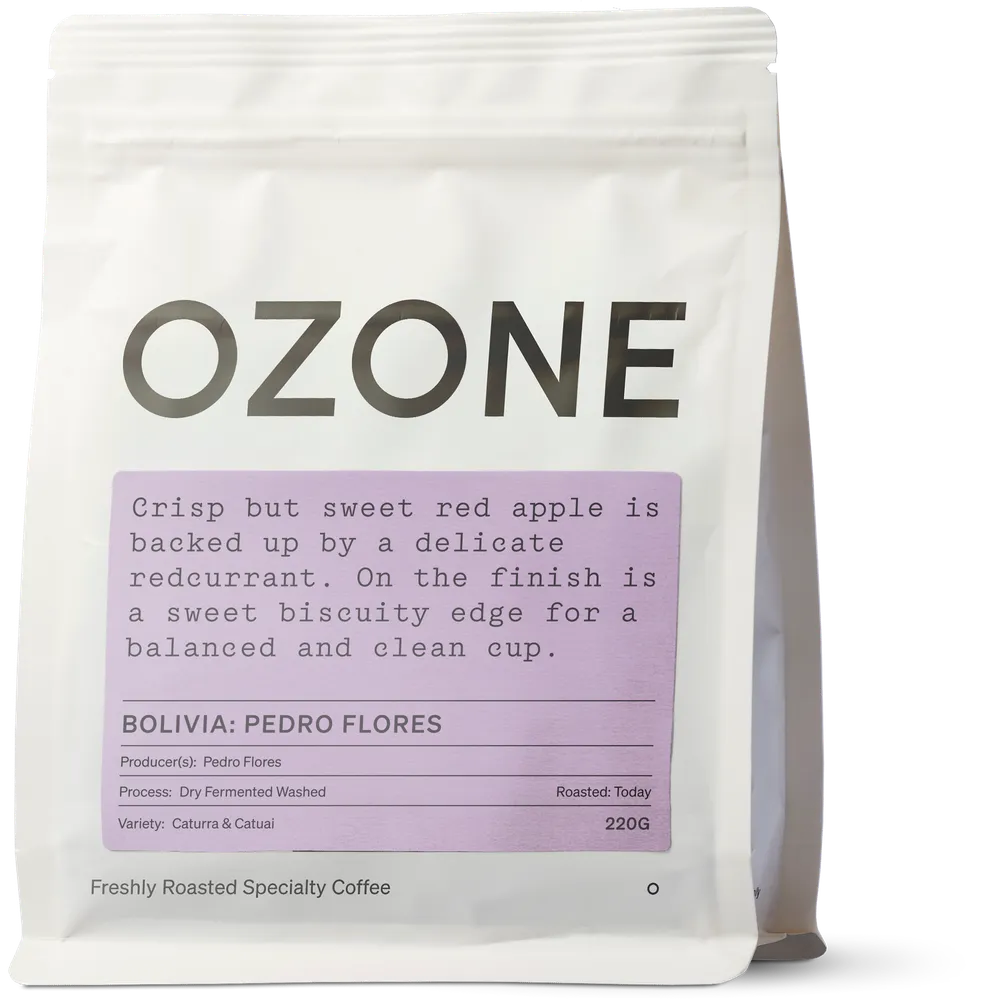
Bolivia: Pedro Flores, Dry Fermented Washed
Roasted by Ozone Coffee
Crisp Bolivian Catuai with red apple, redcurrant, and balanced biscuity sweetness.
From the roaster
Bolivia: Pedro Flores, Catuai, Dry Fermented Washed
Crisp but sweet red apple is backed up by a delicate redcurrant. On the finish is a sweet biscuity edge for a balanced and clean cup.
Pedro Flores’ farm is in the small colonia of Villa Rosario, a short drive east of Caranavi city. The Caranavi province sits towards the western edge of Bolivia, on the eastern slopes of the Andes mountain range. Caranavi means "high place" in the Aymara language, one of the indigenous languages spoken in Bolivia. Caranavi province sits in a transitional zone between the high Andes and the Amazon basin, it’s known for its lush vegetation and has been dubbed the "Coffee Capital of Bolivia" for its ideal growing conditions and over 13,000 hectares of plantations.
Pedro has about 2 hectares of land spread across a ridge at 1,500 metres above sea level. He’s very aware of how the plants respond differently depending on the different microclimates they experience on one side from the other. He’s part of the Sol De La Mañana project, run by our Bolivian exporting partners Agricafe. The program provides training in coffee agronomy to small producers. Through this, he’s learnt to replant his land and manage his coffee plants more methodically to get both quality and consistency.
Meaning “The Sun of Tomorrow”, this program supports small local producers to increase their long term efficiency and quality of production so that they can become sustainable. The Los Rodriguez farms play into this, with the varietals, techniques, and processing which they develop on the farms being passed on to the Sol De La Mañana producers. The producers get support in understanding not just coffee agronomy but cupping, the coffee markets, and much more. The coffee from these producers is delivered to Agricafe’s mill – Buena Vista – in the evening and processed there. Each lot is rigorously separated, measured and controlled to ensure the best quality for the coffee. In Bolivia, even a small portion of the coffee harvest earning less than a good speciality coffee price would be devastating to the producers.
To ensure only the very ripest coffee cherries are picked, it's not uncommon for producers in the Sol De La Mañana program to do 7 or 8 harvesting passes across their plants, many more than producers in other parts of the world do. This is very labour intensive and yields smaller amounts each pass but ensures great quality. The downside is that for each delivery of cherries from the Sol De La Mañana producers in Bolinda, the lots are often too tiny to process separately and so it’s common for coffee from these smallholders to end up as blended lots which means we can’t always trace the coffee back to individual farms. Thanks to improved traceability and deeper collaboration with the Sol de la Mañana program, we’re now seeing more availability of single producer lots like this one from Pedro. Roland was particularly excited about this new development for our 2025 harvest Bolivian coffees and said, "It’s a significant step forward - not just for transparency, but for recognising the skill and dedication of individual farmers whose work could otherwise go unnamed".
Once the fresh cherry is delivered to Buena Vista mill, it goes through a de-pulper to remove the skin and fruit pulp from the seeds. But instead of adding water to fermentation tanks (as you would with traditional washed processing), the de-pulped coffee – still coated in its sticky mucilage layer – goes into closed tanks to ferment in its own moisture and natural juices. This dry fermentation environment creates a more concentrated microbial activity. The yeasts and bacteria breaking down that mucilage are working in an intensely flavour-rich medium, rather than a diluted water bath. The result? More pronounced fruit character and a heightened clarity in the cup. After fermentation is complete, the coffee is thoroughly washed to remove all remaining mucilage, then taken to raised drying beds where it slow
— Ozone Coffee
Context
Pedro Flores brings a refined approach to coffee processing in Bolivia's Caranavi region, employing a dry fermented washed method that adds complexity to the region's Catuai varietal. This hybrid technique—combining elements of natural and washed processing—often produces coffees with layered fruit character and unusual clarity. The producer's work at 1500 meters yields a cup marked by bright red fruit notes and subtle biscuity undertones, suggesting both delicacy and structure. Ozone Coffee has roasted this lot to emphasize those qualities, creating an accessible yet nuanced profile that rewards attention. For those exploring less conventional processing methods, this lot offers a window into how fermentation choices can shape a coffee's sensory identity.
In the Encyclopedia
Frequently asked questions
What does Bolivia: Pedro Flores, Dry Fermented Washed taste like?
Expect tasting notes of red apple, redcurrant, and biscuity.
How is Bolivia: Pedro Flores, Dry Fermented Washed processed?
Bolivia: Pedro Flores, Dry Fermented Washed uses the Dry Fermented Washed process.
More from Ozone Coffee
View all →Mosto Washed
Bolivia: Don Carlos, Mosto Washed
Soft and sweet Bolivian coffee with sultanas, apricot, and golden sugar notes.
Mosto Fermented Washed
Bolivia: Gregorio & Nancy Palli, Mosto Fermented Washed
Bolivian Caturra and Catuai with bright lime, blackcurrant, and cocoa from mosto fermented washed processing.
Honey
Bolivia: Jeivert Panuni
Honey-processed Bolivian coffee with bright berry and sweet apple notes.
Anaerobic Natural
Thailand: Aoy & Nui
Anaerobic natural Typica from Thailand with red cherry, banana and vanilla notes.
More Dry Fermented Washed coffees
Last verified: June 27, 2026 · Browse all beans.