Knowledge · process
Natural (Dry) Processing
How drying whole cherries in the sun shapes coffee's boldest flavors — and why this ancient method is thriving in modern specialty coffee.
Key facts
- Also called
- Dry processing
- Origin
- Ethiopia, Yemen, ancient method
- Key difference
- Whole cherry dries with seed intact
- Drying duration
- 2–6 weeks depending on climate
- Main labor
- Frequent turning, 4–6 times daily
- Flavor profile
- Stone fruit, berry, chocolate, wine notes
- In our catalog
- 369 natural-process coffees
What Is Natural Processing?
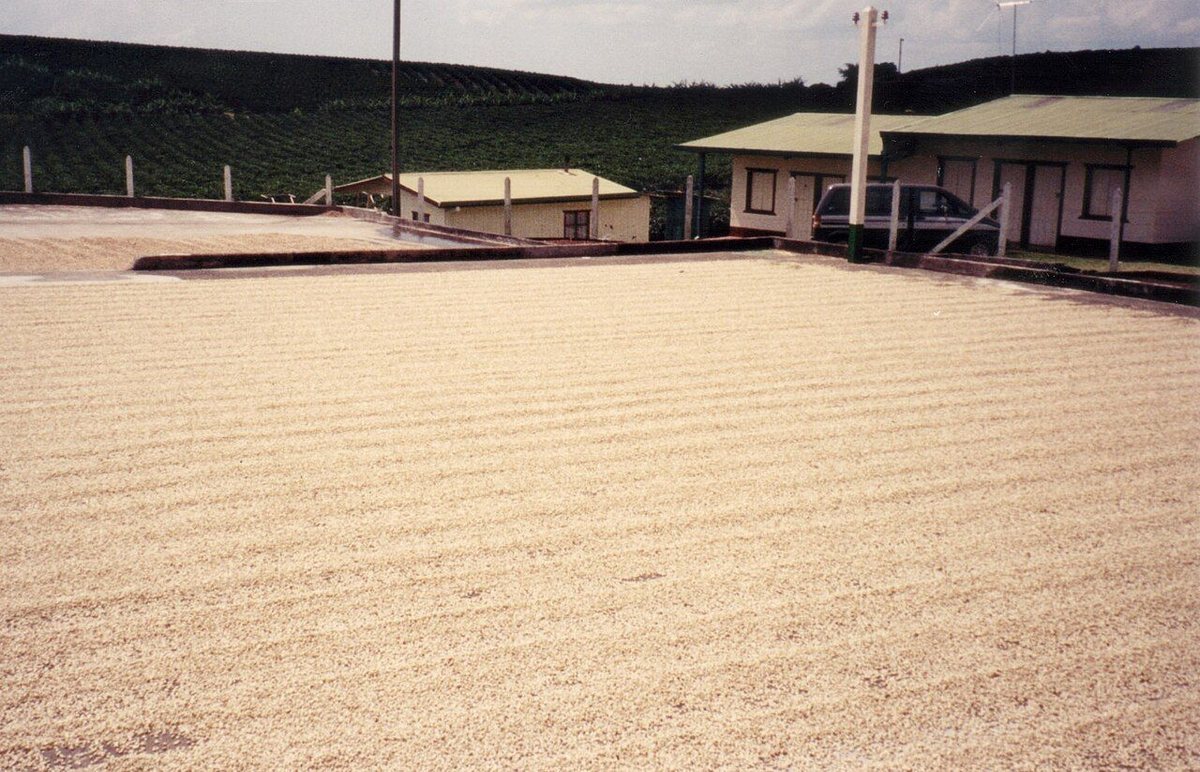
Natural processing — also called dry processing — is the method by which whole, intact coffee cherries are dried in the sun with the fruit still surrounding the seed. No pulping, no fermentation tank, no washing: the cherry is harvested, sorted, and laid out to dry as-is. Only once the fruit has desiccated completely is the hardened husk — skin, pulp, mucilage, and parchment together — removed in a single mechanical step called hulling.
This stands in direct contrast to washed (wet) processing, where the fruit is removed from the seed before drying, and to honey and pulped-natural processing, where a calculated portion of mucilage is left on the parchment. Natural processing is the simplest of the three primary methods in terms of equipment requirements, but among the most demanding in terms of environmental control and day-to-day management.
Because the seed spends weeks inside the fermenting fruit, it absorbs compounds that no post-pulping process can replicate. The flavors unlocked — stone fruit, berry, dark chocolate, wine, fermented sweetness — are among the most distinctive in all of specialty coffee, and they explain both the method's deep historical roots and its vigorous contemporary revival.
Origins and Historical Context
Natural processing is not a modern invention. It is almost certainly the original method of preparing coffee, predating any purpose-built processing infrastructure by centuries.
Ethiopia, widely regarded as the birthplace of Coffea arabica, has practiced dry processing for as long as coffee has been consumed. In the country's southwestern highlands — in regions such as Sidama, Yirgacheffe, Guji, and Harrar — smallholder farmers have traditionally dried cherry on raised beds or simply on the earth, a practice shaped as much by the arid seasonal climate as by custom. Ethiopian naturals, particularly those from the Harrar region, have long been celebrated for their blueberry, wine, and chocolate notes, a flavor profile inseparable from the natural process.
Yemen shares an equally ancient dry-processing tradition. Coffee was first cultivated in Yemen for large-scale trade, and the country's dry, mountainous terroir made natural processing the only practical choice. Mocha — the original port of export, and the etymological root of the flavor descriptor — became synonymous with the fruit-forward, winey character that natural processing produces.
Brazil, the world's largest coffee producer (accounting for roughly 45% of global exports according to commonly cited trade figures), adopted natural processing at scale for entirely different reasons: geography and economics. The country's vast, relatively flat coffee-growing regions and mechanized strip-harvesting operations made large-scale washing infrastructure impractical and expensive. As [S2] notes, dry processing was "historically used for lower-quality beans in Brazil and much of Africa" — a reputation earned in an era when consistency was sacrificed for volume. That reputation has since been substantially revised.
The Drying Process: Step by Step
Understanding natural processing requires a close look at what actually happens between harvest and hulling.
Sorting and Initial Preparation
Before drying begins, freshly harvested cherries are sorted to remove twigs, leaves, and other foreign material. A flotation sort — immersing the cherries in water — is commonly used: ripe, dense cherries sink, while unripe, overripe, or damaged fruit tends to float and is discarded. This initial cull is disproportionately important in natural processing because defective cherries cannot be removed after drying without sophisticated optical sorting equipment.
Spreading on Drying Surfaces
Sorted cherries are spread on one of two primary drying surfaces:
- Raised drying beds (also called African beds): mesh or slatted platforms elevated above the ground, typically 0.8–1.2 metres high. Airflow underneath the bed accelerates drying and reduces the risk of mold on the underside of the cherry layer.
- Patios or drying tables: flat concrete, brick, or compacted-earth surfaces. Lower cost and easier to construct, but airflow beneath the cherry layer is absent, making rotation more critical.
The cherries are spread in a layer thin enough to allow even exposure to sun and air — typically just a few centimetres deep. Piling cherries too thickly dramatically increases the risk of mold and uneven fermentation. For more detail on drying infrastructure and best practices, see Drying Coffee.
Turning and Monitoring
Frequent turning is perhaps the single most labor-intensive aspect of natural processing, and its neglect is the most common route to a defective lot. Workers rake or hand-turn the drying beds multiple times per day — often four to six times during the hottest midday hours. Turning serves several functions:
- It exposes all surfaces of the cherry to even sunlight, preventing localized over-drying or moisture pockets.
- It breaks up clumps where cherries have stuck together and begun fermenting unevenly.
- It allows the processor to visually monitor cherry color, surface texture, and any signs of mold.
- In hot climates, cherries may be mounded and covered at night or during rain to prevent re-absorption of ambient moisture.
Duration
The full drying period for natural-processed coffee is significantly longer than for washed coffee. As [S2] notes, the fruit is spread out "for 2–3 weeks, turned regularly for even drying." In practice, the timeline varies considerably depending on altitude, ambient humidity, temperature, and the thickness of the drying layer. In Ethiopia's highland regions or at high-altitude farms, drying can extend to four or even six weeks. In Brazil's cerrado, warm dry conditions may permit faster turnaround. Target final moisture content for stable storage is typically cited as approximately 11–12% by weight.
The End Point
An experienced processor judges drying completion by feel and sound. A fully dried cherry shrivels and darkens to a reddish-brown or near-black husk; the seed inside rattles slightly when the cherry is shaken. At this stage, the lot may rest in parchment or in its dried cherry skin (sometimes called dry cherry) in a warehouse for weeks or months before hulling, a resting period that can continue to affect flavor development.
Hulling
Once fully dried, the coffee is mechanically hulled to remove all layers of the fruit in a single pass: skin, dried pulp, mucilage, and parchment are stripped away together, leaving the green bean. This is a critical distinction from washed coffee, where parchment is removed separately after the bean has been dried in a much cleaner state. Natural-process hulling generates more chaff and places greater mechanical demands on the equipment, which must manage the variable density of the dried fruit.
After hulling, the green coffee is sorted and graded — by screen size, density (gravity table), and often by color-sorting machine — before export.
Fermentation Dynamics and Flavor Development
The flavor profile of a natural-processed coffee is not incidental; it is the direct product of controlled (and sometimes uncontrolled) fermentation occurring within the drying cherry.
As the cherry loses moisture, its sugars concentrate and a complex ecosystem of yeasts and bacteria proliferates on the fruit's surface and within the mucilage. These microorganisms metabolize sugars and produce a range of organic acids, esters, and alcohols. Over the drying period, these compounds migrate inward through the parchment and seed coat, bonding with the endosperm in ways that survive roasting.
The principal flavor outcomes associated with natural processing include:
- Heavy, full body — higher viscosity in the cup, often described as syrupy or wine-like
- Low to moderate acidity — often perceived as rounded or lactic rather than bright and citric
- Fruit-forward character — blueberry, strawberry, cherry, dried fig, mango, and tropical fruit notes are common
- Fermented or winey depth — a complexity that can range from pleasant stone-fruit sweetness to overt fermented character, depending on execution
- Chocolate and earthy undertones — more pronounced in natural Brazils and some Yemeni coffees
The boundary between "desirable fermented complexity" and "defective over-fermentation" is one of the defining challenges of the process. A cherry drying too slowly in humid conditions, or piled too thickly, may develop putrid, vinegary, or barnyard taints that are irreversible. The SCA's green coffee defects framework classifies severe over-fermentation as a primary defect.
For producers interested in pushing fermentation further in a controlled direction, anaerobic fermentation builds on natural-process principles by sealing cherries in oxygen-deprived vessels; see Anaerobic Fermentation and Experimental Processing for those developments.
Risks and Consistency Challenges
Natural processing is frequently described as the most difficult method to execute consistently at scale. The risks are real and compound one another:
Mold
Whole cherries create an ideal substrate for mold if moisture is not managed aggressively. Mold not only ruins the affected cherries but can spread rapidly across a drying bed. Ochratoxin A, a mycotoxin produced by certain mold species, is a food safety concern in poorly managed natural lots and is subject to regulatory limits in many importing markets. Thin layer depth, frequent turning, and adequate airflow are the primary preventive measures.
Over-Fermentation
High ambient temperatures accelerate microbial activity. In tropical lowlands, fermentation can outpace drying, producing off-flavors that cannot be corrected downstream. Conversely, if drying is too rapid — as can occur in very hot, dry conditions — the seed may case-harden on the exterior while retaining excessive moisture internally, leading to uneven moisture distribution and storage problems.
Lot Uniformity
Because drying times vary across a bed (edges dry faster than the center; elevated corners differ from the interior), and because individual cherries absorb fermentation products at different rates depending on their maturity at harvest, lot-to-lot and bed-to-bed variation is inherent to the process. Strip harvesting — common in Brazil — compounds this by delivering a mix of ripe, underripe, and overripe cherries to the drying bed simultaneously. Selective hand-picking of only ripe cherry, as practiced on better specialty lots in Ethiopia and increasingly in Brazil's specialty tier, dramatically improves raw material consistency.
Water and Climate Dependency
Natural processing requires sustained dry, sunny weather during the drying period. In regions with unpredictable rainfall — including parts of Ethiopia's main harvest season — unexpected rain on drying beds can re-wet cherries and re-activate fermentation in an uncontrolled manner. Shade covers and climate-responsive bed management are increasingly standard at quality-oriented washing stations.
Natural Processing in Specialty Coffee
For much of the twentieth century, natural processing carried a quality stigma. The association with bulk Brazilian commodity lots and the risk of fermentation defects led many importers and roasters to treat "natural" as shorthand for "lower grade." That perception has undergone a dramatic reversal since the early 2000s.
Several converging factors drove the resurgence:
-
Ethiopian naturals as flavor benchmarks: As specialty coffee's appreciation for terroir and origin flavor deepened, the blueberry-and-wine profiles of well-made Ethiopian naturals — particularly from Yirgacheffe and Guji — became some of the highest-scoring coffees in competition. These coffees demonstrated that natural processing, executed with care, could produce flavors no other method could.
-
Brazilian specialty investment: Brazilian producers, working at altitude with improved varietals and rigorous cherry selection, began producing natural-processed coffees that competed with washed lots at specialty cupping tables. The "dry" process that had served commodity volume became a tool for expressing terroir and sweetness.
-
Consumer appetite for adventurous profiles: Specialty coffee consumers in North America, Europe, and East Asia developed appetite for the bold, fruit-driven cup experiences that naturals deliver — experiences distinct from the clean, transparent profiles of washed coffees.
-
Competition success: World Barista Championship and Cup of Excellence results repeatedly featured natural-processed lots in top placements, lending institutional credibility to the method.
Today, carefully produced natural-processed coffees command significant premiums. The Ethiopia Shakiso Wessi Station Natural from Onyx Coffee Lab exemplifies what a meticulously managed natural from the Guji zone can offer: intense fruit clarity alongside structural sweetness. Similarly, the El Burro Natural Gesha Lot E from Black & White Coffee Roasters and the Boutet Natural Gesha from Black & White Coffee Roasters demonstrate how natural processing applied to the Gesha variety can produce extraordinary aromatic complexity.
Relationship to Other Processing Methods
Natural processing sits at one end of a spectrum defined by how much fruit contact the seed experiences during drying. At the other end, washed processing removes all fruit before drying, producing cleaner, more transparent flavor profiles. Honey and pulped-natural processing occupies the middle ground, removing the skin but leaving varying amounts of mucilage on the parchment.
Understanding natural processing is foundational to understanding the broader coffee processing landscape and the flavor logic that connects method to cup. The naturals tradition also provides the conceptual framework for newer innovations: anaerobic naturals, carbonic maceration, and other experimental techniques that manipulate fermentation conditions within a whole-cherry framework.
Summary: Evaluating a Natural-Processed Coffee
When approaching a natural-processed coffee — whether cupping, brewing, or purchasing — several characteristics are worth evaluating:
- Body: Expect medium-full to full; a hallmark of the method.
- Sweetness: Often high, sometimes jammy or syrupy.
- Fruit character: Stone fruit, berry, and tropical notes are hallmarks of well-executed naturals.
- Fermentation level: A spectrum from clean fruit sweetness to overt winey complexity. Neither end is inherently superior; context and preference matter.
- Acidity: Typically lower and softer than a comparable washed coffee from the same origin.
- Defect check: Off-flavors such as vinegar, barnyard, or putrid notes indicate over-fermentation or mold exposure and represent processing failures rather than style.
The difference between a defective natural and a transcendent one often comes down to a few degrees of temperature, a centimetre of cherry depth, and the vigilance of the workers turning the beds. That fragility is what makes excellent natural processing a genuine craft — and what makes its best results so compelling.
Coffees demonstrating this
From our catalog of in-stock beans.
Panama · Natural
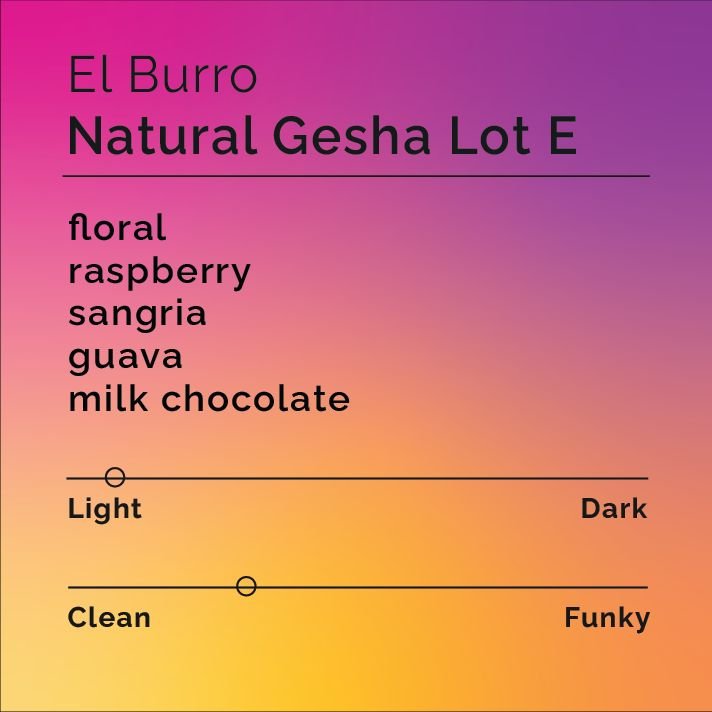
El Burro - Natural Gesha Lot E
Black & White Coffee Roasters · $32
Natural Geisha from El Burro Estate in Panama with red fruit and tropical flavors.

Panama · Natural
Boutet - Natural Gesha
Black & White Coffee Roasters · $14
Elegant Natural Geisha from Panama with floral, citrus, and stone fruit notes.
Colombia · Natural
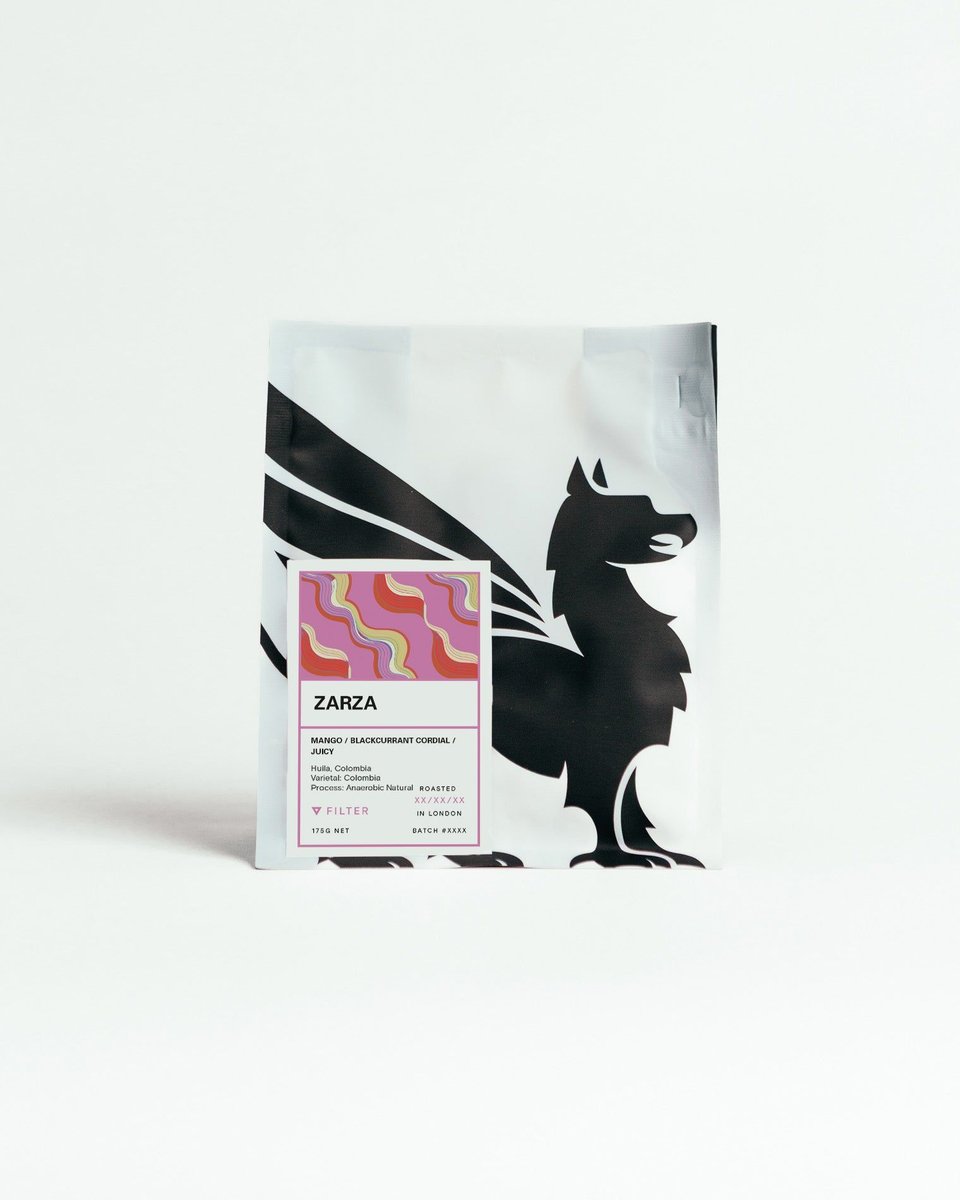
Zarza
Square Mile Coffee Roasters · £18.25
Fruity and candy-like Colombian natural process coffee from Huila producers.
Frequently asked questions
- What makes natural-processed coffee taste different from washed coffee?
- In natural processing, the seed dries inside the whole cherry for two to six weeks, during which yeasts and bacteria ferment the surrounding fruit and infuse the seed with sugars, esters, and organic acids. This produces heavier body, lower acidity, and intense fruit or winey notes. Washed coffees, by contrast, have the fruit removed before drying, yielding a cleaner, more transparent flavor profile that expresses origin and varietal character more directly.
- Is natural processing lower quality than washed processing?
- Historically, natural processing was associated with lower-grade commodity coffee, particularly large-scale Brazilian production. However, when applied with careful cherry selection, thin drying layers, frequent turning, and attentive moisture management, natural processing can produce some of the highest-scoring coffees in the world. Many Cup of Excellence and World Barista Championship lots have been natural-processed coffees.
- How long does natural processing take?
- The drying phase typically takes two to three weeks under favorable sunny, dry conditions, as commonly cited for the method. At higher altitudes or in more humid environments, the process can extend to four to six weeks. After drying, lots may rest in their dried cherry husk for additional weeks before hulling, which can further affect flavor development.
- What are the main risks of natural processing?
- The three primary risks are mold (favored by excessive moisture, thick cherry layers, or poor airflow), over-fermentation (resulting in vinegar, barnyard, or putrid off-flavors), and lot inconsistency (caused by uneven drying or mixed cherry maturity). All three are managed primarily through thin drying layers, frequent turning, careful sorting at intake, and dry, sunny weather conditions.
- Where did natural processing originate?
- Natural processing almost certainly originated in Ethiopia, where Coffea arabica is indigenous and where whole-cherry drying has been practiced for centuries. Yemen, the first country to cultivate coffee for large-scale trade, also developed an ancient natural-processing tradition shaped by its dry, mountainous climate. Brazil later adopted the method at industrial scale due to geographic and economic factors.
- What is hulling in natural processing?
- Hulling is the mechanical step at the end of natural processing in which the dried fruit layers — skin, pulp, mucilage, and parchment — are removed from the green bean in a single pass. Unlike washed processing, where parchment alone is hulled after a relatively clean drying phase, natural-process hulling deals with the entire compacted, desiccated cherry structure.
- How does natural processing relate to anaerobic or experimental methods?
- Anaerobic and other experimental methods often use natural processing — keeping the cherry intact — as their starting point, but add a controlled fermentation phase (such as sealing cherries in oxygen-deprived vessels) before or during drying. These techniques deliberately manipulate the microbial environment to achieve specific flavor outcomes, building on the fruit-contact principle that defines traditional natural processing.
See also