Washed
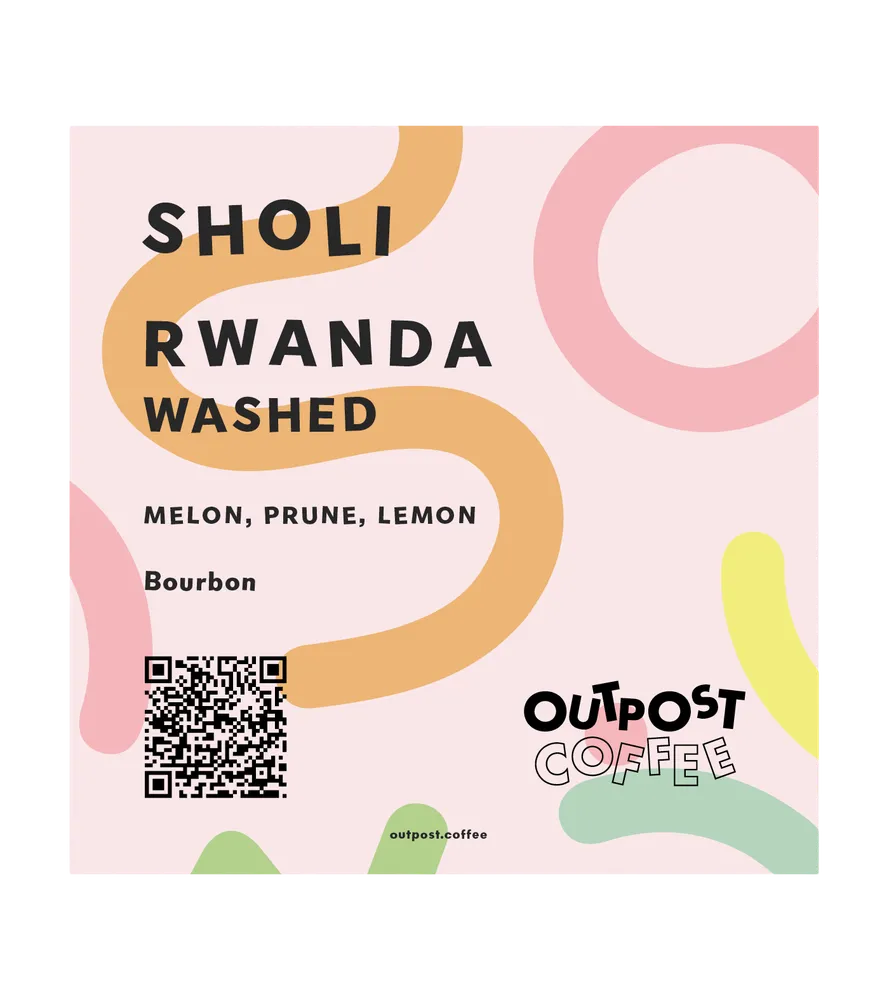
Sholi, Washed, Rwanda
Roasted by Outpost Coffee
Fair Trade organic washed Bourbon from Rwandan women coffee farmers at 1800-2000m elevation.
From the roaster
Melon, Prune, Lemon
Producer: Abateraninkunga Ba Sholi (Kundwa Women's Farmer Group) Origin: Muhanga, Rwanda Varietal: Bourbon Elevation: 1800-2000 masl
About This Coffee
This fairtrade and organic certified lot is sourced from smallholder farmers representing Kundwa Women Coffee, a women-only farmer group operating under Abateraninkunga Ba Sholi (Aba Sholi) Co-operative.
Aba Sholi Co-op is located in Cyeza sector, Muhanga district, central Rwanda. Sholi co-op was established in 2008 by 30 women living and growing coffee in the region as a conscious effort to invigorate the local economy. Back then, coffee was only a small part of the association, there was no profitable market for coffee cherries as there was no washing station in area. This changed when two years later, the mission of the association changed, and we eventually became a cooperative. Slowly the cooperative started growing, adding new members every year and in 2014, Aba Sholi opened its very own washing station.
“Abateraninkunga” is a Kinyarwanda word which translates to “mutual assistance”, encapsulating their values to encourage more farmers to join. Today there are 610 producers, many of them women, growing coffee at altitudes between 1,800 and 2,000 masl. The Coop became Fair Trade certified in 2015, the same year they won the Rwanda Cup of Excellence Award. The co-operative owns central washing station to which the members can deliver cherries for processing.
The Region
The head office and the coffee plantations of Sholi coffee washing station are located at Cyeza Sector, Muhanga District. The region is known for its diverse fruit farming and ancient rocks called Sebwugugu.
The changes in the neighbourhood after the establishment of Sholi cooperative have been miraculous. The process started with a large growth in local population - a lot of people moved away from high-risk zones to a settlement area. Sholi brought a lot of jobs to the community and with them came increased food security, better living conditions and reliable income to pay for health insurance and school fees. As part of their vision to invest in the local community, Sholi the co-operative also built a health centre, a water source and a village hall, all of which can be accessed by the whole community, including non-members.
Everyone at Sholi is treated equally regardless of age, gender, religion or disability. The co-operative offers health insurance and a loan system so members manage cash flow and pay for necessities like school fees.
Rwanda is poetically known as “the land of a thousand hills” and Muhanga district is no exception. With rolling mountains, rich soils and plentiful sunshine, the region boasts an exceptional terroir for arabica cultivation. This mountainous terrain makes mechanisation of harvesting impossible and the transportaion of coffee very challenging. Nevertheless coffee plays a huge role in the growing Rwandan economy and the increased demand for washed specialty arabicas from this small but beautiful country have allowed it to become one of the region’s most highly regarded producers.
The Process
This lot is fully washed, whereby ripe cherries are carefully selected, first by hand sorting then by floatation to remove under-developed cherries (floaters). The cherries are then depulped and fermented for 12-18 hours, typically overnight, to break down the remaining mucilage. After fermentation, the wet parchment is washed by high pressured water and grading is done throughout long channels to separate coffee by density. During this grading stage, coffee beans pass through a series of gates that allow less dense, lower quality beans to flow through, while retaining the denser, higher quality beans for separate processing in top lots such as this.
The retained washed beans are moved from channels to pre-drying tables, where they are carefully sorted under shade for around 4 hours. Next, the beans are taken on raised drying tables numbered for around
— Outpost Coffee
Context
From the Muhanga region of Rwanda, this washed Bourbon comes from Abateraninkunga Ba Sholi, a women's farmer collective working at 1800–2000 meters. The washed process typically emphasizes brightness and clarity in the cup, qualities evident here in the interplay of melon and citrus notes alongside deeper stone fruit character. Outpost Coffee has brought out the coffee's lemon and prune dimensions—a balance that reflects both the varietal's inherent profile and the elevation's influence on bean development. Rwandan coffees from this region are recognized for their clean, fruit-forward character, making this lot a representative example of what the origin offers when processed with care.
In the Encyclopedia
Frequently asked questions
What does Sholi, Washed, Rwanda taste like?
Expect tasting notes of Melon, Prune, and Lemon.
How is Sholi, Washed, Rwanda processed?
Sholi, Washed, Rwanda uses the Washed process.
More from Outpost Coffee
View all →Costa Rica · Washed
Santa Elena, Washed, Costa Rica
Washed microlot from Tarrazú with chocolate, sugar, and raisin notes.
Ethiopia · Washed
Banko Gotiti, Washed, Ethiopia
Grade 1 washed Ethiopian Heirloom from Banko Gotiti wetmill with apricot, lemon, and orange blossom notes.
Anaerobic Washed
Los Quispe, Anaerobic Washed Gesha, Peru
Anaerobic washed Geisha from Peru's Cajamarca region with vibrant floral and fruit notes.
Washed
Merly Leon, Washed, Peru
Washed microlot from woman producer Merly Leon featuring extended anaerobic fermentation.
More Washed coffees
Onyx Coffee Lab · Colombia
Colombia Juan Jimenez Pink Bourbon - Cafe Only
Colombian Pink Bourbon microlot with structured acidity and citrus character.
Onyx Coffee Lab · Colombia
Colombia El Tambo-AMACA
Single-origin Colombian coffee from a women's farming cooperative in the Western Cordillera.
ViewGreater Goods Coffee · Ethiopia
Kolla Bolcha - Light Ethiopia
Washed Ethiopian Heirloom with peach syrup, honeysuckle, and bright floral notes.
Cuvee Coffee · Colombia
Colombia
Colombian Huila coffee with washed Caturra varietal from high altitude foothills.
Last verified: June 27, 2026 · Browse all beans.