Washed
Sugarcane Decaf
Roasted by Clifton Coffee Roasters
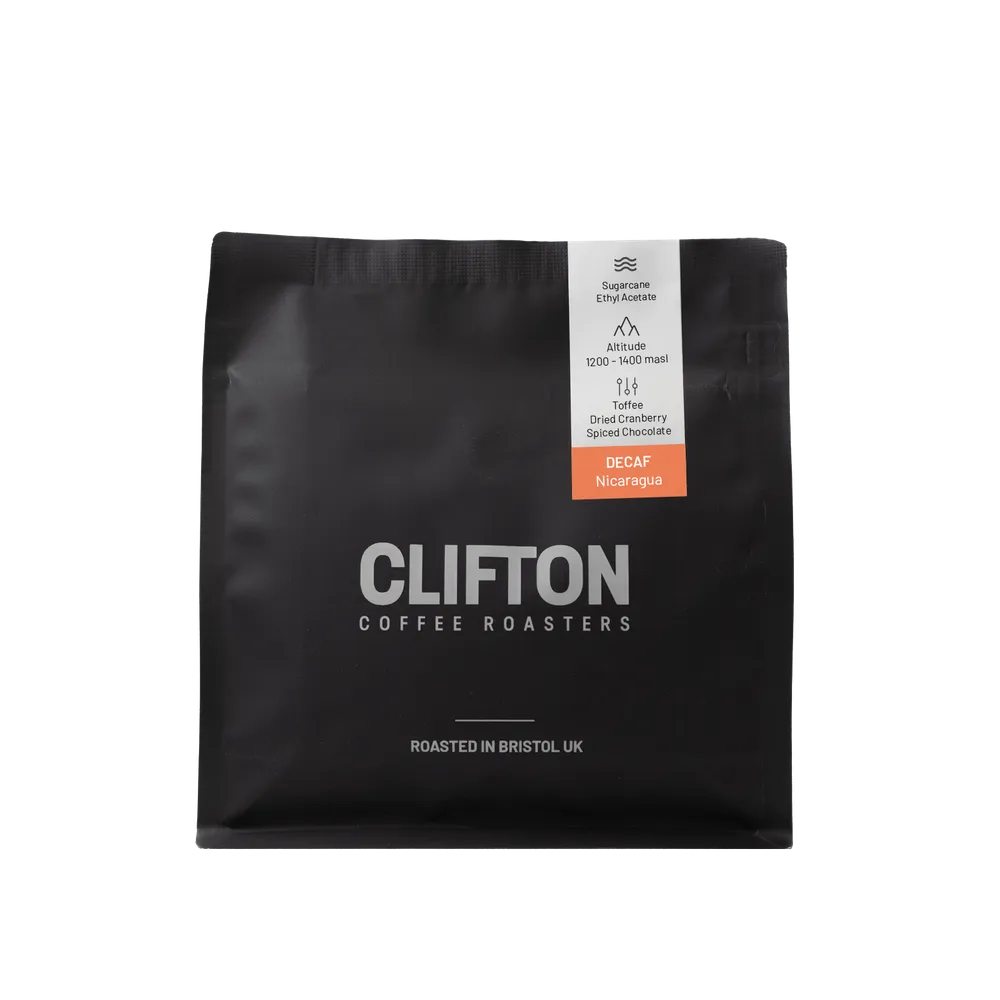
Balanced Nicaragua decaf with dried cranberry, toffee, and spiced chocolate notes.
From the roaster
Our Nicaragua Decaf is sourced from two exceptional farms, Finca San Luis and Finca Santa Martha. Located in the fertile coffee growing regions of San Ramon. These farms are renowned for their commitment to quality, family run farming, and great attention to detail throughout the cultivation and harvesting process.
The coffee is produced from mixed Catimor, Catuai, Margogogype varieties grown at elevations of 1,200–1,400 m.a.s.l., where rich soils, warm days, and cool nights create ideal conditions for developing complex flavours and balanced sweetness. Cherries are hand-picked at peak ripeness to ensure only the highest quality coffee is selected for processing.
The coffee is decaffeinated using the natural Ethyl Acetate (EA) process. The decaffeination agent, ethyl acetate, is naturally derived from sugar cane and vegetables and gently removes caffeine while preserving the coffee’s inherent flavour characteristics. During the process, the beans are carefully treated to maintain their structure and cup quality, resulting in a decaffeinated coffee that retains the sweetness, aroma, and complexity of the original full caffeine lot.
Prior to decaffeination, the coffee undergoes meticulous post harvest processing. After harvesting, ripe cherries are sorted and processed before being washed, sun dried on patios for several days.
The resulting cup is sweet, comforting, and very balanced, with notes of dried cranberry, toffee, and spiced chocolate.
— Clifton Coffee Roasters
Context
This decaffeinated offering from Clifton Coffee Roasters brings together coffees from two San Ramon farms in Nicaragua's mid-elevation zone. The blend combines Catimor, Catuai, and Margogogype varietals processed via washed method, which typically emphasizes cleaner, brighter cup characteristics. The roaster identifies dried cranberry, toffee, and spiced chocolate in the cup—flavor notes that suggest a balanced decaf with both fruit-forward acidity and warming sweetness. The combination of different varietals and two distinct producers creates complexity often challenging to achieve in decaffeinated coffees.
In the Encyclopedia
Frequently asked questions
What does Sugarcane Decaf taste like?
Expect tasting notes of dried cranberry, toffee, and spiced chocolate.
How is Sugarcane Decaf processed?
Sugarcane Decaf uses the Washed process.
More from Clifton Coffee Roasters
View all →Natural
Rwanda - Mbizi
Rwanda Red Bourbon with black cherry, maple syrup, and Darjeeling tea notes.
Colombia · Fermentation
Gesha - Wilton Benitez
Wilton Benitez's Geisha uses specialized fermentation and thermal shocking for complex flavors.
Office Filter 1kg
House filter from Mount Sunzu Coffee estate in northern Zambia with sustainable and community-focused practices.
ViewBrazil
Office Espresso 2kg
Well-balanced, easy-drinking espresso from Brazil's most sustainable farm.
More Washed coffees
Onyx Coffee Lab · Colombia
Colombia Juan Jimenez Pink Bourbon - Cafe Only
Colombian Pink Bourbon microlot with structured acidity and citrus character.
Onyx Coffee Lab · Colombia
Colombia El Tambo-AMACA
Single-origin Colombian coffee from a women's farming cooperative in the Western Cordillera.
ViewGreater Goods Coffee · Ethiopia
Kolla Bolcha - Light Ethiopia
Washed Ethiopian Heirloom with peach syrup, honeysuckle, and bright floral notes.
Cuvee Coffee · Colombia
Colombia
Colombian Huila coffee with washed Caturra varietal from high altitude foothills.
Last verified: June 27, 2026 · Browse all beans.