From the roaster
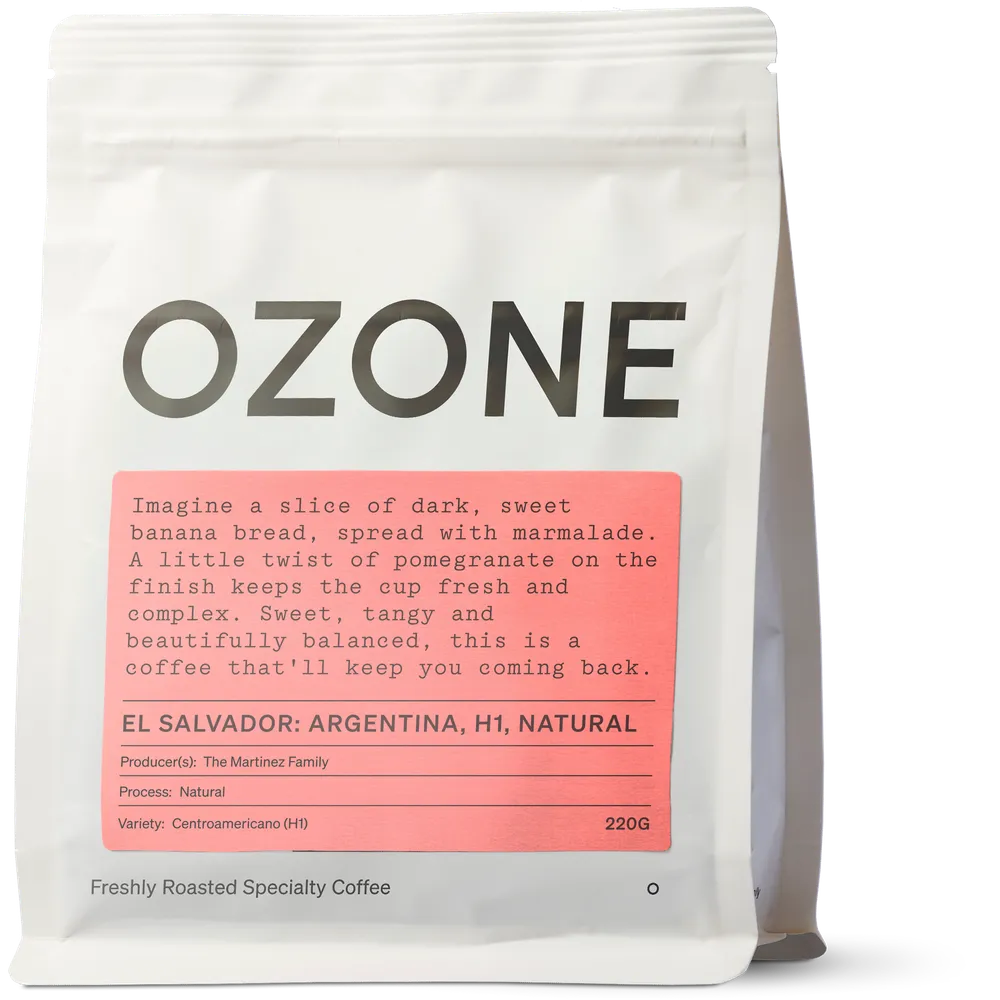
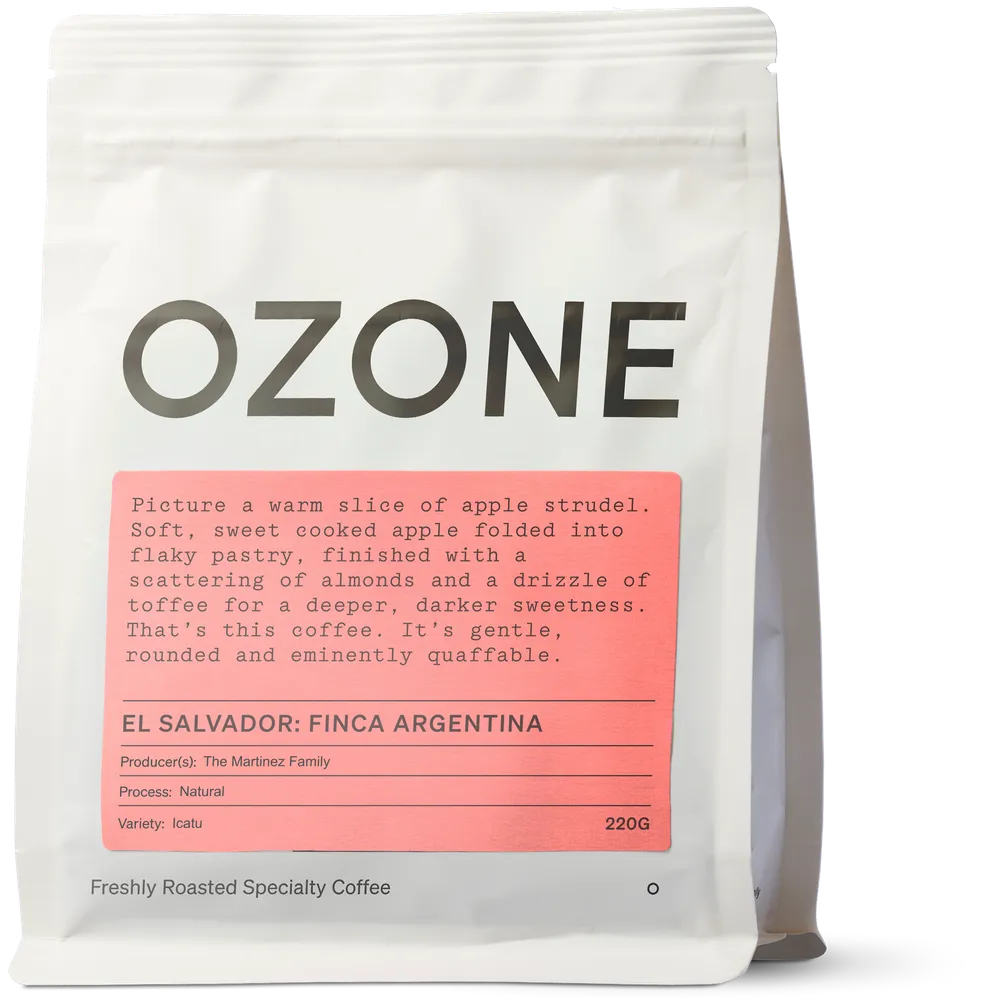
El Salvador: Finca Argentina, Icatu, Natural
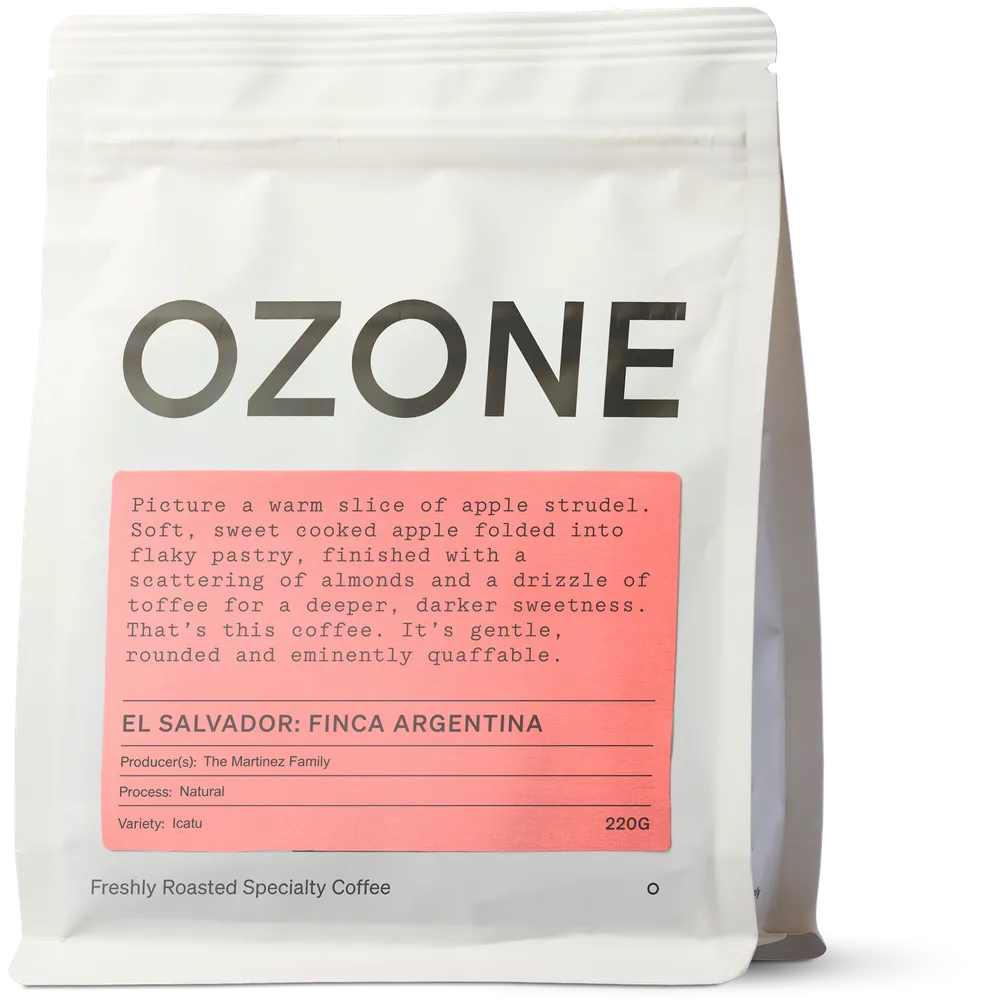
Picture a warm slice of apple strudel. Soft, sweet cooked apple folded into flaky pastry, finished with a scattering of almonds and a drizzle of toffee for a deeper, darker sweetness. That’s this coffee. It’s gentle, rounded and eminently quaffable.
It’s also a bit of a rarity. This is Icatu, a Brazilian varietal through and through, and you very rarely see it outside Brazil. Finding it on a hillside in western El Salvador, grown by friends we’ve bought from since 2008, was too good to pass up.
A Brazilian a long way from home
Icatu is a proper slow-burner. Breeders at Brazil’s Instituto Agronômico de Campinas (IAC) started work on it in 1950, and the first cultivars weren’t released until 1992. That’s over four decades of patient crossing and selecting.
The goal was to bring the disease resistance of Robusta (Coffea canephora) into Arabica without losing what makes Arabica worth drinking. Breeders crossed Robusta with Red Bourbon, then backcrossed the offspring with Mundo Novo, generation after generation, keeping the plants that held onto that resistance while growing and tasting more and more like Arabica. The result is a tall, vigorous, productive plant with useful resistance to coffee leaf rust.
It was built for Brazil, though. Its height suits big, spaced-out plantations where machines do much of the harvesting. Steep Central American hillsides, usually picked by hand, are a very different proposition. So why grow it here?
Leaf rust tore through Central America in the early 2010s, and El Salvador was hit particularly hard. Farms built on traditional varietals like Bourbon saw huge losses, and many producers started looking for plants that could stand up to the disease. Icatu fits that brief neatly. It even carries Bourbon in its family tree, the varietal El Salvador’s coffee reputation was built on.
In the cup, Icatu tends towards sweet and rounded, with chocolate, caramel and nutty notes and a generous body. Natural processing, where the whole cherry dries around the seed, pushes it further into soft, cooked fruit, and that’s exactly what’s happened here. Grown at altitude in volcanic soil, it’s a world away from the Brazilian plantations it was bred for, and it’s all the better for it.
On the farm
Finca Argentina sits near the town of Turin, in the Ahuachapán department, high in the Apaneca-Ilamatepec mountain range at between 1,150 and 1,350 metres above sea level. Its neighbours include the Los Ausoles geothermal field, more than 130 mud pots, fumaroles and steam vents, and those volcanic soils are a big part of why the region’s coffee is so good.
The landscape also gives its name to El Beneficio Los Ausoles, the cooperative dry mill in Ahuachapán where the family’s coffee is hulled, sorted and readied for export. It’s been doing this for over four decades, and in recent years it has been chosen to dry mill and export El Salvador’s Cup of Excellence winning lots. The team there have a long relationship with Mauricio and have been consistent, reliable partners for us as buyers too.
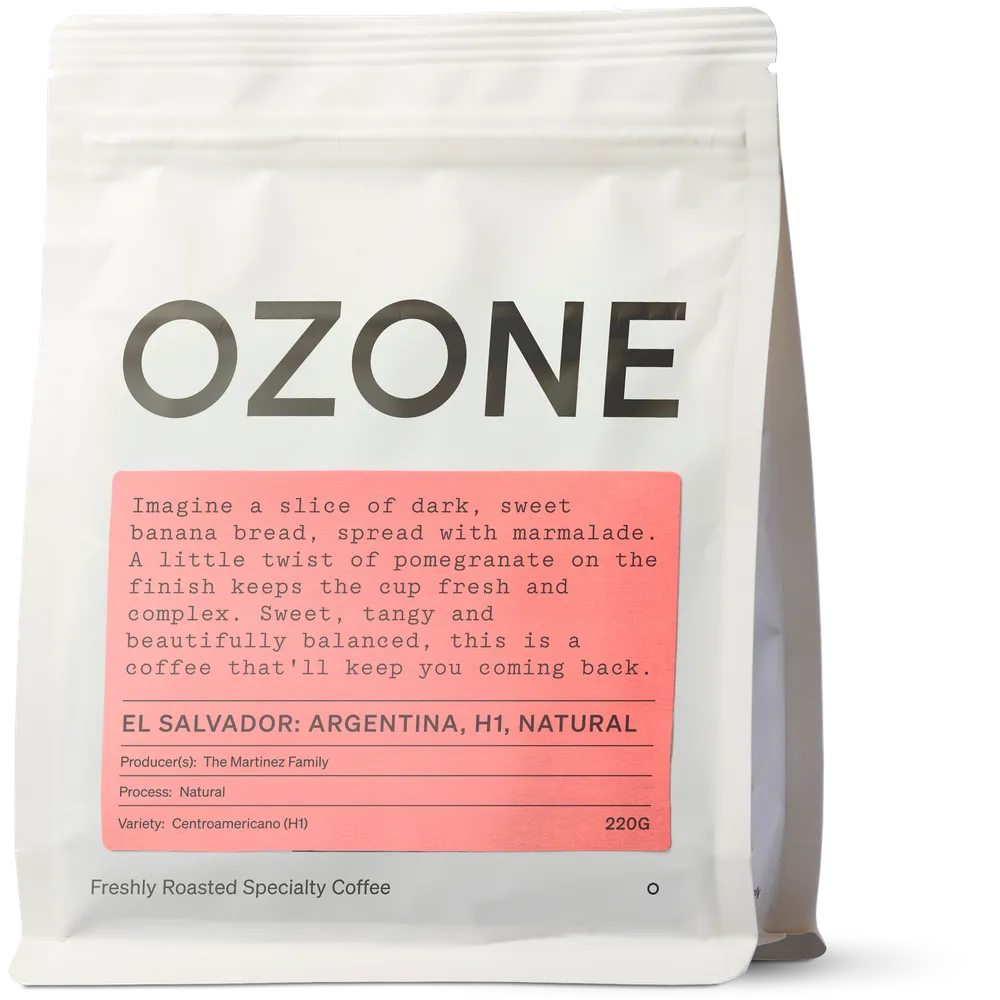
The farm is split into seven tablones, individual plots each with their own character. This Icatu comes from Guachipelin, a six-hectare plot replanted in 2016 with Icatu, Centroamericano H1, Yellow Bourbon and a little SL-28. If you caught our recent Natural H1, this is its next-door neighbour: same plot, same weather, same hands, very different family tree.
The experimenting hasn’t stopped. In 2023 the family planted Mundo Novo, with a first harvest expected this year in late 2026. So Icatu and one of its own parents are now growing on the same Salvadoran farm.
The Martinez family
The Martinez family have owned Finca Argentina since 1967. By 2008 its yields had slumped, until Alejandro, back home after banking in New York, found records showing the farm had been classified for a Q auction in 2005. He started sending samples to roasters across Europe, and one landed with us in Staf
— Has Bean
Tasting notes
- apple strudel
- soft
- sweet cooked apple
- flaky pastry
- almonds
- toffee
- chocolate
- caramel
- nutty
- soft, cooked fruit
As listed by Has Bean.
Origin & producer
- Country
- El Salvador
- Producer
- Finca Argentina
- Altitude
- 1,150–1,350 m
Process & variety
- Process
- Natural
Roast & brewing
- Acidity
- not stated
- Bag size
- 265 g