Ethiopia · Natural
Ethiopia, Megadu
Roasted by Hundred House Coffee
Community lot from smallholder farmers in Megadu, Guji, naturally processed with emphasis on quality and sustainability.
From the roaster
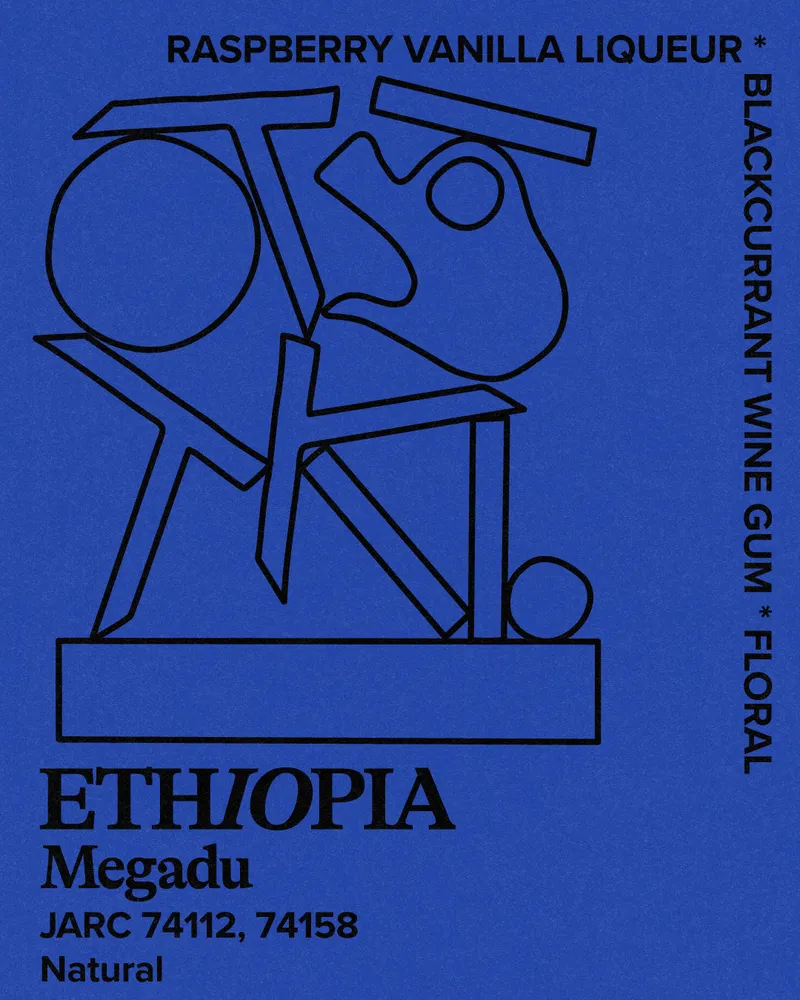
FARM: Bette Buna REGION: Guji Megadu ALTITUDE : 2000 - 2200 MASL VARIETAL : JARC 74112, 74158 PROCESS : Natural
This community lot comes from Bette Buna in Guji, Ethiopia, sourced from smallholder farmers across the Megadu area. Working in remote conditions, Bette Buna supports producers with training in ecological farming and home-processing, helping improve both quality and long-term income.
Cherries are carefully harvested and processed by farmers using natural methods, often dried on raised beds or small shared drying stations. This lot is a blend of coffees from producers who have excelled in these techniques, creating consistency while maintaining the character of each contribution.
After drying, the coffee is milled locally, hulled, and hand-sorted before being transported to Bette Buna’s mill near Addis Ababa for final cleaning and grading.
Alongside quality, the project places strong emphasis on community impact, from distributing climate-adapted seedlings to supporting inclusive employment and transparent supply chains—ensuring value is shared from farm to cup.
— Hundred House Coffee
Context
Hundred House Coffee sources this natural-processed lot from the Guji Megadu region of Ethiopia, where producer Bette Buna cultivates JARC 74112 and 74158 varietals at 2000–2200 meters. Natural processing typically emphasizes fruit-forward character through extended contact between bean and fruit; Ethiopian origins, particularly in Guji, are celebrated for distinctive floral and berry-driven profiles. The interplay between these experimental JARC lines and the fermentative intensity of natural processing creates coffees worth exploring for their complexity and sensory depth. This lot represents the kind of varietal experimentation and regional terroir expression that defines contemporary Ethiopian specialty coffee.
In the Encyclopedia
Frequently asked questions
Where is Ethiopia, Megadu grown?
Ethiopia, Megadu, roasted by Hundred House Coffee, is sourced from Sidamo, Ethiopia.
How is Ethiopia, Megadu processed?
Ethiopia, Megadu uses the Natural process.
More from Hundred House Coffee
View all →Colombia · Carbonic Maceration Washed
Freak & Unique XX - Colombia, Edwin Noreña
Colombian Papayo varietal from Campo Hermoso with complex, expressive cup profile.
Colombia · 190 hour Citrullus Nectar Coferment
Freak & Unique XXI - Colombia, Monte Blanco
Extended fermentation Colombian single origin with watermelon and stone fruit notes.
Kenya · Washed
Kenya, Priory C
Washed Kenya lot from Priory Farm featuring hand-sorted, sun-dried beans.
ViewAnaerobic Natural
Uganda | Imbalu
Anaerobic natural from Mount Elgon with clarity and expressive character.
More from Ethiopia
View all →Cuvee Coffee · Natural, Dried on Raised Beds
Ethiopia - CLEARANCE DATED
Ethiopia Guji natural process Typica from Kayon Mountain Farm with berry notes.
Sey Coffee
2026 Chorso Bule - Ethiopia
High-elevation Ethiopian from Chorso Bule site with peach, melon, and jasmine notes.
Merit Coffee · Natural
Gute Site
Naturally processed Ethiopian heirloom with vibrant blueberry and boysenberry notes.
Greater Goods Coffee · Washed
Kolla Bolcha - Light Ethiopia
Washed Ethiopian Heirloom with peach syrup, honeysuckle, and bright floral notes.
More Natural coffees
Onyx Coffee Lab · Ethiopia
Ethiopia Shakiso Wessi Station Natural
Natural-processed Ethiopian coffee from female producers in Guji with balanced fruit-forward notes.
Black & White Coffee Roasters · Panama
El Burro - Natural Gesha Lot E
Natural Geisha from El Burro Estate in Panama with red fruit and tropical flavors.
Merit Coffee · Ethiopia
Gute Site
Naturally processed Ethiopian heirloom with vibrant blueberry and boysenberry notes.
Square Mile Coffee Roasters · Colombia
Zarza
Fruity and candy-like Colombian natural process coffee from Huila producers.
Last verified: June 27, 2026 · Browse all beans.