Kenya · Washed · Filter
Komothai Kiambu
Roasted by Axil Coffee Roasters
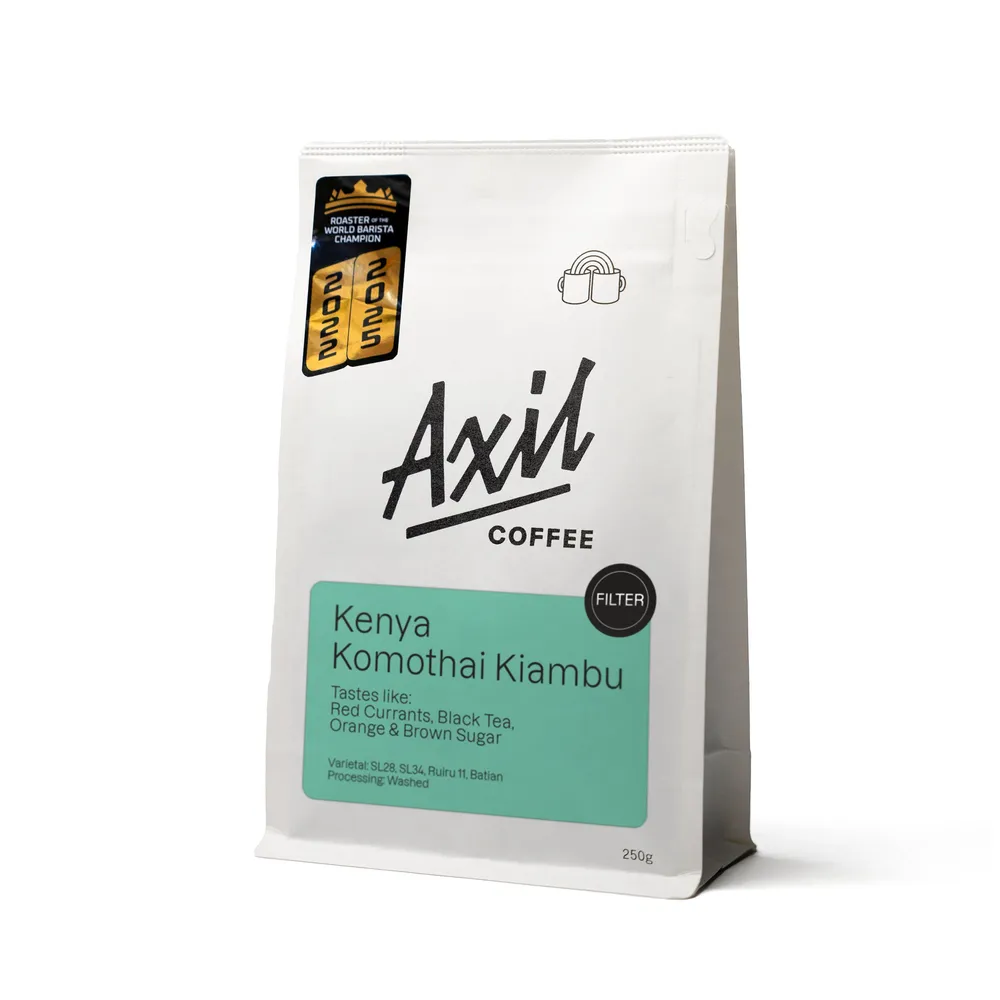
Kenyan filter coffee from Kiambu highlands with red currant and black tea notes.
From the roaster
Origin: Kenya
Farm/Region: Kiambu
Tasting Notes: Red Currants, Black Tea, Orange & Brown Sugar
Producer: Komothai Farmers Cooperative Society
Varietal: SL28, SL34, RUIRU 11, BATIAN
Processing: Washed
Altitude: 1900 MASL
Roast Profile: Filter
Recommended Recipe: 6g in/ 100ml water out in Bloom: 30 sec Total Extraction time: 3.30 min
About The Coffee: Komothai Station is located & grown in the lush highlands of Kiambu County, Kenya. Produced by smallholder farmers and managed under the Komothai Farmers Cooperative Society (FCS), these coffees come from elevations ranging between 1,400 and 1,900 meters above sea level. The region’s deep red volcanic soils and cool climate support slow cherry development, resulting in coffees with clarity and intensity that are highly regarded in specialty markets.
Komothai coffees are known for their vibrant citric acidity and layered sweetness, typically showcasing notes of bright citrus, blackcurrant, and stone fruits such as peach and kiwi, balanced by dark chocolate and a lingering black tea finish. The coffees are primarily fully washed, with careful hand-harvesting and meticulous drying on raised African beds, enhancing their structure, cleanliness, and expressive cup profile.
— Axil Coffee Roasters
Context
This washed coffee from Komothai Farmers Cooperative Society in Kenya's Kiambu region blends SL28, SL34, RUIRU 11, and BATIAN varietals grown between 1400–1900 masl. Axil Coffee Roasters highlights red currants, black tea, orange, and brown sugar—a profile that balances bright acidity with rounded sweetness typical of Kiambu's coffees.
The cooperative's multi-varietal approach draws on Kenya's heritage cultivars alongside disease-resistant modern selections, creating complexity across the cup. Washed processing emphasizes the cleaner, more defined character these varietals tend to express, allowing the terroir-driven flavor attributes to emerge clearly.
In the Encyclopedia
Frequently asked questions
Where is Komothai Kiambu grown?
Komothai Kiambu, roasted by Axil Coffee Roasters, is sourced from Kiambu, Kenya.
What does Komothai Kiambu taste like?
Expect tasting notes of Red Currants, Black Tea, Orange, and Brown Sugar.
How is Komothai Kiambu processed?
Komothai Kiambu uses the Washed process.
What roast level is Komothai Kiambu?
It is roasted to a filter level.
More from Axil Coffee Roasters
View all →Ethiopia · Natural
Chelchele - Natural
Ethiopian natural process coffee from Chelchele with dark chocolate and fruit notes.
Guatemala · Washed
Chuito
Guatemalan washed Bourbon espresso from fourth-generation producer with chocolate and guava notes.
Colombia · Natural - Anaerobic & Thermo Shock
Cherry Pie — Drip bag
Sweet, bold Colombian filter blend with cherry, sugar and pastry notes.
White Honey & Peach co-fermented honey
Peachy Keen — Drip bag
Blend combining SL28 and Castillo varieties with peach and coconut notes.
More from Kenya
View all →Axil Coffee Roasters · Washed
Kenya — Komothai Kiambu
Kenyan washed coffee from Kiambu highlands with citric acidity and layered sweetness.
Wood and Co Coffee · Washed
Gitutu, Kenya
Bright and juicy Kenyan coffee with dark fruits, citrus, and floral notes.
Regalia Coffee · Washed
Ibonia Estate
Washed Kenya coffee with crisp green guava, apricot, and lingering sweetness.
Brandywine Coffee Roasters · Washed
Kenya - Karatu - AB
Kenya Karatu AB is a double washed coffee with tropical vibes and luscious sweetness.
More Washed coffees
Onyx Coffee Lab · Colombia
Colombia Juan Jimenez Pink Bourbon - Cafe Only
Colombian Pink Bourbon microlot with structured acidity and citrus character.
Onyx Coffee Lab · Colombia
Colombia El Tambo-AMACA
Single-origin Colombian coffee from a women's farming cooperative in the Western Cordillera.
ViewGreater Goods Coffee · Ethiopia
Kolla Bolcha - Light Ethiopia
Washed Ethiopian Heirloom with peach syrup, honeysuckle, and bright floral notes.
Cuvee Coffee · Colombia
Colombia
Colombian Huila coffee with washed Caturra varietal from high altitude foothills.
Last verified: June 27, 2026 · Browse all beans.